
Repair, Restain, or Reseal? Reviving Worn Concrete Landscape Curbing in Northeast Wisconsin
- Old plastic, metal, or stone edging already in the bed, which usually needs to be removed or addressed first
- Surface roots from nearby trees or shrubs
- Irrigation lines running through or near the bed
- Landscape lighting cables
Worn, faded, chipped, or cracked concrete landscape curbing can often be revived with repair, color restoration, resealing, or a combination of the three, rarely needing to be completely torn out. The right fix depends on the type of damage and the condition of the concrete underneath.
Wolfrath's Curb mixes UV-resistant pigment through the entire curb and finishes every installation with a commercial-grade penetrating sealer, then comes back every few years to reseal it. That same finishing step is often what an aging curb needs to look and perform its best again.
Three Solutions for Three Different Problems
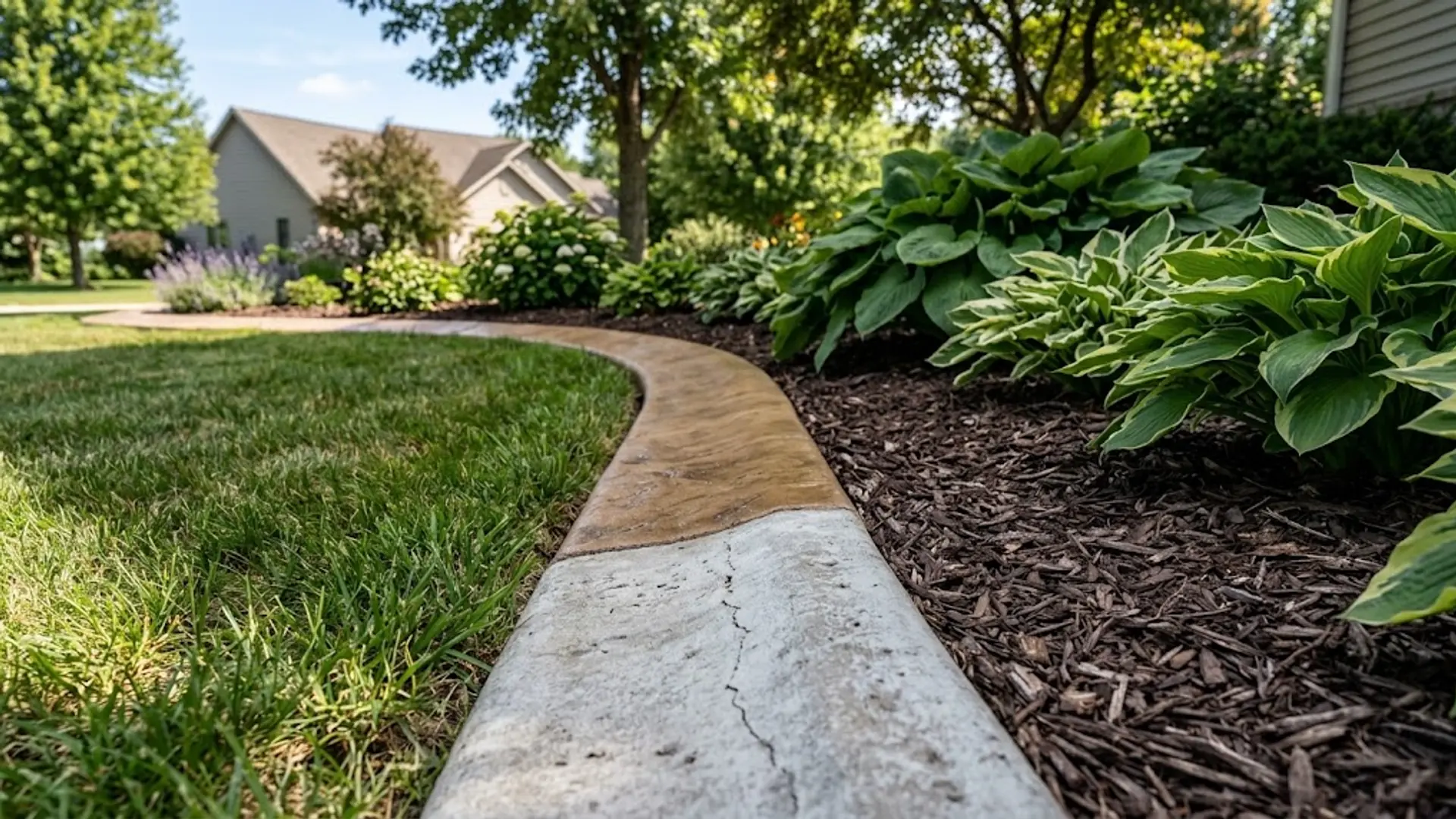
Repair, restaining, and resealing each solve a different problem. An aging curb can need one, two, or all three at once:
- Repair fixes structural damage such as cracks, spalling, impact damage, or sections that have broken or shifted.
- Restaining restores depth to color that has worn away at the surface.
- Resealing renews the protective coating that keeps moisture out and makes the color pop.
Minor surface wear, dullness, or a chalky look usually points toward color and sealer work. Deep cracks, movement, or broken sections call for a repair assessment first, because a sealer can't hold a broken curb together. Cracks also vary widely: hairline cracks, spalling, and full-depth breaks each have different causes and different fixes, so an evaluation should come before any assumption that the whole border has failed.
Why Northeast Wisconsin Winters Speed Up Wear
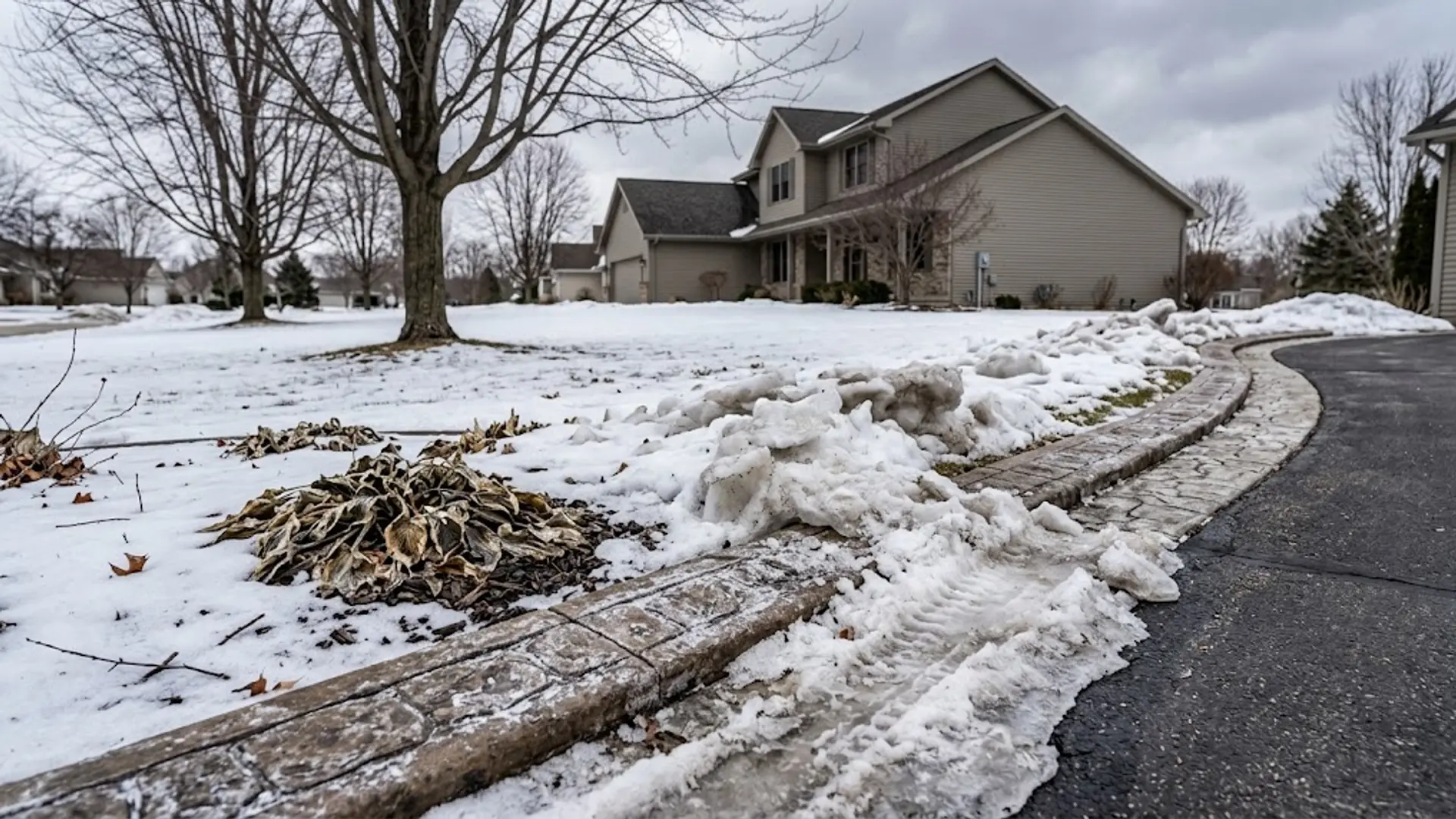
Wisconsin winters are hard on exposed concrete. When water gets into a crack or a worn section, it expands as it freezes. Each freeze-thaw cycle can widen the damage. De-icing salt adds to that surface wear, especially along driveways, walkways, and streets where plowed snow and salted runoff collect.
Exposure, drainage, and the condition of the existing sealer all affect how quickly a curb wears, so curbing in those high-exposure spots deserves a closer look first. That applies across the 11 counties Wolfrath's Curb serves: Outagamie, Winnebago, Brown, Calumet, Fond du Lac, Manitowoc, Marquette, Shawano, Sheboygan, Waupaca, and Waushara.
What Affects the Scope of the Work
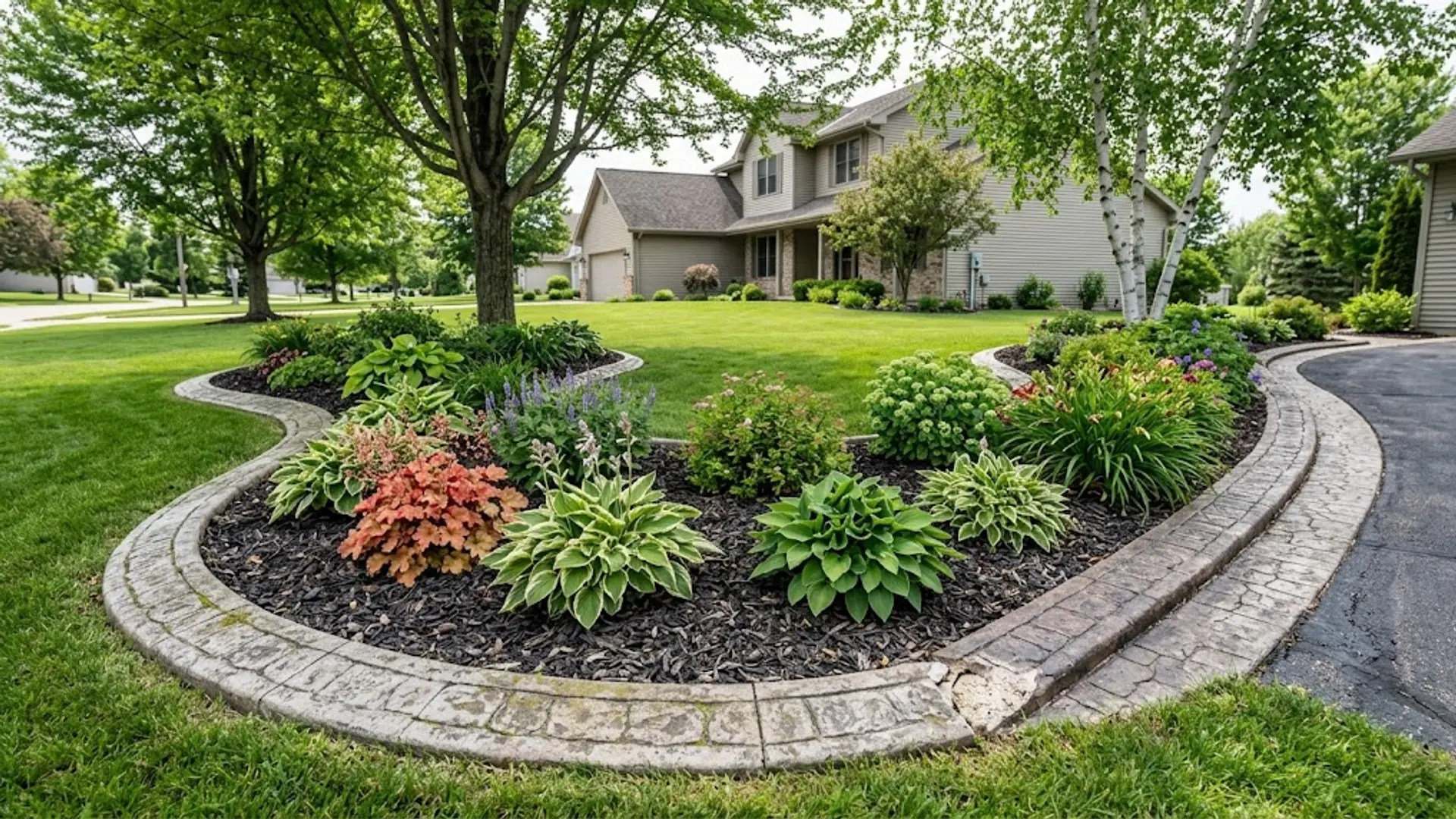
Several factors shape how much work an older curb needs:
- The type and amount of damage
- The total length of curbing affected
- Access to the curbing and how much surface prep it needs
- Whether color restoration is part of the job
- Whether some sections need repair on top of a fresh seal
Faded curbing often has sound color underneath. Integral color runs through the whole curb, and what usually fades is the protective sealer that makes that color stand out. Wolfrath's Curb recommends
resealing concrete curbing every two to three years in Wisconsin. A fresh coat of compatible sealer often brings back the depth of the original color when the concrete itself is still sound.
Timing the Work Around Wisconsin Weather
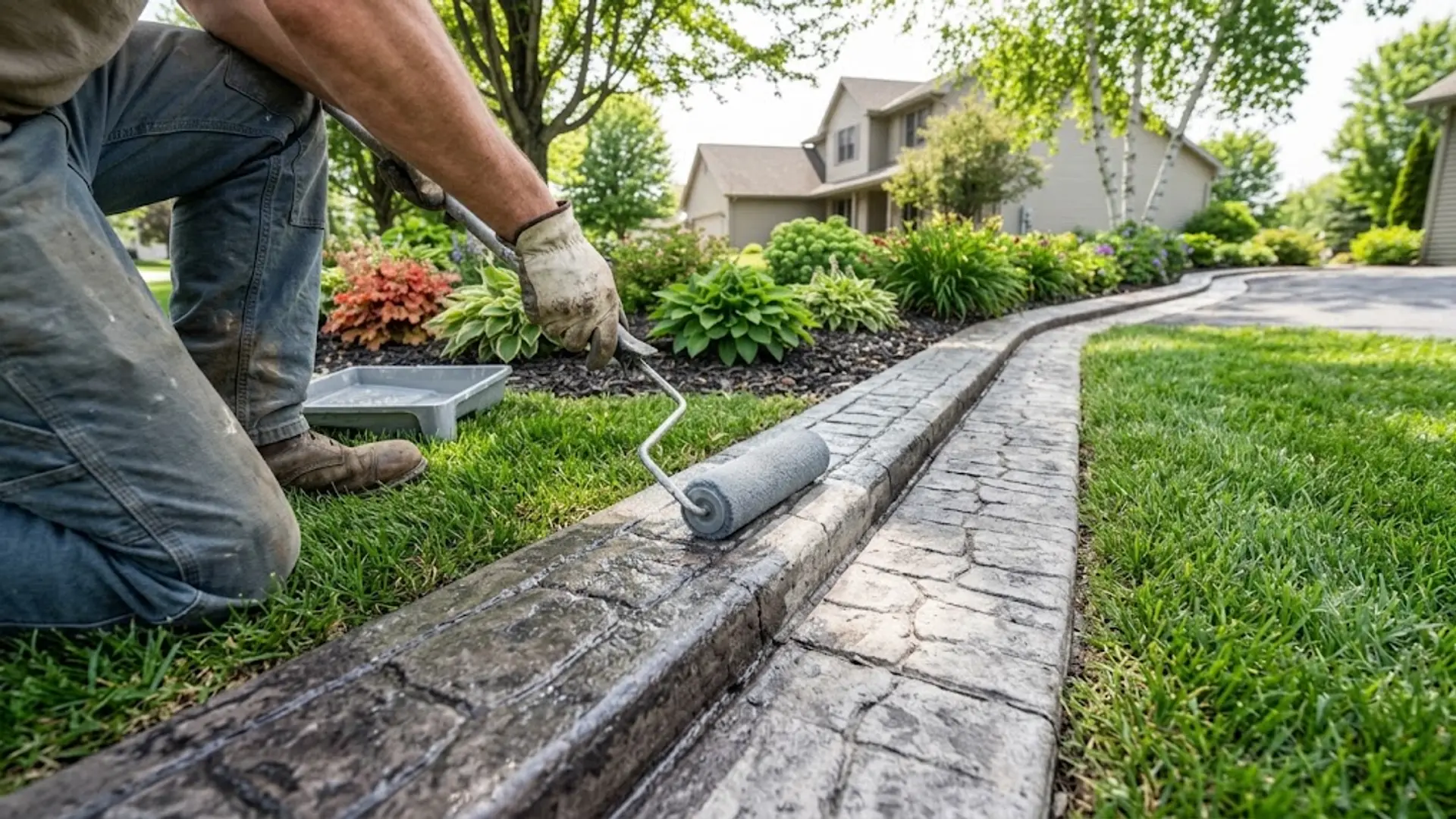
Sealing and color work needs dry weather, with temperatures staying above 50°F for 24 hours after application. In Northeast Wisconsin, that usually means scheduling between late April and early October. A sealer adds protection, but drainage, existing damage, and salt exposure still determine how a curb holds up through winter. Checking aging curbing early in the season leaves time to repair and reseal before the next freeze.
Frequently Asked Questions
Can faded concrete curbing be restored without replacing the entire border?
Faded concrete curbing can usually be restored without replacing the entire border. Integral color runs through the whole curb, so the fading is usually due to worn sealer. A fresh, compatible sealer often brings the color back when the concrete is still in good condition.
When is a crack serious enough to need more than sealing?
A crack needs more than sealing when it runs deep, shows movement, or has broken the curb into separate sections. Hairline surface cracks can often be handled with a protective finish, but structural damage calls for a repair assessment first.
Does curbing near a driveway need special attention because of road salt runoff?
Curbing near a driveway need special attention, because salted runoff and plowed snow collect along driveway and walkway edges. That extra moisture and salt wears the sealer faster, so those sections are worth checking sooner.
Get an Honest Look at Your Curbing
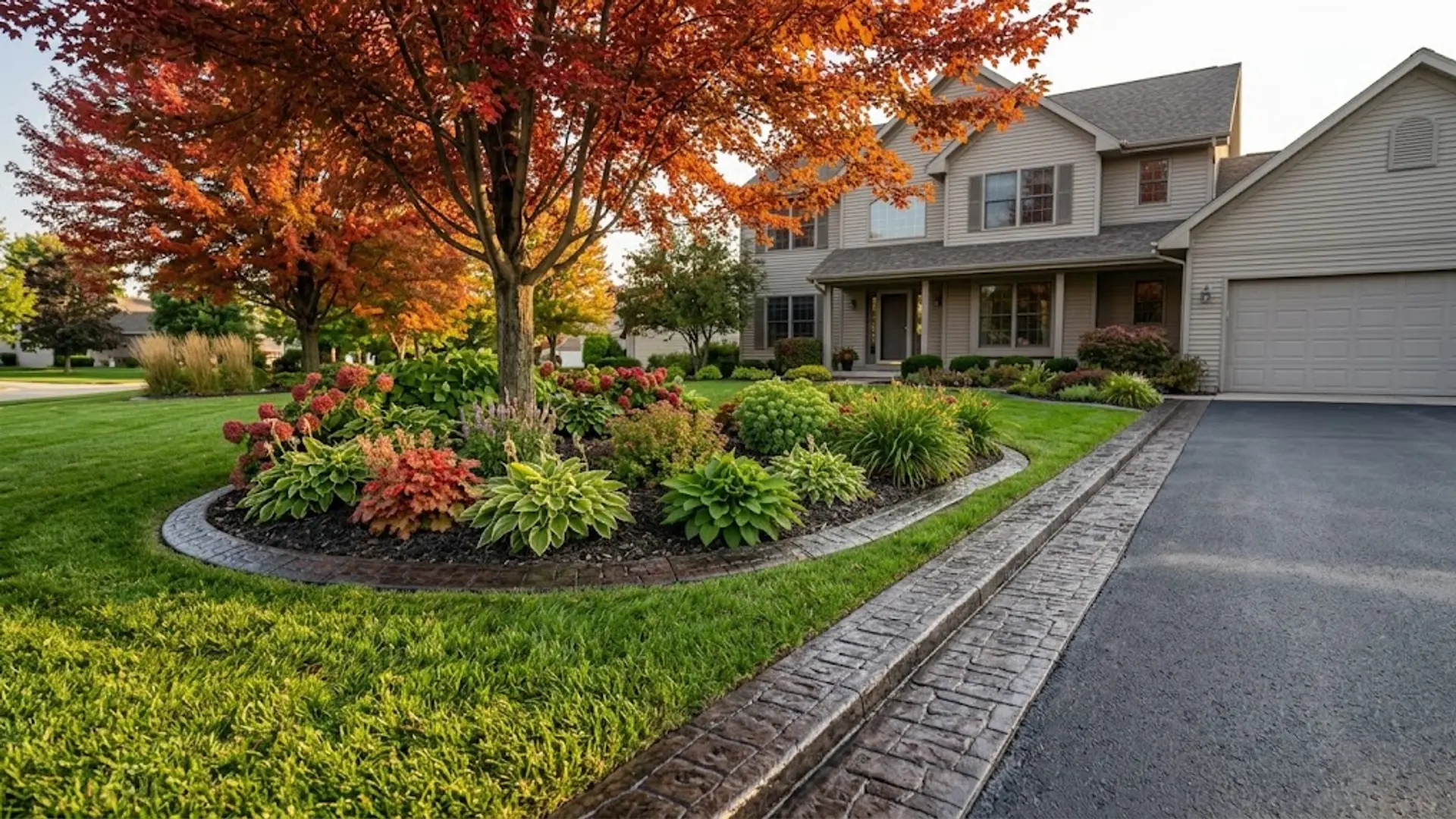
If your landscape curbing is showing its age, the quickest way to know whether it needs repair, color work, resealing, or a combination of the three approaches is by scheduling an in-person evaluation. Wolfrath's Curb serves homeowners throughout Northeast Wisconsin and backs its work with a comprehensive warranty. Call (920) 212-2872 to talk through what you're seeing.