
Concrete Curbing Winter Care: 5 Maintenance Tips
Concrete curbing winter care consists of five steps: seal it before the first freeze, keep snow-removal equipment off the edge, avoid de-icing salt within a foot of it, inspect for damage after the spring thaw, and reseal professionally every two to three years. Concrete curbing is engineered for Wisconsin's freeze-thaw cycles, but it isn't maintenance-free. A little seasonal prep keeps it structurally sound and looking sharp for decades instead of scaling and cracking early.
The two forces that do the most damage are freeze-thaw moisture and road salt. Both are rooted in a single cause: water getting into the concrete. That's why sealing is the foundation of the whole plan. Wolfrath's Curb has installed over a million linear feet of landscape curbing across NE Wisconsin since 2005, and provides professional resealing built around our local conditions. In this post, find out how winter affects your curbing and the five steps that protect it.
How Wisconsin Winters Affect Concrete Curbing
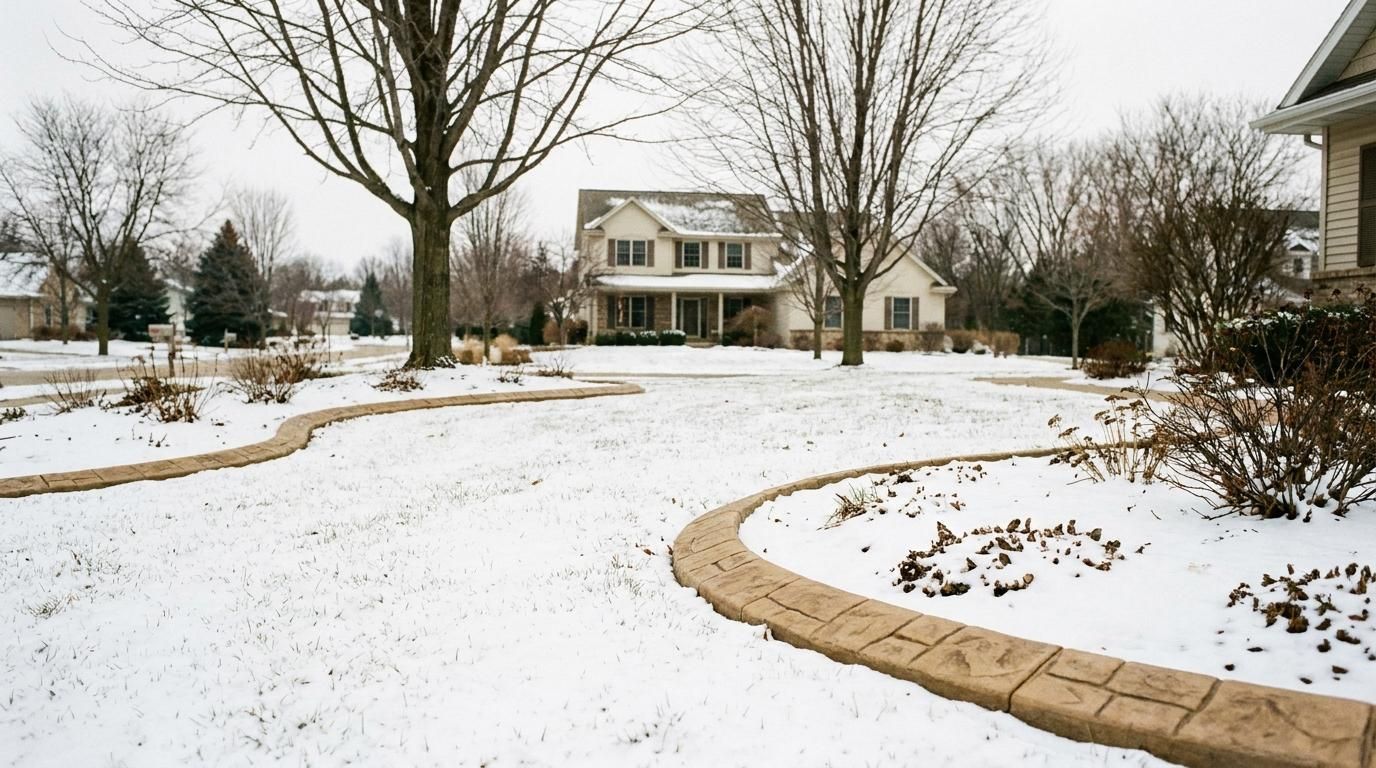
Wisconsin winters are known for their harsh conditions. For your landscape curbing, this means managing two specific environmental factors that can impact its long-term durability.
Freeze-Thaw Cycles
NE Wisconsin experiences 50 or more freeze-thaw cycles per year. Each cycle forces moisture in the concrete pores to expand as it freezes and contract as it thaws. Over time, this repeated stress can cause surface scaling and hairline cracks, especially in concrete that wasn’t properly sealed. Sealed curbing resists moisture absorption and handles freeze-thaw cycles with minimal wear.
Road Salt and De-Icer Exposure
Curbing near driveways, sidewalks, and streets is exposed to salt splash and chemical de-icer runoff. This is a constant winter reality across Sheboygan County and the rest of NE Wisconsin, where roads are salted heavily for months. Sodium chloride and calcium chloride accelerate concrete deterioration by increasing the number of effective freeze-thaw cycles at the surface. Salt also draws moisture into the concrete, compounding the freeze-thaw damage. Curbing within 2 feet of a salted surface faces the highest risk.
Tip 1: Seal Before the First Freeze
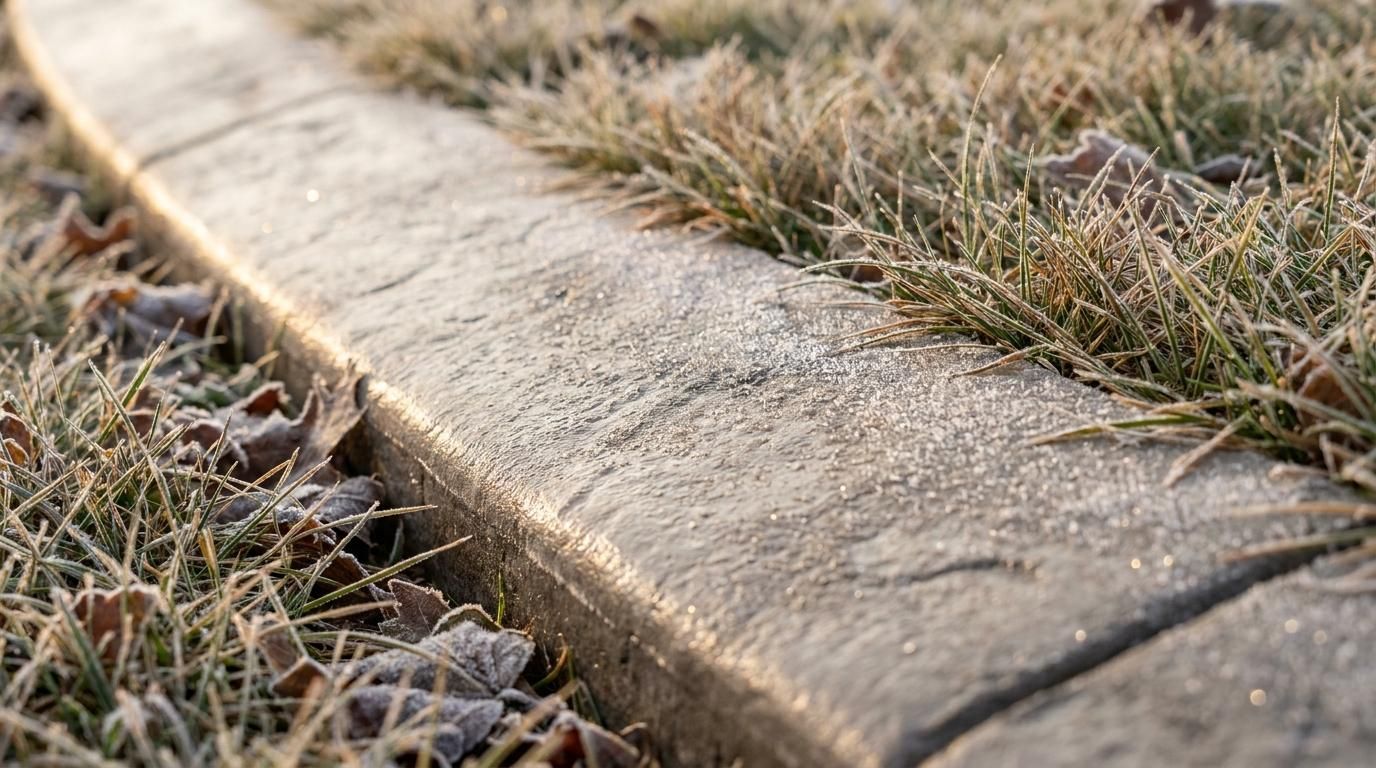
The single most effective thing you can do for your curbing before winter is ensure the sealer is still intact. A professional-grade penetrating sealer blocks moisture from entering the concrete pores, which is the root cause of freeze-thaw damage. Wolfrath’s Curb recommends resealing every 2 to 3 years. The ideal window in Wisconsin is late summer through early October, before nighttime temperatures consistently drop below 50 degrees.
Signs Your Sealer Has Worn Off
- Water no longer beads on the surface, it soaks in and darkens the concrete
- Color appears faded or chalky compared to when the curbing was freshly sealed
- Surface feels rough or gritty rather than smooth
- It has been more than 3 years since the last seal application
Tip 2: Keep Snow Removal Equipment Away From the Edge
Snowplow blades, snow blower augers, and metal shovels can chip or gouge concrete curbing on contact. The risk increases when snow and ice obscure the curbing line and operators cannot see the border. Before the first snowfall, note where your curbing runs along driveways and walkways. Use landscape stakes or reflective markers to flag curbing edges that are near plow paths. When shoveling by hand, use a plastic-edged shovel within 6 inches of the curbing rather than a metal blade.
Tip 3: Avoid Chemical De-Icers Near Curbing
Rock salt and chemical de-icers are the most common source of preventable winter damage to concrete curbing. The safest approach is to keep salt application at least 12 inches away from any curbing edge. If you need traction near curbing, use sand or kitty litter instead. Both provide the grip you need without the chemical damage.
De-Icer Risk Levels
- Sodium chloride (rock salt): moderate risk. Draws moisture into concrete and increases freeze-thaw cycles.
- Calcium chloride: higher risk. More aggressive on concrete surfaces than rock salt.
- Magnesium chloride: lower risk than calcium chloride but still causes surface scaling over time.
- Sand or kitty litter: no chemical risk. Safe to use directly against curbing.
Tip 4: Inspect for Damage After Spring Thaw
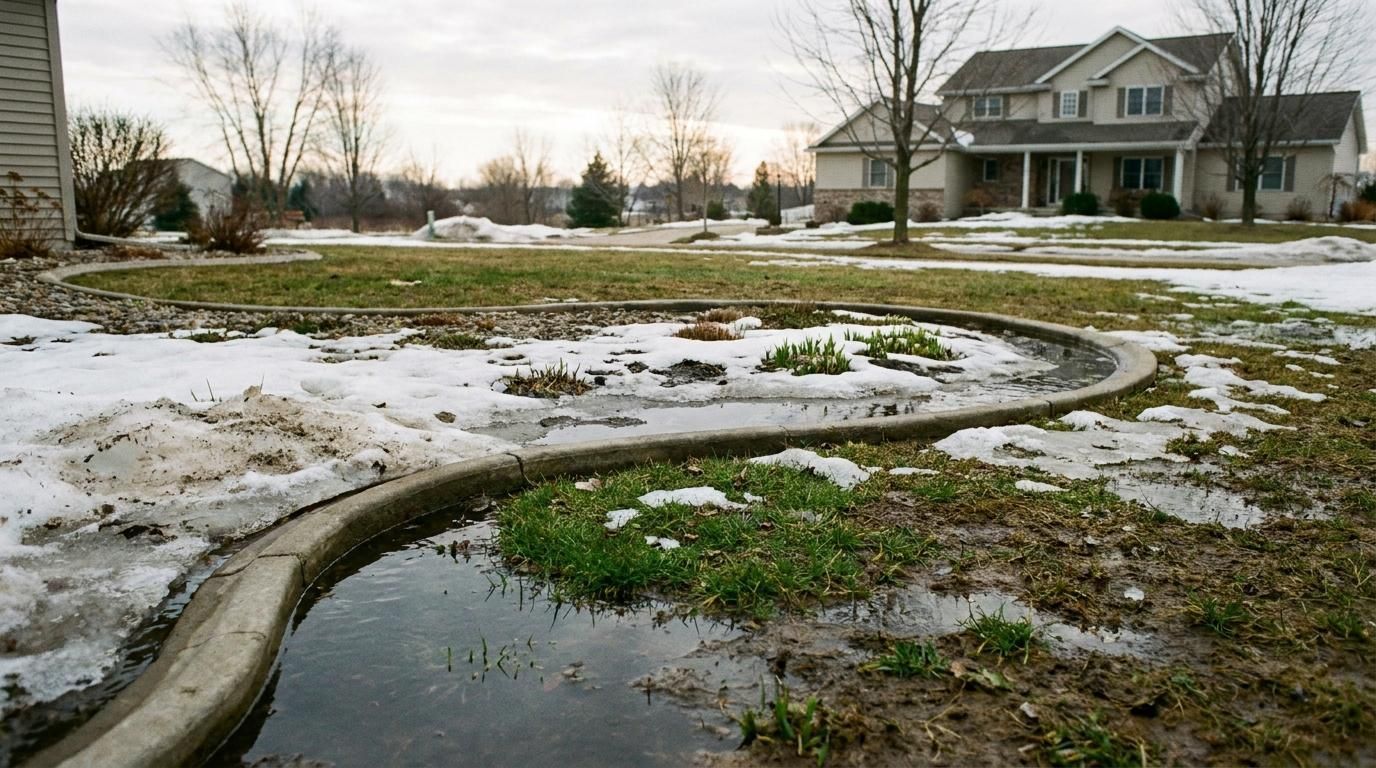
Once the snow melts and the ground has thawed, walk your property and inspect every section of curbing. Most winter damage is cosmetic and does not affect structural performance, but catching issues early prevents them from worsening.
What to Look For
- Surface scaling or flaking: small patches where the top layer has lifted. Usually caused by moisture penetration in unsealed areas.
- Hairline cracks: normal and expected in concrete that endures freeze-thaw cycles. These rarely affect performance or appearance.
- Chips or gouges: impact damage from snow removal equipment. Note the location and size.
- Color fading: may indicate the sealer has worn through and needs reapplication.
If you find scaling, chips, or significant color loss, contact Wolfrath’s Curb for a professional assessment. Minor issues are easy to address when caught early, and many of the most common curbing maintenance questions come down to timing the repair before the next freeze cycle.
Tip 5: Schedule Professional Resealing on a 2–3 Year Cycle
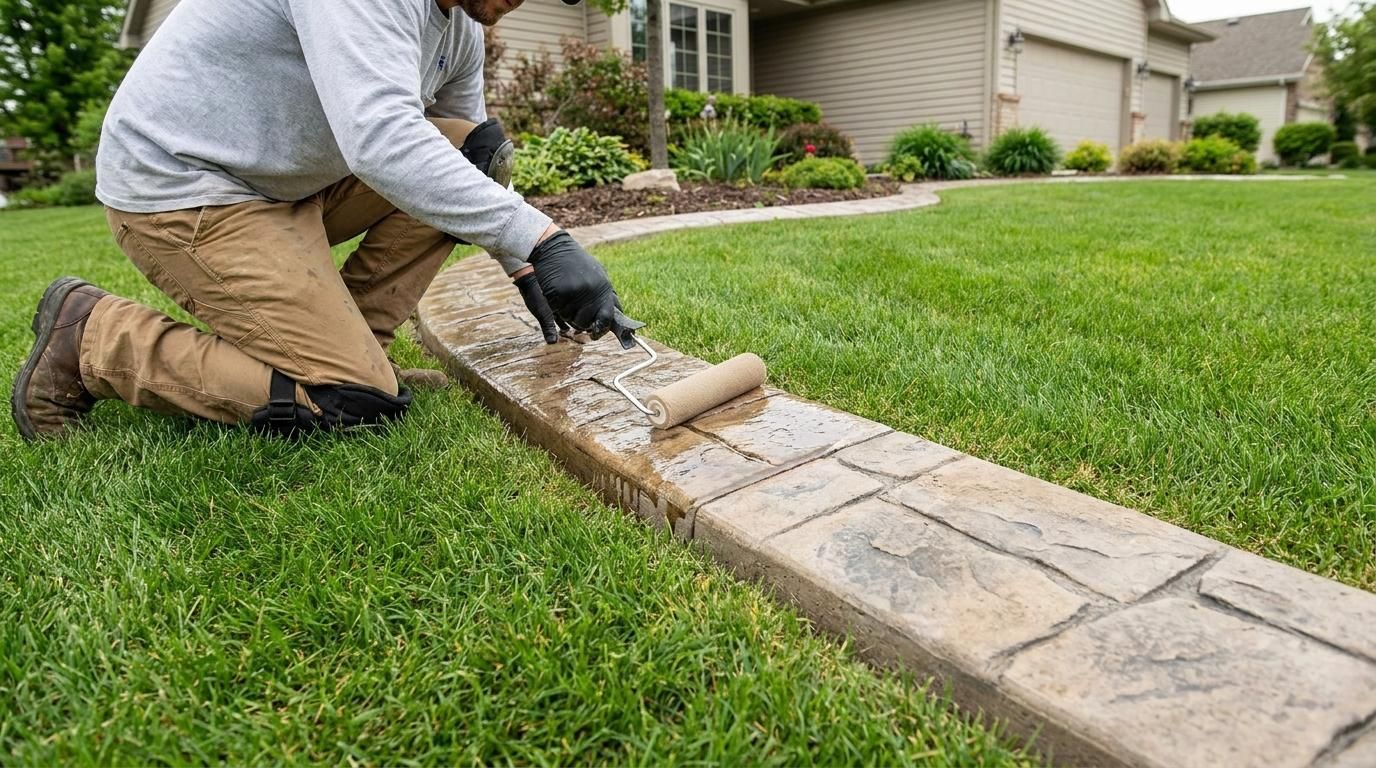
Professional resealing is the single best investment in your curbing's longevity. Wolfrath's Curb offers a resealing service that includes power cleaning the surface, preparing any areas that need attention, and applying a commercial-grade penetrating sealer that protects against moisture, UV, and freeze-thaw damage.
The sealer also restores color vibrancy, making it look freshly installed. Scheduling it in the warmer months works in your favor, too. The same summer curbing care that keeps the finish sharp sets your borders up for the winter ahead.
Recommended Schedule
- Year 1: Wolfrath's Curb seals at installation and returns for a follow-up reseal visit.
- Year 2–3: Schedule your first maintenance reseal. Late summer or early fall is the best time in Wisconsin.
- Every 2–3 years after: Continue the cycle. Curbing that is resealed on schedule lasts 20 to 30 years with minimal visible wear.
Frequently Asked Questions
Does Concrete Curbing Crack in Freezing Temperatures?
Hairline cracks are normal and expected in concrete that endures freeze-thaw cycles. Wolfrath's concrete is custom-blended with fiber reinforcement and polymer additives that enhance crack resistance. Hairline cracks do not affect the structural integrity or long-term performance of the curbing.
Can You Use Salt Near Concrete Curbing?
Salt accelerates concrete surface deterioration by increasing freeze-thaw cycles and drawing moisture into the material. Keep salt application at least 12 inches from curbing edges. Use sand or kitty litter for traction near curbing instead.
When Should You Reseal Concrete Curbing in Wisconsin?
The best time to reseal is late summer through early October, before nighttime temperatures consistently drop below 50 degrees. Reseal every 2 to 3 years to maintain protection through Wisconsin's freeze-thaw seasons.
Protect Your Investment Through Every Wisconsin Winter

Concrete curbing is built for Wisconsin weather, but a little seasonal care helps it last the full 20 to 30 years without scaling or chipping. Winter maintenance is simple: seal before the freeze, keep salt and snowplows away from the edge, check for damage after the thaw, and follow a two- to three-year resealing cycle.
The one step worth handing off is the resealing, since that's what protects everything else. Wolfrath's Curb provides professional resealing, inspection, and maintenance across NE Wisconsin. Schedule your resealing or call (920) 212-2872 to talk with our team.