Concrete Curbing for Driveways: Cost & Style Guide
Concrete curbing frames the largest hardscape on your property, turning a soft, eroding driveway edge into a clean, defined border. It costs $3 to $8 per linear foot, which puts a typical two-car driveway (100 to 200 feet around both sides and the turnaround) between $300 and $1,600. Beyond its polished look, it stops grass from creeping onto the asphalt, holds adjacent mulch beds in place through heavy rain, and keeps the soil shoulder from washing out. It also lasts 20 to 30 years, far longer than the plastic or steel edging it replaces.
Wolfrath's Curb builds seamless concrete borders for driveways using a five-step process that’s usually completed in a single morning. Discover what driveway curbing costs, the styles that suit a driveway best, and what to expect on installation day.
Why Driveways Need Curbing
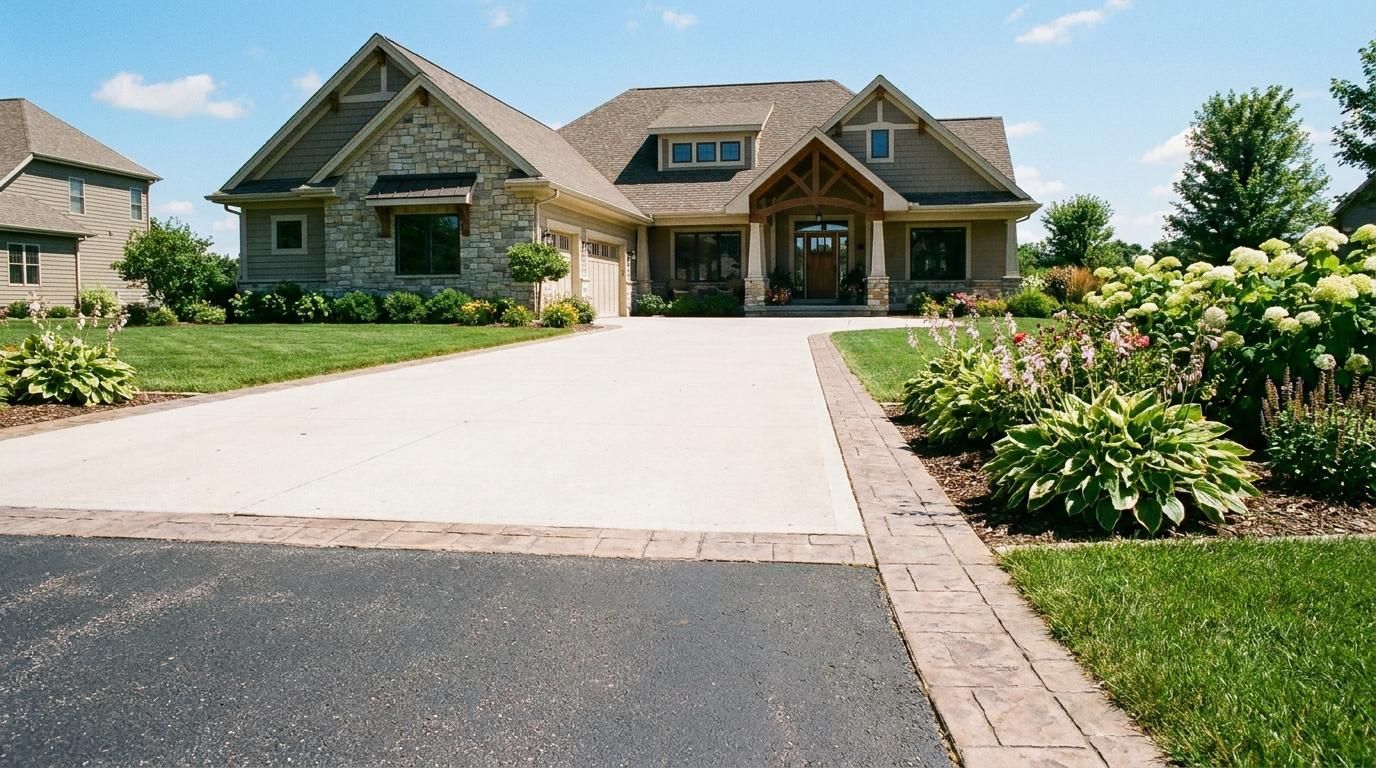
Curbing adds a decorative touch while providing essential structural support and visual organization for the largest hardscape on your property.
Edge Definition and Erosion Control
Without a border, the transition between driveway and lawn erodes over time. Grass invades cracks at the driveway edge. Soil along the sides washes away during heavy rain, exposing the driveway substrate and creating an uneven, crumbling shoulder. Curbing creates a hard boundary that stops soil migration, contains adjacent mulch beds, and gives mowing equipment a clean edge to follow.
Curb Appeal and Property Value
Driveway curbing is visible from the street, which means it directly affects how your property looks to visitors, neighbors, and potential buyers. A defined driveway edge makes the entire front yard appear more intentional and maintained. Real estate professionals consistently identify curb appeal as a factor in buyer perception and offer price.
How Much Does Driveway Curbing Cost?
Concrete driveway curbing from Wolfrath's Curb costs $3 to $8 per linear foot, depending on pattern selection, color, and project size. A typical two-car driveway with curbing on both sides and the turnaround runs 100 to 200 linear feet, putting most projects between $300 and $1,600.
Factors That Affect Price
- Pattern and color: Standard gray concrete is most affordable. Decorative stamps and custom colors carry a premium.
- Project size: Larger jobs benefit from economies of scale. Longer driveway runs lower the per-foot cost.
- Site conditions: Sloped driveways, tight access, or obstacles like irrigation lines or lighting may add to preparation time.
- Design complexity: Straight runs cost less than borders with tight curves or transitions between patterns.
Cost Compared to Alternatives
Professional contractor installation for brick paver borders ranges from $18 to $38 per linear foot because of the intensive excavation and gravel base preparation required. Commercial-grade steel edging runs $10 to $25 per foot installed, but it quickly corrodes at stake points near driveways where winter road salt runoff collects. Concrete curbing falls on the lower end of the upfront professional installation spectrum at $3 to $8 per foot and lasts 20 to 30 years, making it the most affordable permanent option over a decade.
Best Curbing Styles for Driveways
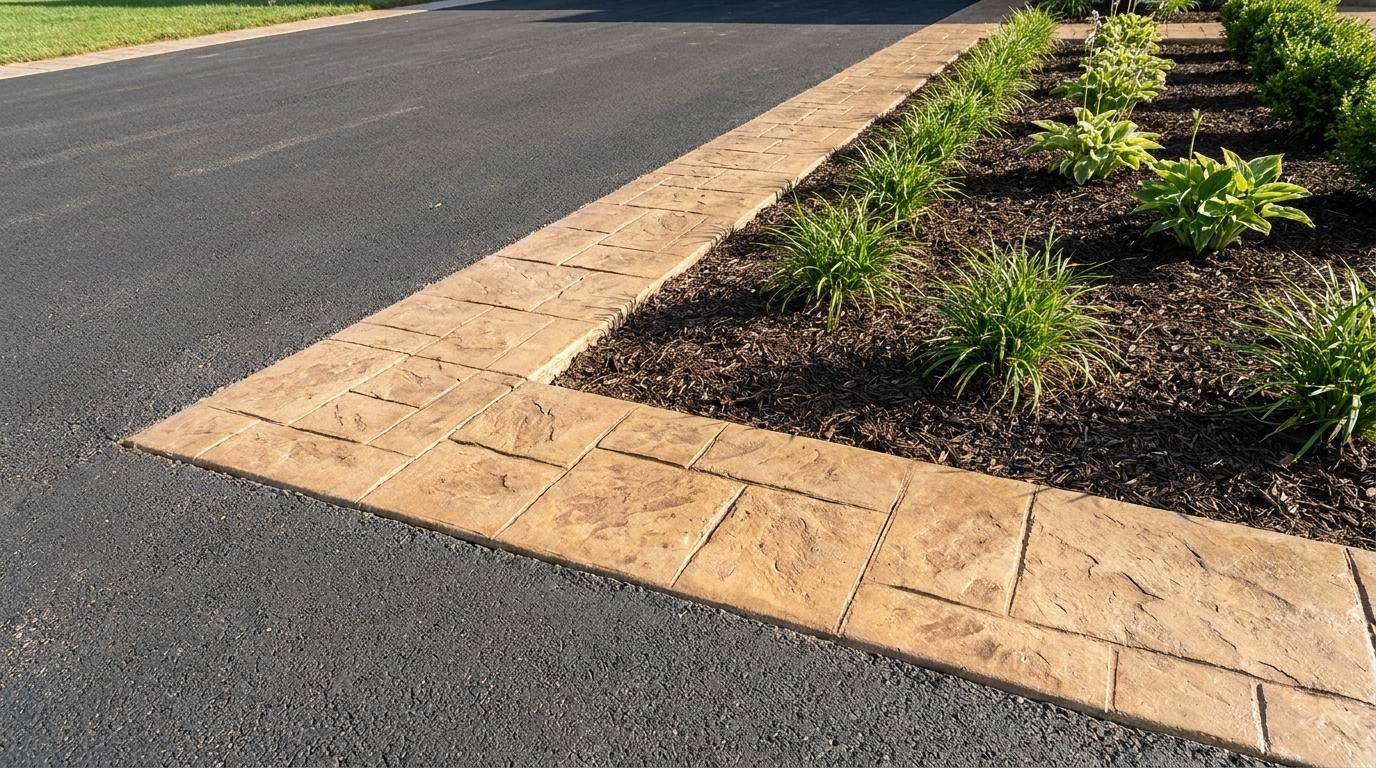
Not every stamp pattern suits driveway applications. The best choices create a structured, linear look that complements the geometry of the driveway surface. Wolfrath's Curb offers 13 patterns across two design tiers. The following are the most popular for driveway borders:
Soldier Course
Uniform rectangular bricks laid end-to-end in a single row. This is the most formal pattern and the top choice for driveway curbing because its linear geometry mirrors the straight edges of the driveway itself. Works well in gray, sandstone, or brick red.
Castle Rock
Smooth rectangular blocks in a running bond layout. Castle Rock offers structure with slightly more visual texture than Soldier Course. A strong choice for homeowners who want definition without a rigid, formal look.
London Cobble
Rounded cobblestone texture that works especially well on curved driveway sections. London Cobble adds old-world character and pairs well with the Colonial and Craftsman-style homes common in Brown County neighborhoods around Green Bay and De Pere.
What to Expect During Installation
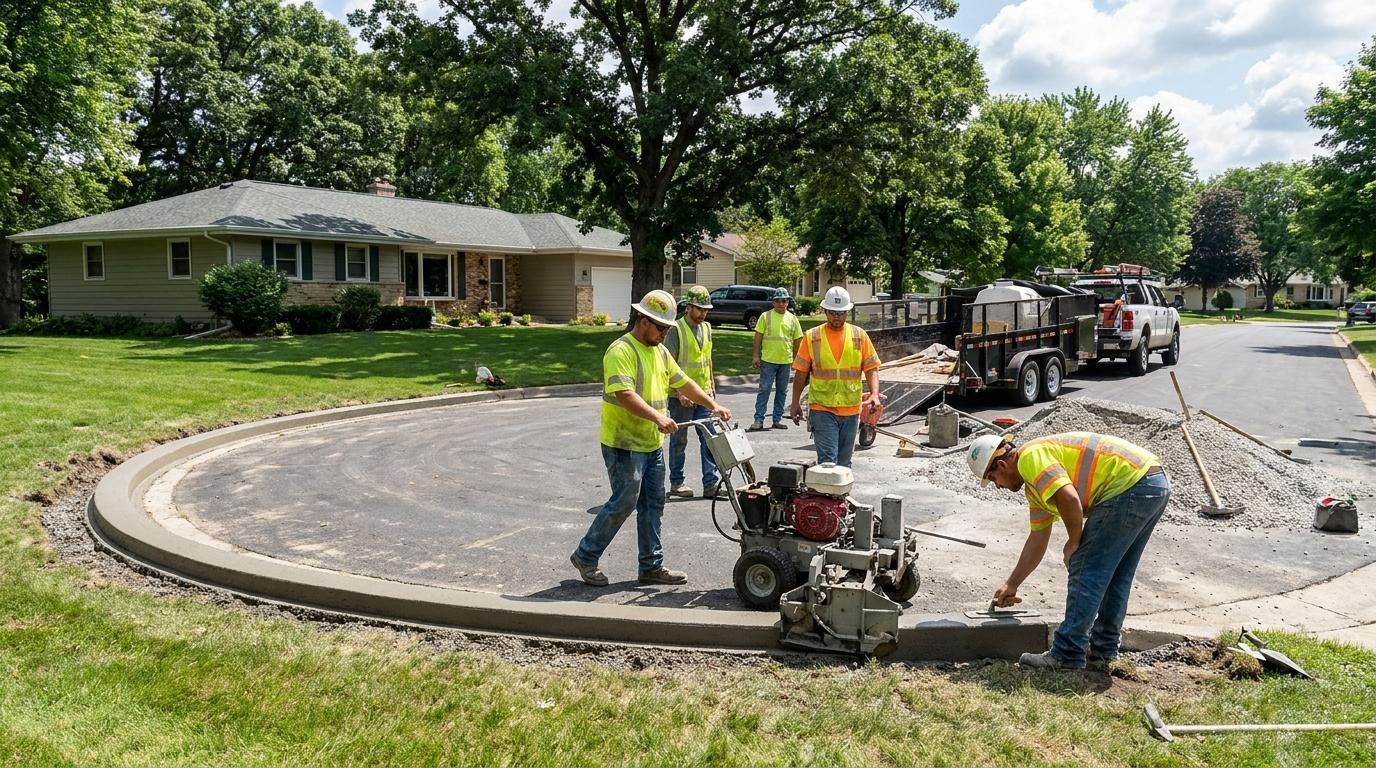
We believe in complete transparency, so here’s a breakdown of what happens on installation day and how you can help our team work efficiently.
Before Installation Day
Mark sprinkler heads, landscape lighting, and underground utilities along the driveway edge. Clear any loose debris, potted plants, or items within two feet of the planned curbing path. The crew will handle excavation and grading.
Installation Day
Most driveway curbing projects are completed in a single day. The crew prepares the ground along the driveway edge, mixes concrete on-site with fiber reinforcement and polymer additives, extrudes the curbing using a specialized machine, stamps the selected pattern, and applies color confirmation. Foot traffic is safe within 24 hours. You can landscape around the curbing—adding mulch, plants, or stone—the next day.
Sealing and Maintenance
A professional-grade sealer is applied after the concrete cures. Wolfrath's Curb returns for a follow-up reseal visit to ensure full protection. After that, reseal every 2 to 3 years to maintain color vibrancy and weather resistance. Avoid pressure washing, a mild soap and soft-bristle brush are all you need for cleaning.
Driveway Curbing Design Tips
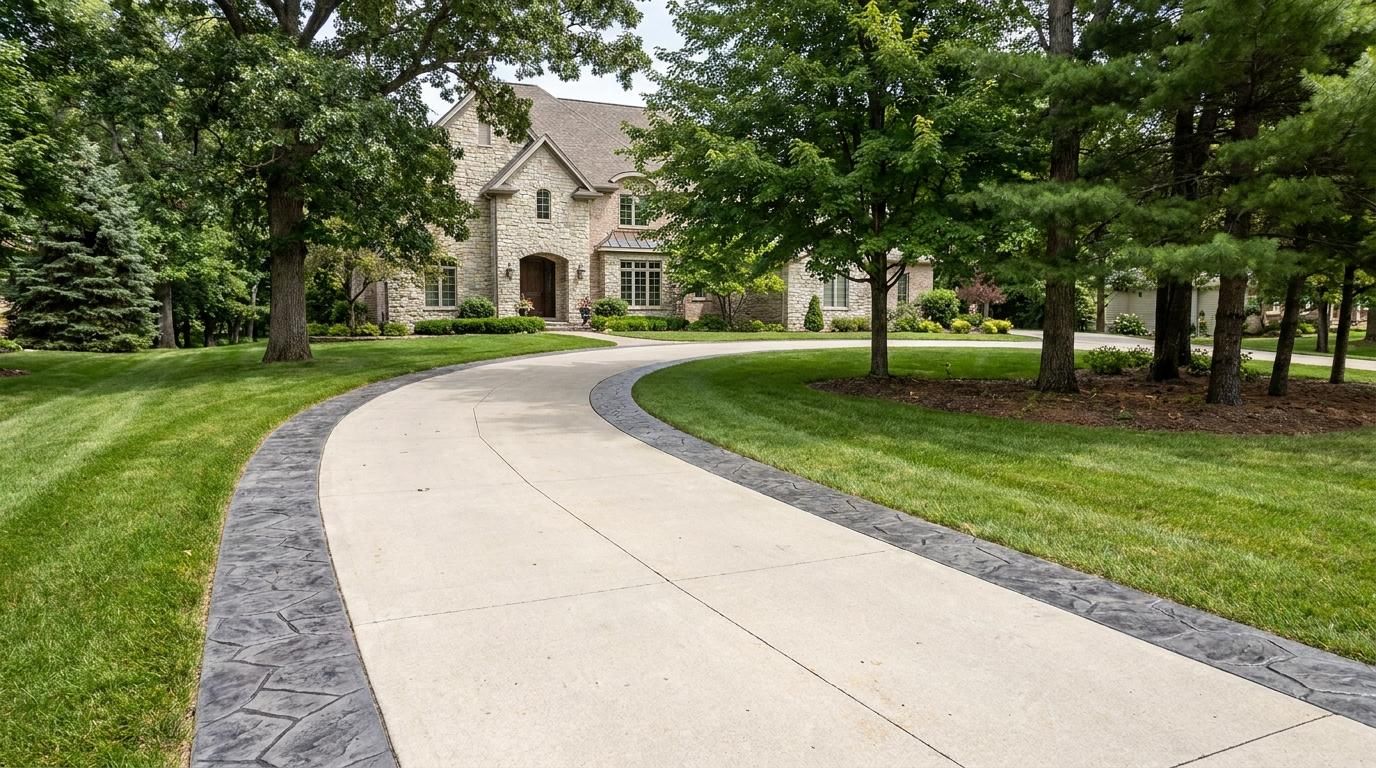
To get the most out of your driveway project, consider these design strategies for a cohesive, professional look that boosts your home's curb appeal.
- Match the curbing color to your home's trim or foundation stone for a cohesive look from the street.
- Use the same pattern on driveway borders and adjacent flower beds to unify the landscape.
- On sloped driveways, curbing doubles as a water management feature, directing runoff away from the lawn and into drainage channels.
- Consider extending driveway curbing around the garage apron or turnaround area for a fully finished appearance.
- Matching the curbing color to driveway borders on past NE Wisconsin projects shows how consistent color ties the landscape together from the street.
Frequently Asked Questions
Can Concrete Curbing Be Installed on an Existing Driveway?
Yes. Curbing is extruded along the edge of the existing driveway surface, it does not require removing or modifying the driveway itself. The crew prepares the ground beside the driveway and extrudes the curbing in place.
Will Driveway Curbing Crack in Wisconsin Winters?
Hairline cracks are normal in any concrete product that endures freeze-thaw cycles. Wolfrath's concrete is custom-blended with fiber reinforcement and polymer additives for enhanced crack resistance. Hairline cracks do not affect the structural integrity or performance of the curbing.
How Long Does Driveway Curbing Last?
Concrete driveway curbing lasts 20 to 30 years with proper maintenance, which means periodic resealing every 2 to 3 years. This far exceeds the lifespan of plastic edging (1-3 years) and steel edging (5-10 years near salted driveways), and matches or exceeds brick pavers without the releveling maintenance.
Define Your Driveway With a Border Built to Last
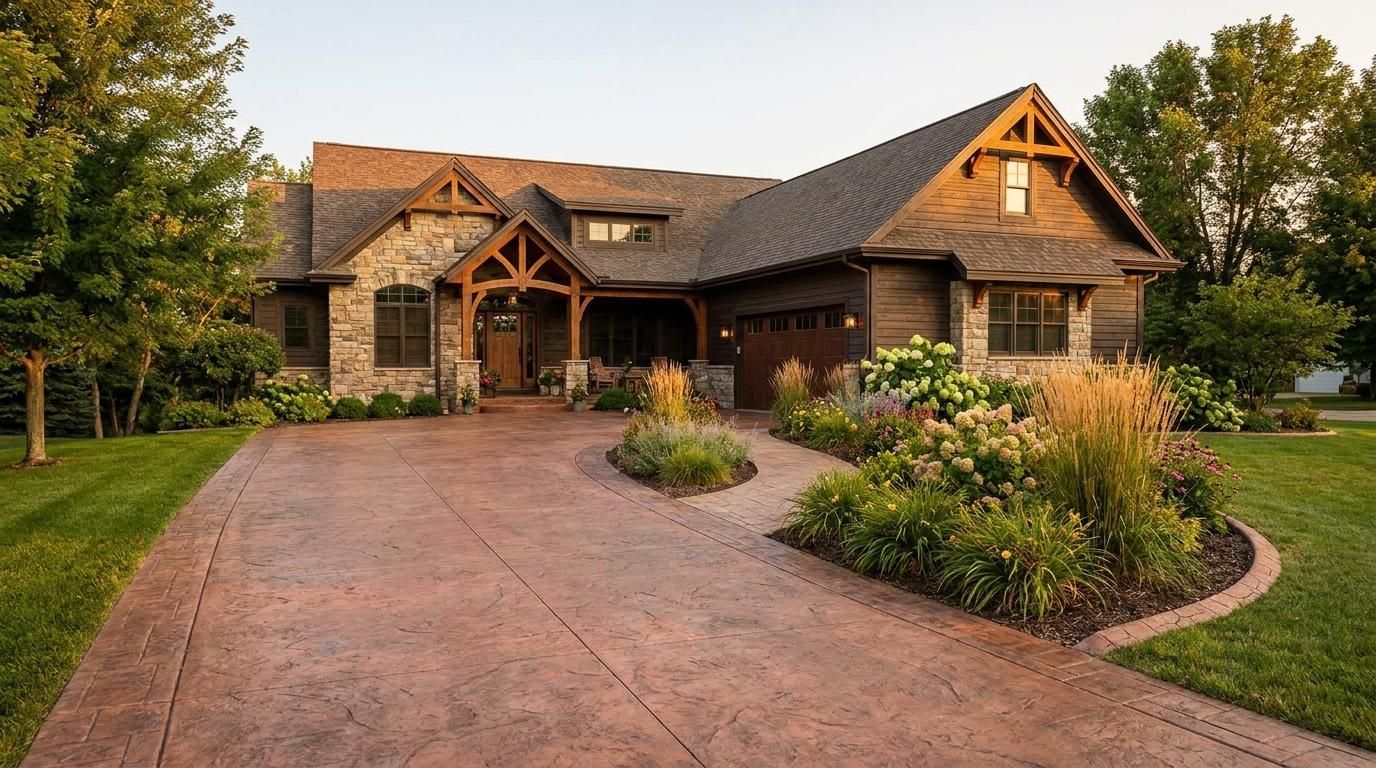
A defined edge turns your driveway’s plain slab into a finished feature. Concrete curbing is made for Wisconsin's freeze-thaw winters, one that holds its shape and color for decades instead of the season or two you get from plastic. Match the pattern to your driveway's geometry and the color to your home, and the whole front of your property reads as intentional.
Wolfrath's Curb has laid over a million linear feet of curbing across NE Wisconsin since 2005. Request a free driveway curbing estimate or call (920) 212-2872 to talk through patterns, colors, and scheduling.