
Mulch Bed Edging Ideas That Stay Put: 4 Curbing Solutions
If your mulch keeps washing onto the lawn, the fix isn't more mulch—it's better edging. Four options solve mulch migration in Wisconsin, and they differ mainly in how long they hold up against freeze-thaw. Concrete curbing is seamless and rigid enough to stop mulch cold. Natural stone looks rugged but creates gaps as it shifts. Steel holds a clean line but corrodes from road salt. Rubber is cheapest but loosens within a few seasons. The key is height and rigidity. Edging needs to sit 2 to 3 inches above grade with no gaps where water can push through.
The reason cheap edging fails here is the climate. Wisconsin's freeze-thaw cycles heave the ground under plastic and thin metal, lifting the border until mulch spills through the gaps. Wolfrath's Curb has stopped mulch migration on hundreds of NE Wisconsin properties with seamless concrete borders. Keep reading to see why mulch won't stay put, and how all four edging types compare on cost, durability, and looks.
Why Mulch Won't Stay in the Bed
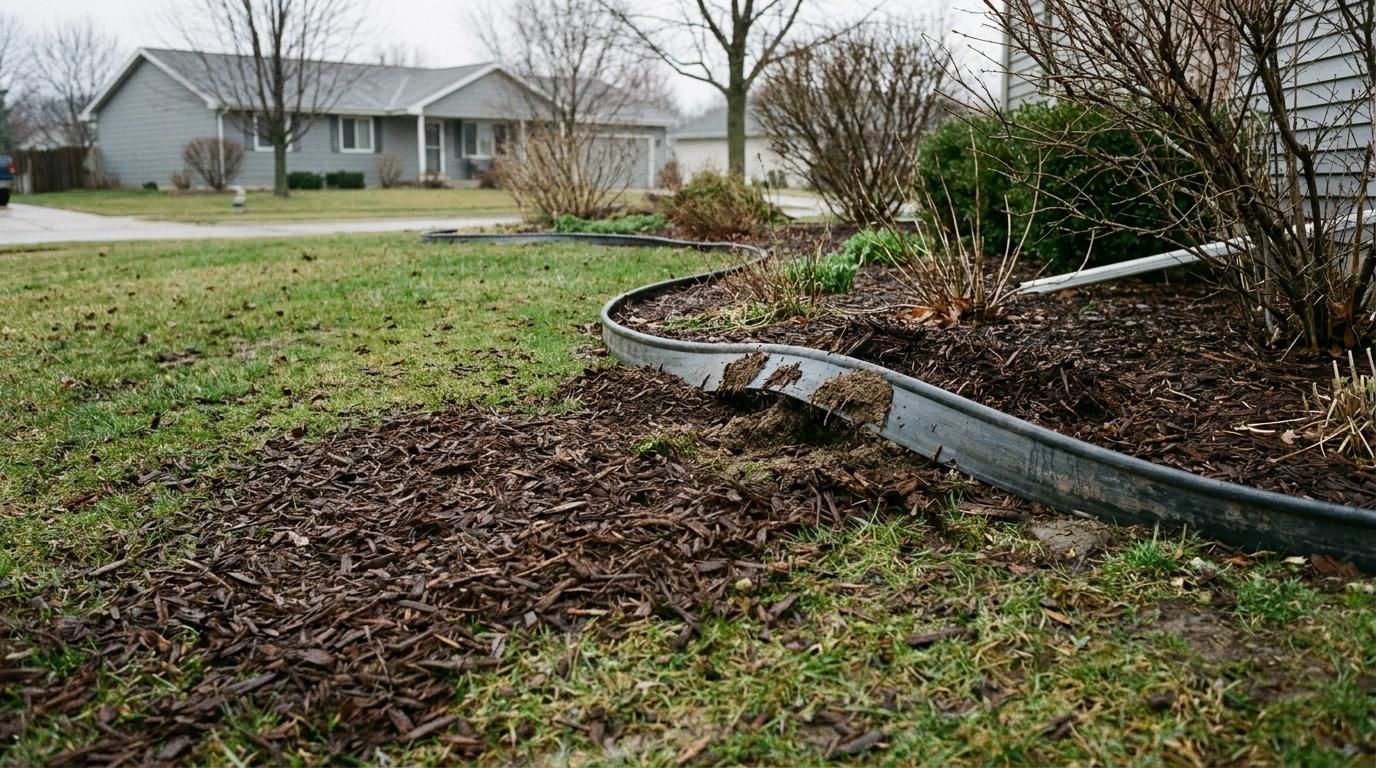
While it may seem like mulch simply disappears on its own, there are distinct factors at play that push your landscaping materials out of place and across your property lines.
Common Causes of Mulch Migration
Mulch moves for three main reasons: water flow, gravity on slopes, and edging displacement. Spring snowmelt and heavy summer storms send sheets of water across bed surfaces, carrying lightweight mulch with it. Sloped beds lose mulch downhill even without rain. And when freeze-thaw cycles heave the ground beneath plastic or thin metal edging, the border lifts, tilts, or pops free—opening a path where mulch can spill.
What Effective Mulch Bed Edging Needs
- Height above grade of at least 2 to 3 inches to contain standard mulch depth
- Rigid structure that resists bowing, heaving, and displacement
- No gaps, joints, or seams where water can push mulch through
- Resistance to UV degradation, frost heave, and moisture absorption
Concrete Landscape Curbing
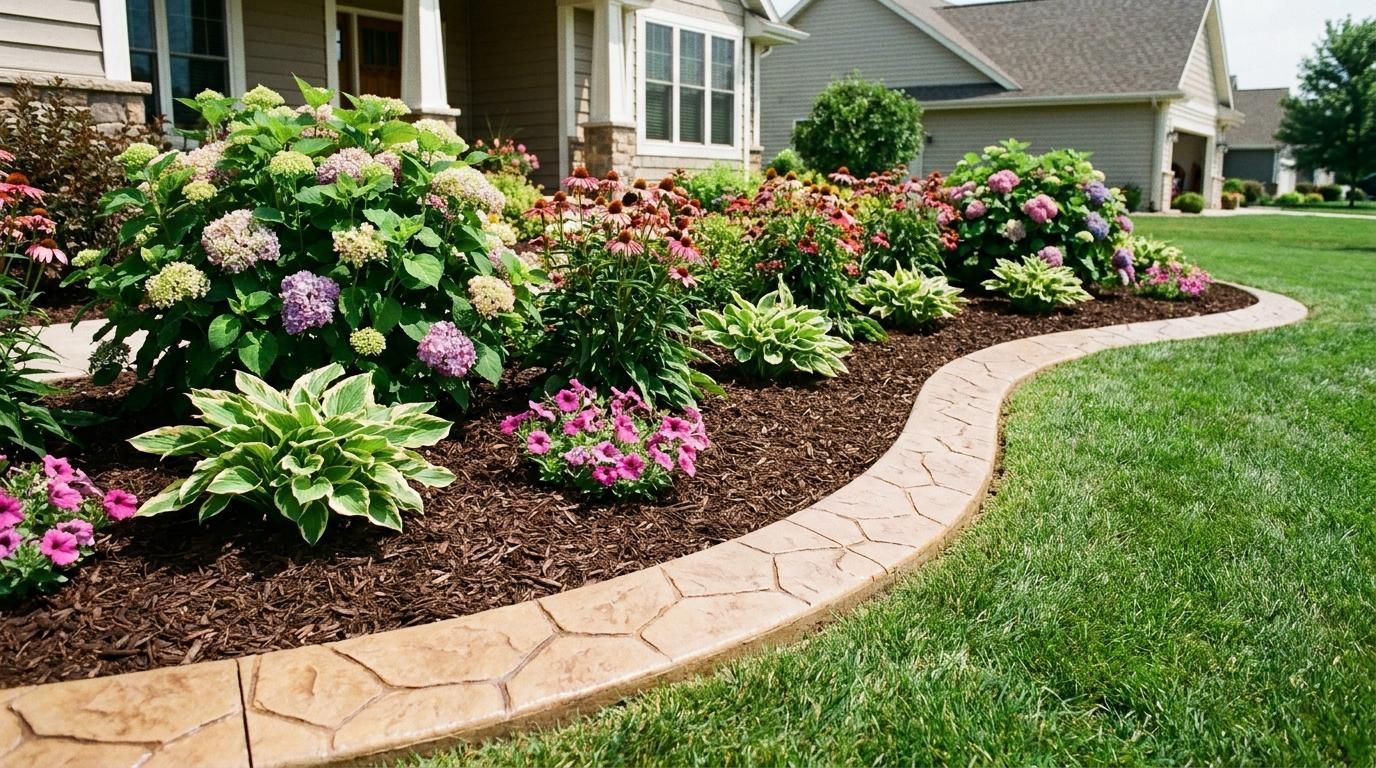
Concrete landscape curbing is widely considered the gold standard for long-term mulch retention due to its durability, seamless design, and aesthetic versatility.
How It Contains Mulch
Extruded concrete curbing is poured as one continuous piece with no joints or seams. The profile sits 2 to 4 inches above grade, creating a solid wall that mulch cannot pass over or through. Because the curbing is anchored directly to compacted soil and weighs significantly more than plastic or rubber alternatives, freeze-thaw cycles do not displace it. Wolfrath's Curb follows a five-step installation process that includes ground preparation, custom on-site concrete mixing with fiber reinforcement, machine extrusion, stamping, and professional sealing.
Cost and Lifespan
Concrete curbing costs $3 to $8 per linear foot depending on pattern, color, and project size. It lasts 20 to 30 years with resealing every 2 to 3 years. Over a decade, the total cost is lower than replacing rubber edging three to five times. Most installations are completed in a single day.
Natural Stone Borders
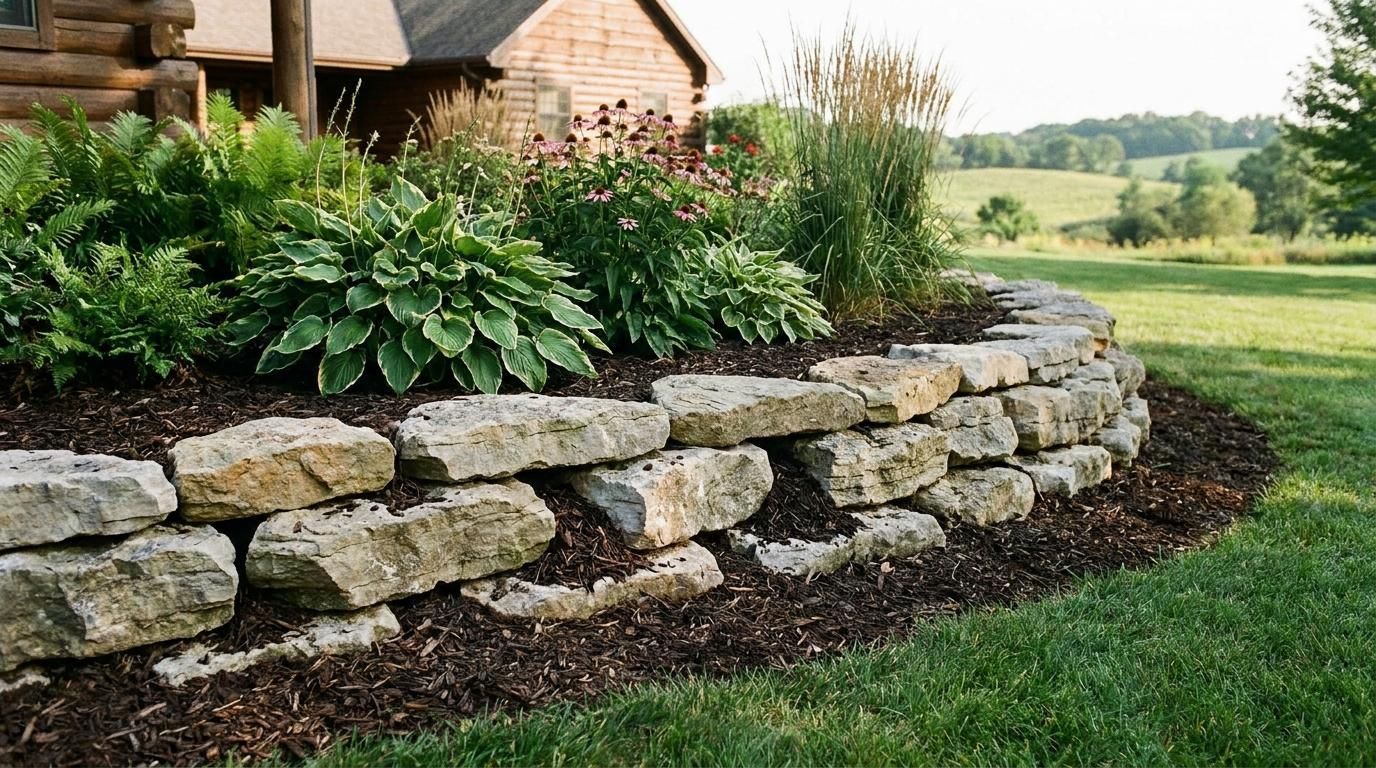
Fieldstone and limestone borders add a rugged, organic look to mulch beds. Stones are placed by hand along the bed perimeter, and the weight of the material helps resist displacement. However, gaps between individual stones allow water and mulch to pass through, especially after frost heave shifts stone placement. Annual resetting is typical in Wisconsin. Because of the heavy excavation and manual labor required, full contractor installation costs range from $25 to $60 per linear foot for premium natural stone.
For homeowners who want the same aesthetic without the gaps and at a lower price, Wolfrath's offers seamless concrete curbing styles that mimic the look of stone.
Steel and Aluminum Edging
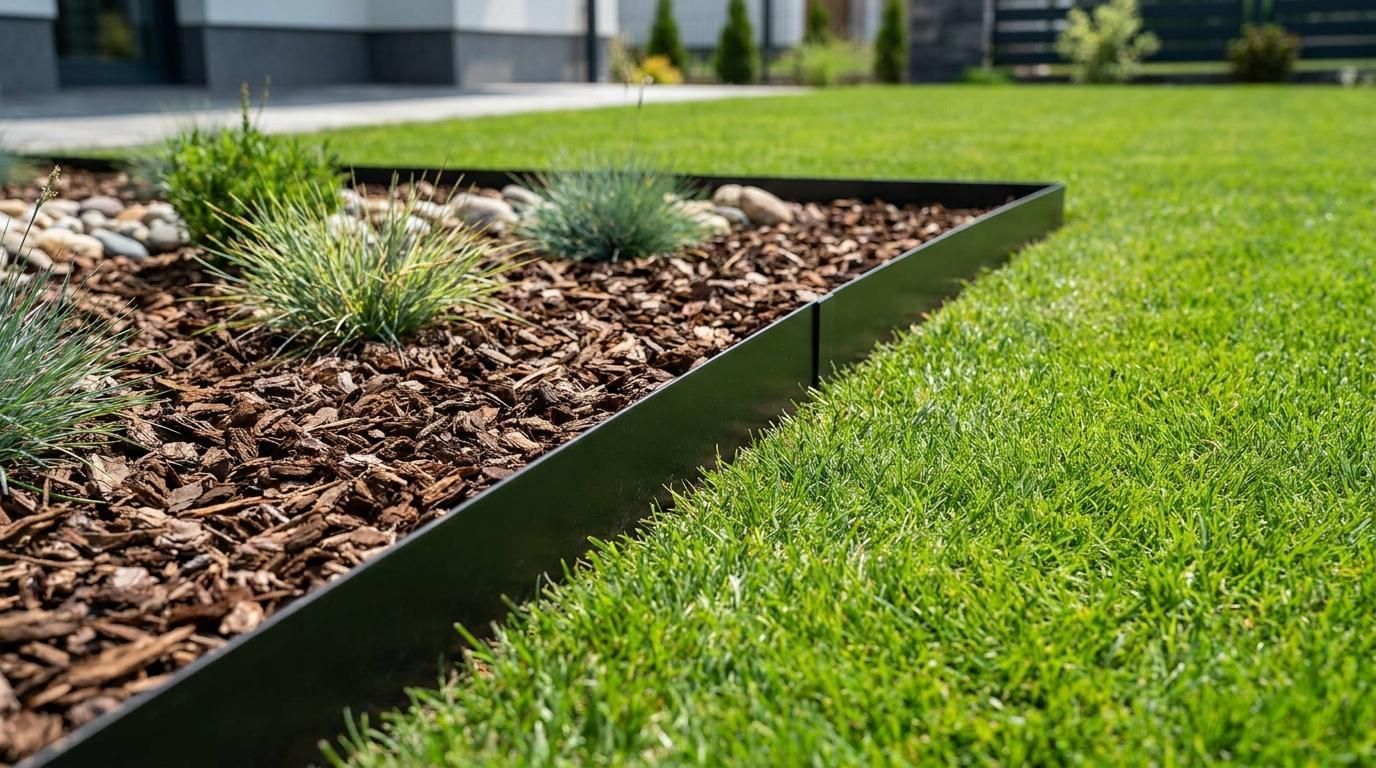
Steel edging creates a thin, clean line between the lawn and mulch bed. Quality steel or aluminum strips sit 3 to 4 inches above grade and hold straight runs well. The material is popular in modern landscapes where the border should be nearly invisible. Installed cost runs $10 to $25 per linear foot.
The main drawback in Wisconsin is corrosion. Salt runoff from driveways and sidewalks accelerates rust at joints and stake points. This is a frequent issue across Outagamie County and the wider NE Wisconsin region, where heavy winter salt use takes a toll on metal edging. Steel edging typically lasts 5 to 10 years before sections need replacement, and thin-gauge aluminum can bend under snow load or mower contact.
Rubber Landscape Edging
Rubber edging, often made from recycled tires, is flexible, UV-resistant, and affordable at $1 to $4 per linear foot installed. It conforms to curves easily and absorbs mower impact without chipping.
The flexibility that makes it easy to install also works against it in freeze-thaw conditions. Rubber stretches and contracts, and stake anchors loosen over time. Most rubber edging needs re-staking or replacement within 3 to 5 years in Wisconsin's climate. It handles mulch retention adequately when new, but performance drops as the material softens and shifts.
Frequently Asked Questions
How Do You Keep Mulch From Washing Away?
Install edging that sits 2 to 3 inches above grade with no gaps or seams. Concrete curbing is the most effective long-term solution because it forms a continuous, rigid barrier that water cannot breach. Adding a thin layer of heavier mulch (hardwood or double-shredded) on top of lighter material also reduces surface movement.
What Is the Best Edging for Mulch Beds?
Concrete landscape curbing is the best edging for mulch beds in Wisconsin because it’s seamless, rigid, and tall enough to contain standard mulch depth. It doesn’t shift, rot, rust, or require annual replacement. Stone and steel are secondary options that perform well but need more maintenance.
How High Should Edging Be for Mulch?
Edging should sit at least 2 to 3 inches above the surrounding grade to contain a standard 2- to 3-inch mulch layer. Concrete curbing profiles are typically 3 to 4 inches tall, which provides enough height to contain mulch even on sloped beds where runoff adds pressure.
Keep Your Mulch Where It Belongs
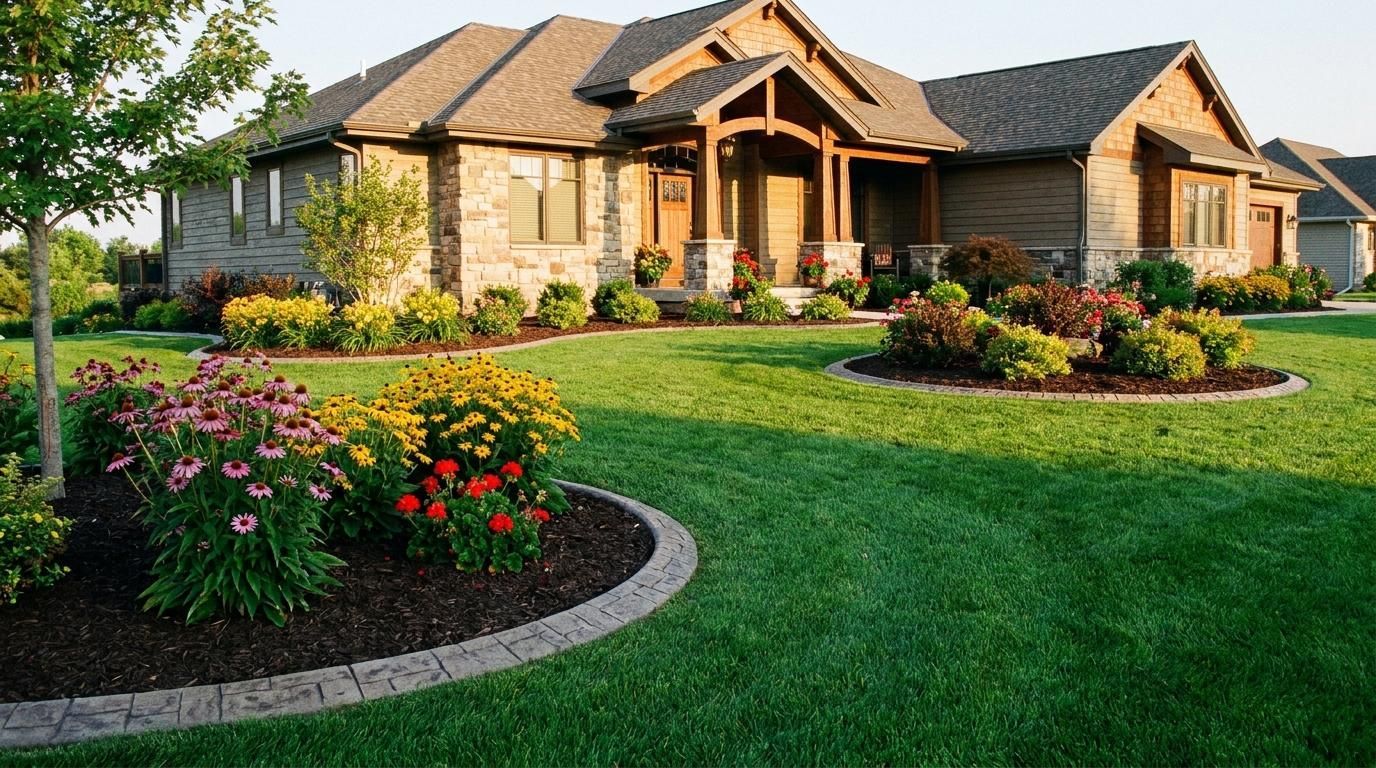
The right edging turns a yearly chore into a one-time fix. All four options work to some degree, but only concrete curbing stops mulch migration permanently, with nothing to maintain beyond a reseal every couple of years. Stone needs resetting each spring, steel rusts at the joints, and rubber works loose in a few winters. Concrete is the one that's still doing its job in 20 years.
If you're tired of re-mulching the same beds every spring, that's the problem worth solving once. Request a free estimate from Wolfrath's Curb or call (920) 212-2872 to talk through your mulch bed edging project.