What is Poured Concrete Edging? The Complete Wisconsin Homeowner’s Guide
Poured concrete edging is a seamless landscape border extruded on-site from custom-blended concrete. It follows curves, straight runs, and tree rings without joints or gaps, typically costs $3 to $8 per linear foot, and lasts 20 to 30 years. Wolfrath’s Curb has installed over one million linear feet across northeast Wisconsin since 2005.
The step most homeowners overlook is the ground preparation and concrete formulation underneath, not the pour itself. Those two variables determine whether a border survives freeze-thaw cycles or cracks within a few seasons.
How Poured Concrete Edging Is Installed
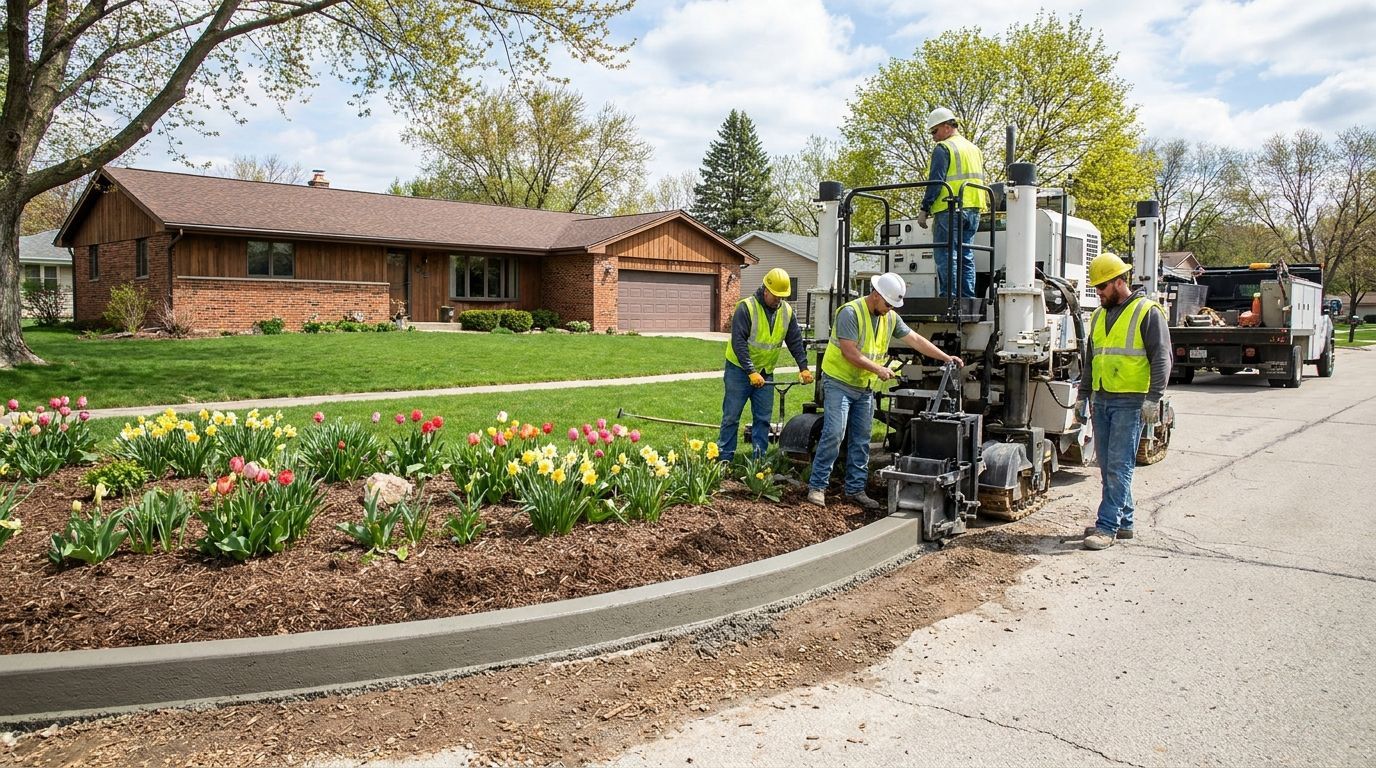
A curbing crew arrives with a specialized extrusion machine. Concrete is mixed on-site with fiber reinforcement, polymer additives, and integral color pigments blended directly into the material. This custom mix is designed for local soil and weather conditions, improving flexibility and crack resistance through seasonal temperature swings.
The machine feeds wet concrete through a shaped die, producing a continuous ribbon of curbing. The operator guides it along the planned layout, following curves, corners, and tree rings in a single unbroken line with no joints or seams. Wolfrath’s Curb’s five-step installation process covers everything from ground preparation through final sealing.
After extrusion, the crew stamps a decorative pattern while the concrete is still workable. Most residential projects are finished in a single day.
Why Poured Concrete Outperforms in Wisconsin’s Climate
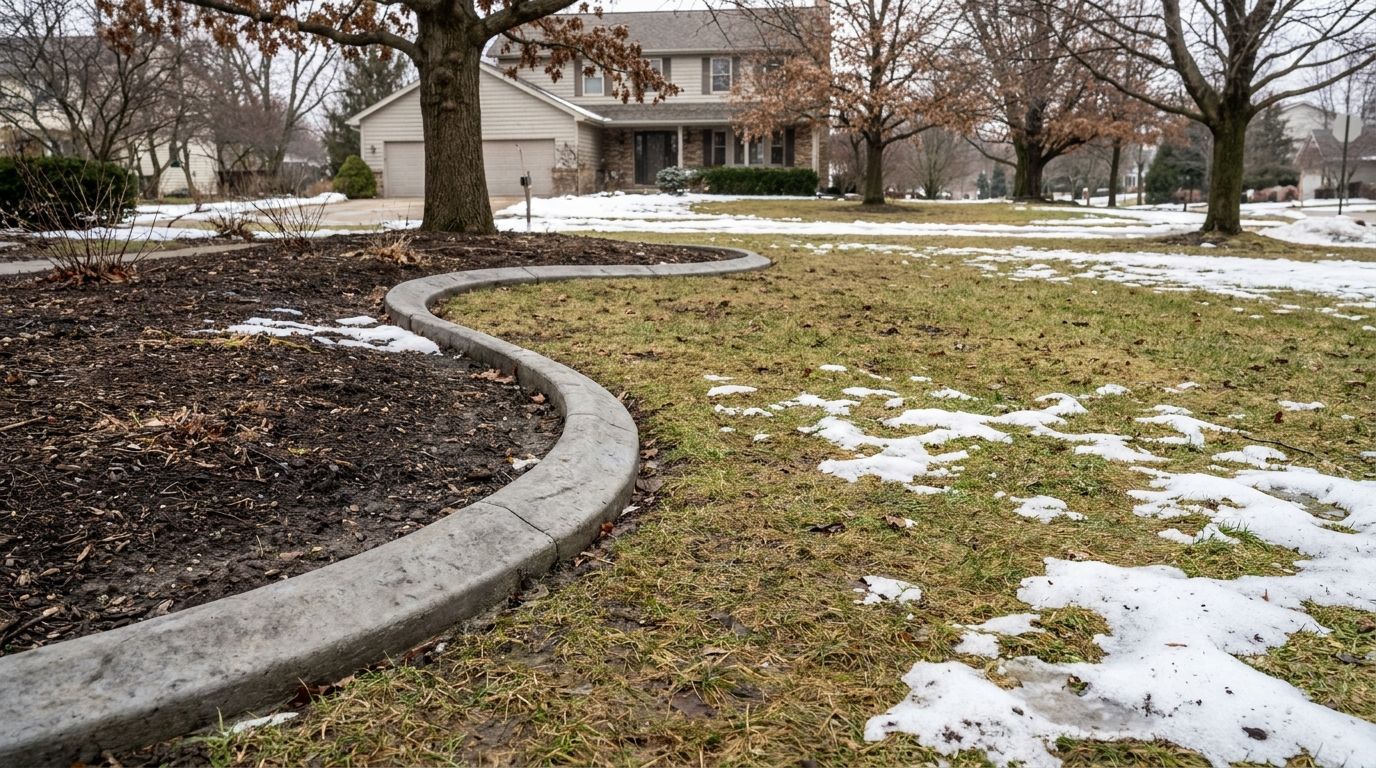
Wisconsin’s freeze-thaw cycle is the main reason cheap edging fails here. Water seeps into cracks and gaps, freezes and expands by roughly 9%, then thaws and contracts. Plastic edging warps and becomes brittle within one to three seasons under these conditions. Steel rusts. Pavers shift and open gaps for weeds.
Poured concrete curbing handles this cycle because it’s continuous, no gaps for water to penetrate and no sections that heave independently. The fiber-reinforced mix and professional-grade sealer add another layer of protection against moisture and UV exposure.
A properly installed border lasts 20 to 30 years in northeast Wisconsin, compared to one to five years for most plastic alternatives. Our cost breakdown of concrete landscape curbing shows how that gap plays out over a full decade of ownership.
Design Options That Match Your Home
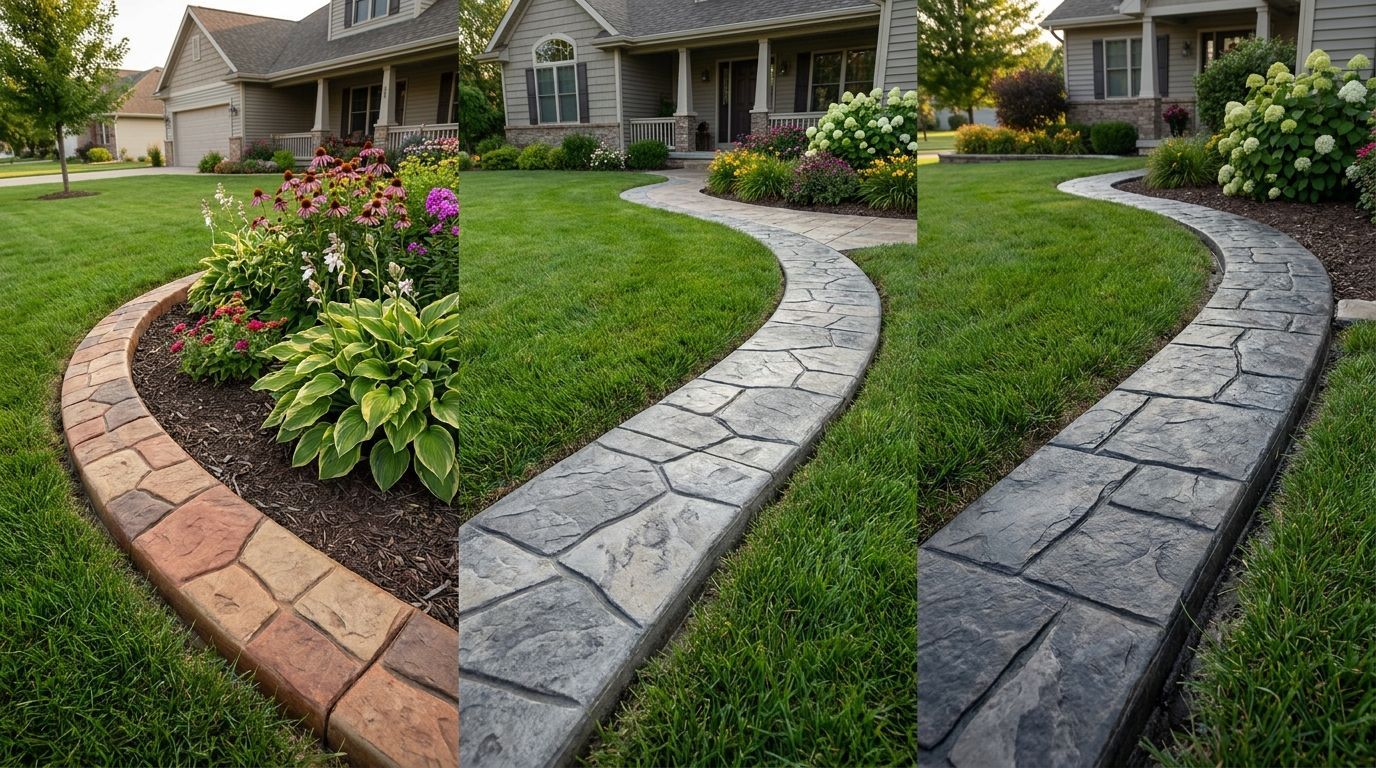
Wolfrath’s Curb offers 80+ integral color options and 13+ stamp patterns, enough variety to match any home exterior, from a red brick ranch in Hortonville to a neutral-toned colonial in Greenville.
Popular stamp patterns include:
- Castle Rock : smooth rectangular blocks in a running bond layout
- Flagstone : irregular natural stone appearance
- Natural Stone : weathered quarry rock texture with raw fissures
- Wood Grain : replicates milled timber for a rustic feel
Color is mixed throughout the full depth of the concrete. Chips or surface wear don’t reveal a different shade underneath, which is a common problem with surface-painted alternatives. The result is a border that still looks consistent after ten or fifteen seasons of Wisconsin weather.
What to Expect After Installation
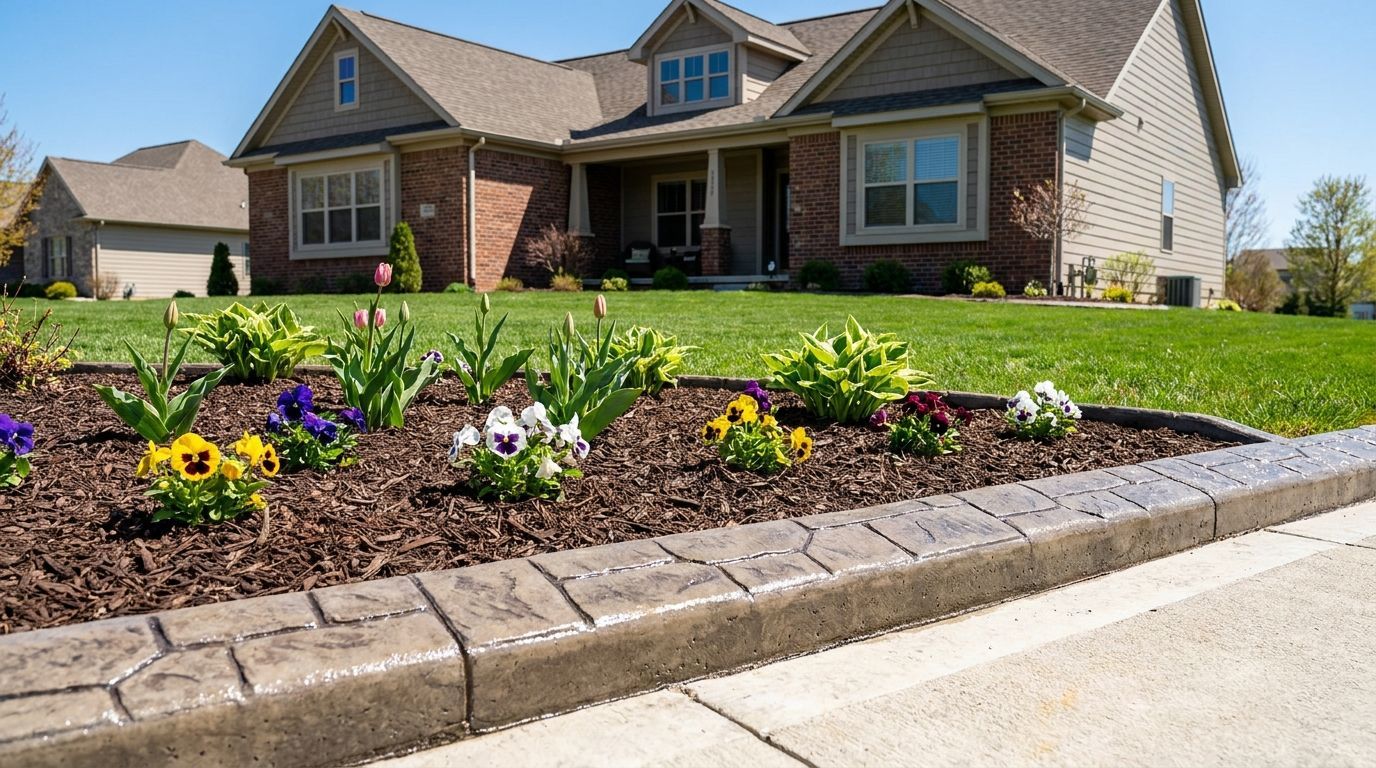
Knowing how to properly care for your new curbing is essential for ensuring its longevity and appearance.
Curing and Initial Care
The concrete reaches its initial set within 24 hours. You can add mulch, stone, or plantings the next morning. Full cure takes several weeks, so avoid placing heavy equipment near the curbing during that window.
Long-Term Maintenance and Sealing
Plan for a professional reseal every two to three years. The sealer protects against moisture, UV exposure, and salt runoff from nearby sidewalks and driveways. For routine cleaning, use mild soap and a soft-bristle brush. Pressure washing strips the sealer and should be avoided.
Why Hairline Cracks Are Normal
Hairline cracks may appear as concrete naturally expands and contracts with temperature changes. They rarely affect performance or appearance. They’re a characteristic of the material, not a sign of installation failure.
Frequently Asked Questions
How long does poured concrete edging last in Wisconsin?
A properly sealed concrete border typically lasts 20 to 30 years in Wisconsin’s climate, far longer than plastic or steel alternatives. Resealing every two to three years keeps the surface protected against moisture penetration and UV exposure. Wolfrath’s Curb includes professional sealing at installation and offers scheduled resealing service afterward.
Can poured concrete edging follow curved garden beds?
Yes. The extrusion machine produces a continuous ribbon that follows any shape, including tight curves around tree bases, sweeping arcs along flower beds, and straight runs beside walkways. There are no pre-formed sections or limiting angles. The result is a border that traces your landscape’s natural contours exactly.
Does concrete edging stop mulch from migrating into the lawn?
Concrete curbing creates a physical barrier between garden beds and grass. The raised profile keeps mulch contained even during heavy spring rains and snowmelt. The mower-friendly slope lets you trim right along the edge without lifting the deck, so bed lines stay crisp without hand-edging.
Start With the Right Edge
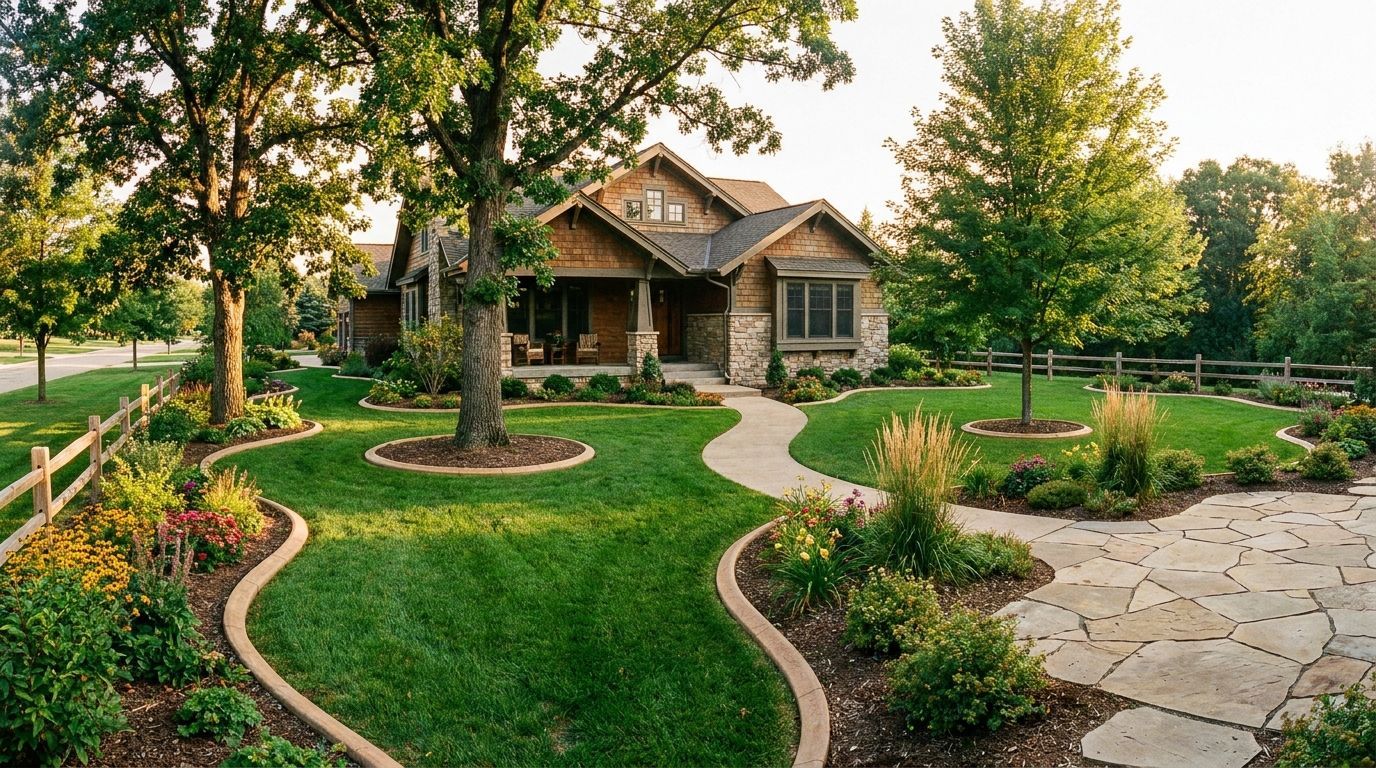
Poured concrete edging is the only "one-and-done" solution designed to survive Wisconsin’s brutal freeze-thaw cycles while keeping your mulch contained and your bed lines crisp for decades.
With over one million feet installed since 2005, Wolfrath’s Curb provides the local expertise your landscape deserves. Contact Wolfrath’s Curb at (920) 212-2872 for a free estimate and make this the last year you ever have to worry about your edging.