5 Concrete Curbing Ideas for Wisconsin Yards
Concrete curbing ideas for Wisconsin homeowners range from clean Castle Rock borders around flower beds to rustic Wood Grain tree rings and bold Soldier Course driveway edges. Each pattern is stamped into custom-blended concrete with 80+ color options. Wolfrath’s Curb installs all five styles across 11 northeast Wisconsin counties.
A bare mulch line between lawn and garden looks unfinished no matter how well the plantings grow. After a one-day installation, that same edge holds a stamped pattern that won’t shift or fade through Wisconsin winters.
1. Stamped Castle Rock Around Flower Beds
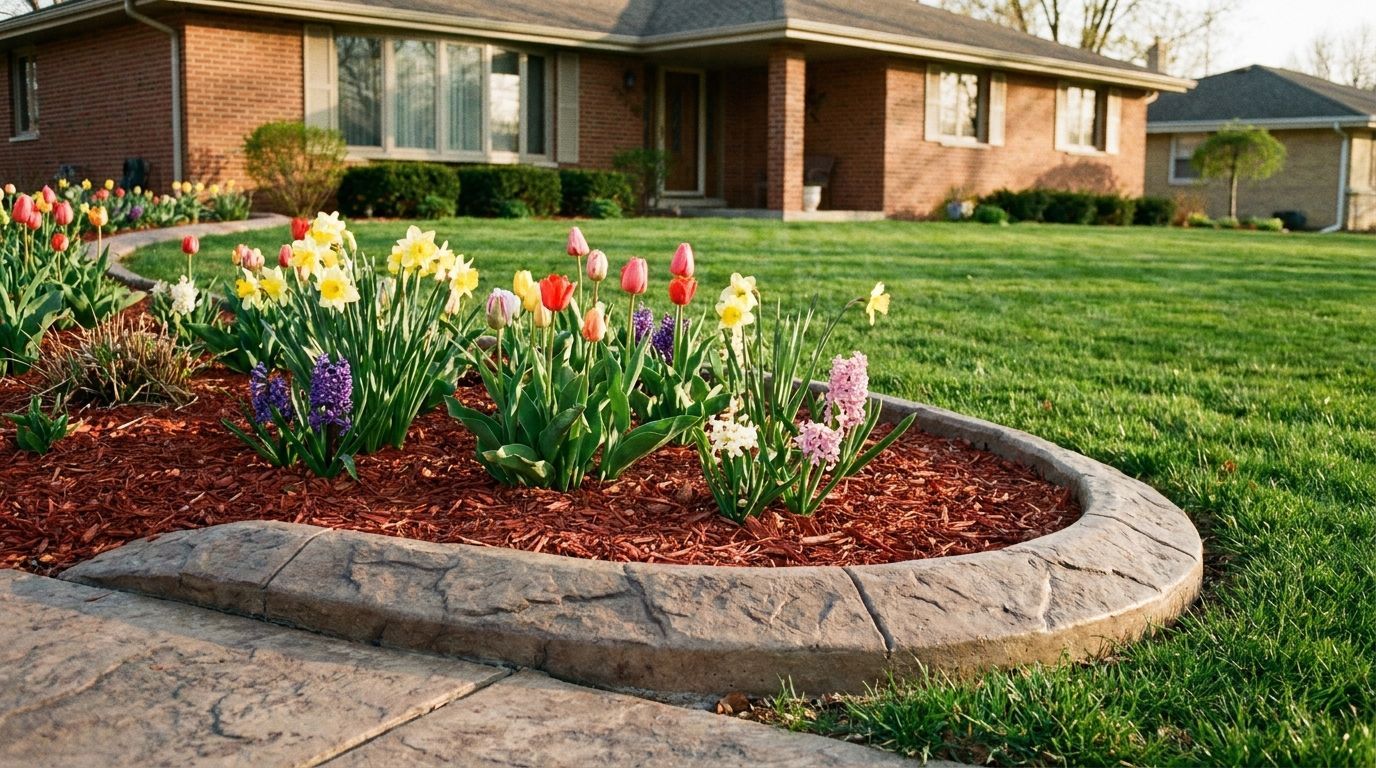
Castle Rock creates a smooth, rectangular block pattern in a running bond layout, making it one of the most requested designs at Wolfrath’s Curb. It pairs naturally with formal gardens and symmetrical flower beds where clean lines matter.
In northeast Wisconsin, where spring thaw heaves plastic edging out of position every season, Castle Rock concrete stays level and aligned through the cycle. A warm sandstone or terracotta color ties the border to brick-front homes common in Brown County and the Fox Valley. The raised profile keeps mulch contained during heavy rain, so bed lines stay defined from April through November.
2. Flagstone Borders Along Garden Paths
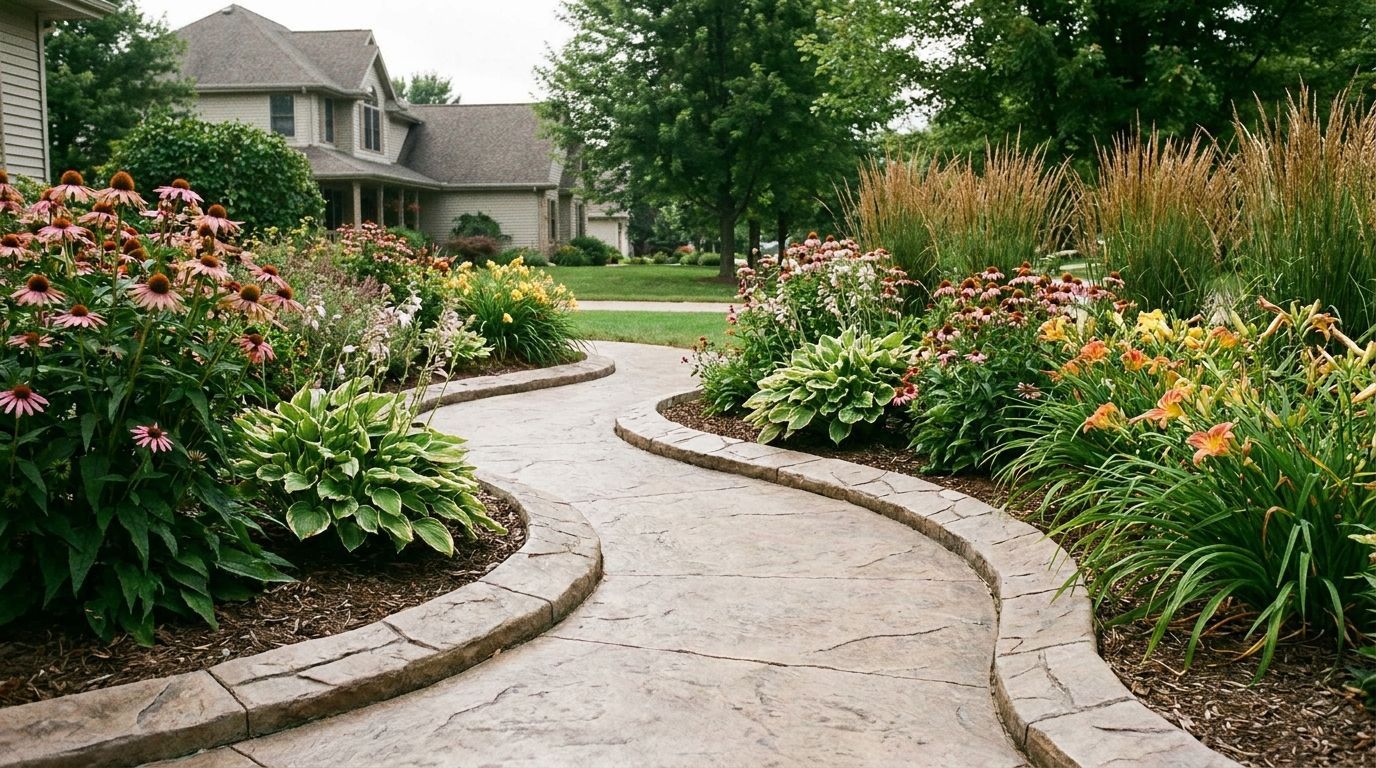
Flagstone’s irregular, natural stone texture follows curved garden paths without looking forced. The random sizing and organic edges create a border that blends with surrounding plantings and feels intentional rather than manufactured.
The stamp replicates the variation of real flagstone without the cost or installation time of setting individual stones by hand. Concrete flagstone borders don’t shift or settle like loose-laid rock, and the continuous pour handles Wisconsin’s freeze-thaw without opening gaps between sections. Browse Wolfrath’s project gallery to see flagstone installed in residential projects across the state.
3. Natural Stone Tree Rings
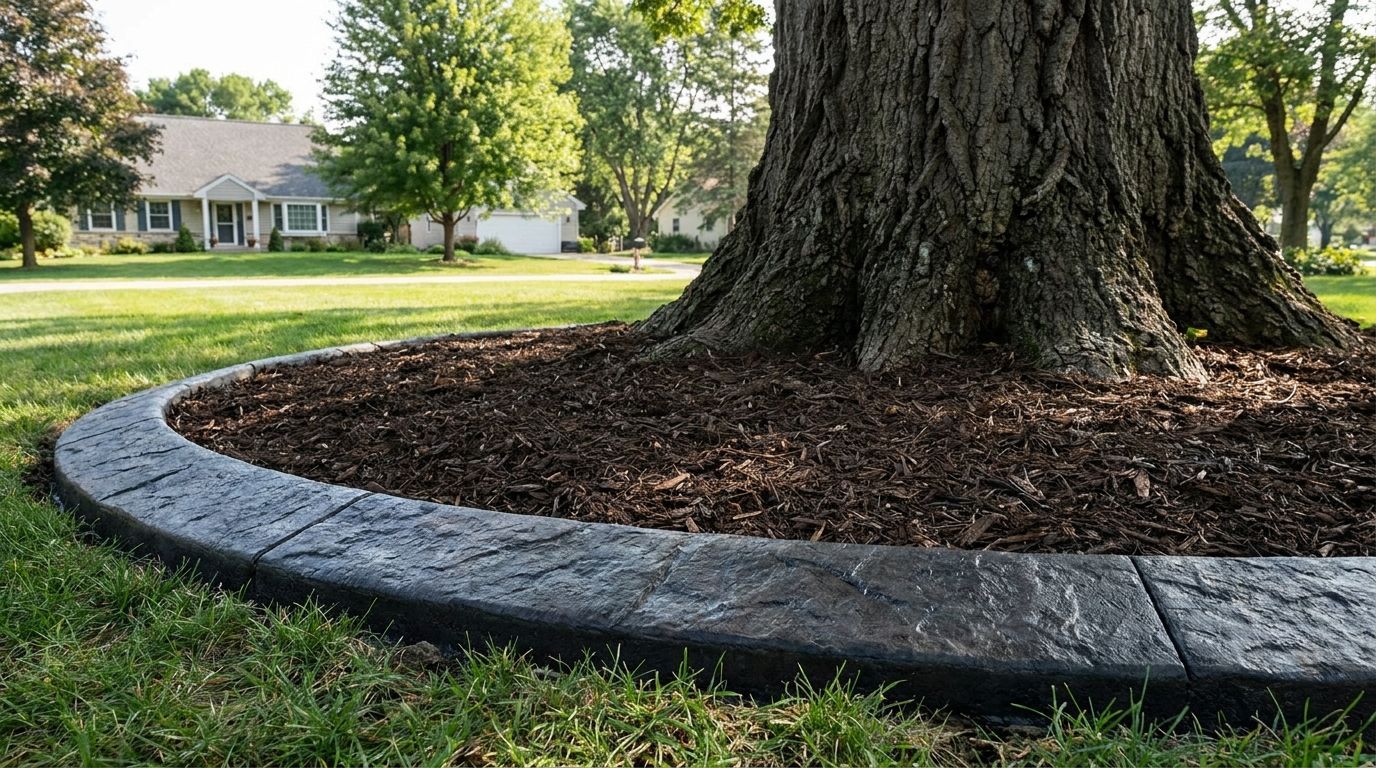
Natural Stone stamps reproduce the look of weathered quarry rock with raw fissures, split faces, and irregular surfaces. It’s the strongest design choice for tree rings, where the rugged texture blends with bark and root flare rather than competing with them.
The curbing wraps around the tree base in a seamless circle with no joints for roots to push through. This protects the tree’s critical root zone while keeping grass from creeping in and competing for water and nutrients. In northeast Wisconsin, where mature oaks and maples anchor most residential yards, that detail makes a visible difference season after season.
4. Wood Grain Edging for Rustic Landscapes
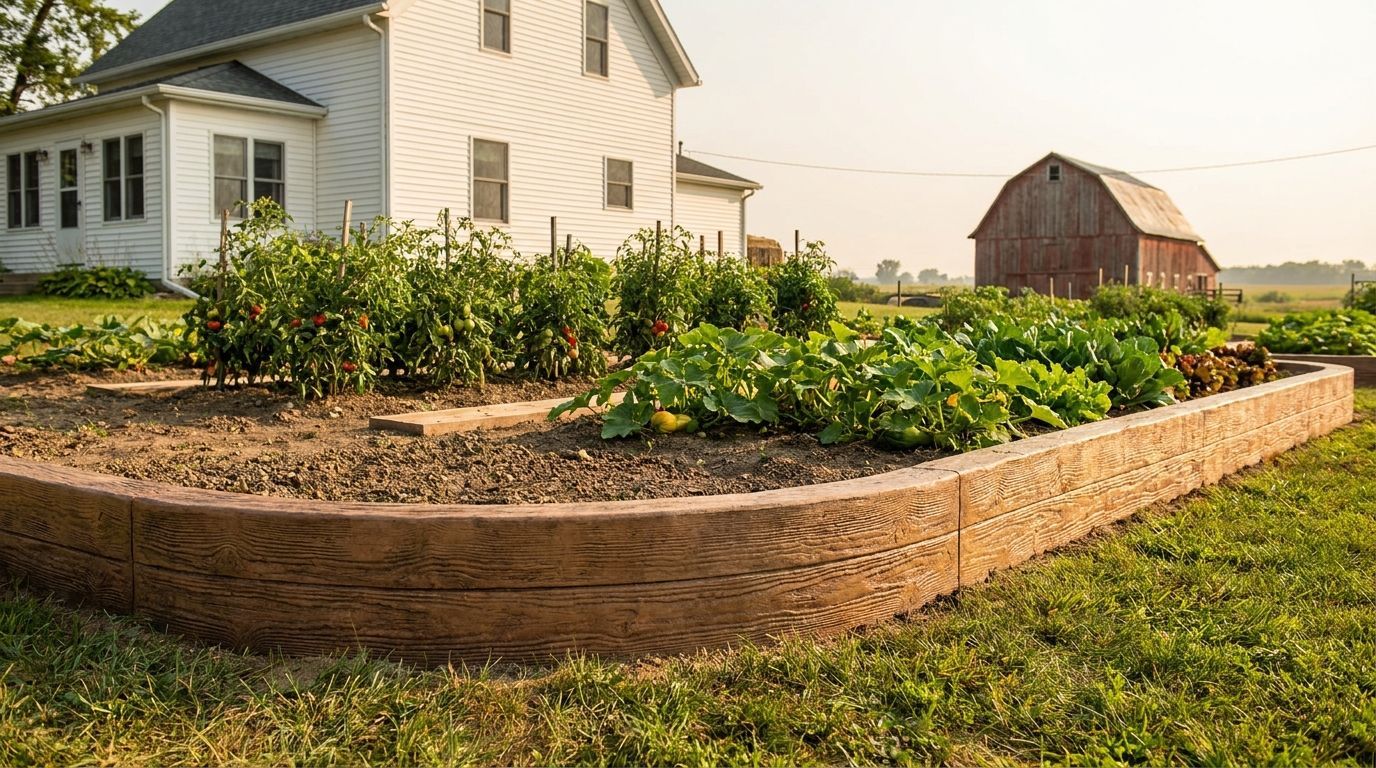
Wood Grain replicates the texture of milled timber with realistic grain lines, knots, and natural splits. It gives gardens and bed borders a rustic, organic feel without the rot, carpenter ant damage, or seasonal warping that real wood develops at ground contact in Wisconsin.
This pattern is popular on larger rural properties in Outagamie and Waupaca counties where farmhouse and cabin aesthetics define the landscape. A cedar color deepens the natural wood effect. The concrete version handles snow load, spring moisture, and direct soil contact for decades without degrading. This pattern works well for raised garden bed borders, barn-adjacent landscaping edges, and long driveway runs on larger acreage properties.
5. Colored Soldier Course Along Driveways
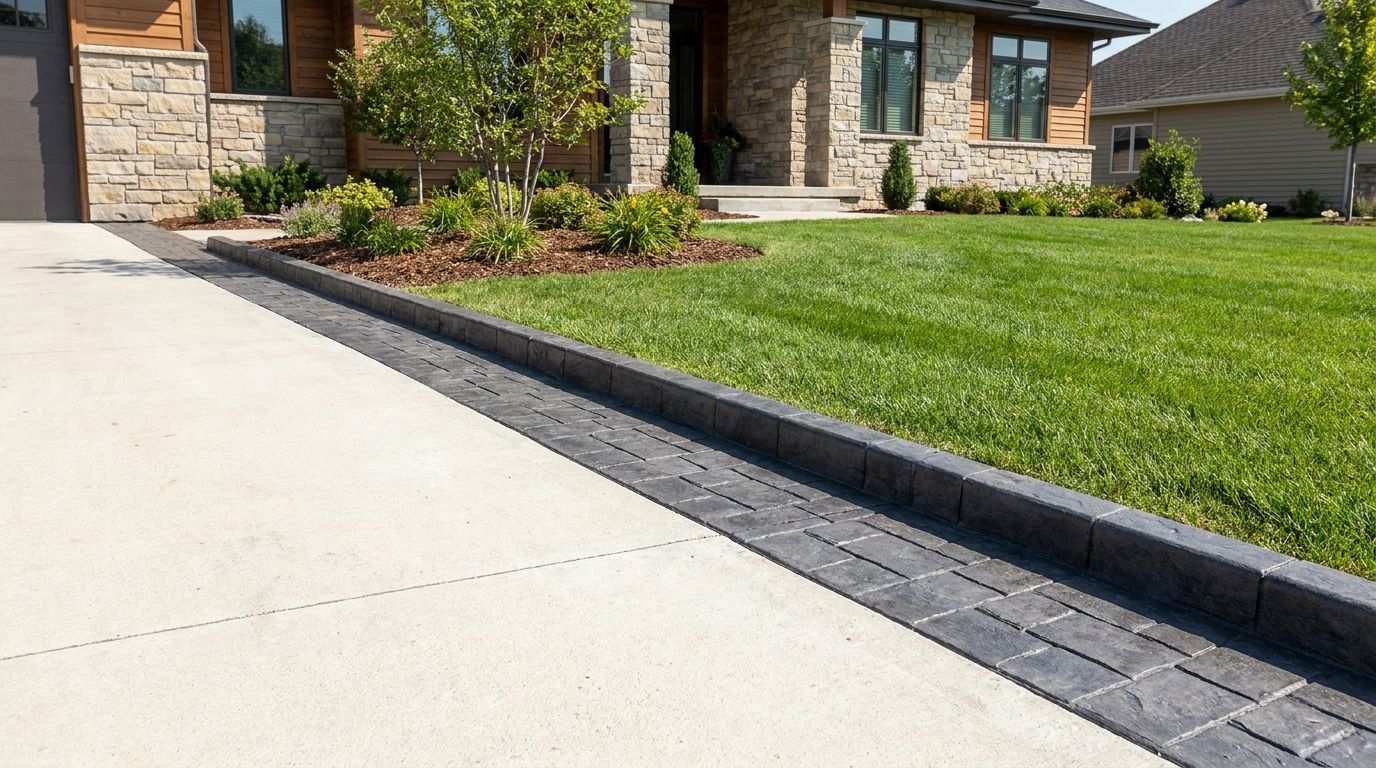
Soldier Course lays uniform blocks end-to-end in a single tight row, creating a sharp, geometric border. It defines driveways, parking pads, and sidewalk edges with a look that mirrors brick or paver edging at a fraction of the long-term cost.
A charcoal or slate color against fresh concrete driveways and sidewalks sharpens the entire front approach. Builders and landscape designers frequently specify Soldier Course for subdivision homes where a consistent, modern border style unifies the streetscape. At $3 to $8 per linear foot, concrete curbing adds a finished, permanent border without significantly increasing the overall landscaping budget on new builds. Wolfrath’s Curb carries 13+ stamp patterns and coordinating design options to match any home style.
Frequently Asked Questions
What concrete curbing stamp pattern is most popular in Wisconsin?
Castle Rock is one of the most requested patterns for Wisconsin homes. Its clean, running bond layout complements both modern and traditional exteriors. It pairs especially well with brick-front homes and works for garden beds, walkway borders, and tree rings. Wolfrath’s Curb can show samples during a free estimate consultation.
How many curbing color options are available?
Wolfrath’s Curb offers more than 80 custom-blended integral colors. The pigment is mixed throughout the concrete, not applied on top, so the curbing color stays consistent as the surface wears. Popular choices include warm earth tones like sandstone and terracotta, neutral grays, and bold accent reds.
Can different stamp patterns be combined on the same property?
Yes. Many homeowners use one pattern along flower beds and a different style around tree rings or driveways. The key is matching the color palette across all sections so the borders look intentional. Wolfrath’s Curb’s design consultation covers pattern and color coordination for multi-zone layouts.
Find Your Curbing Style
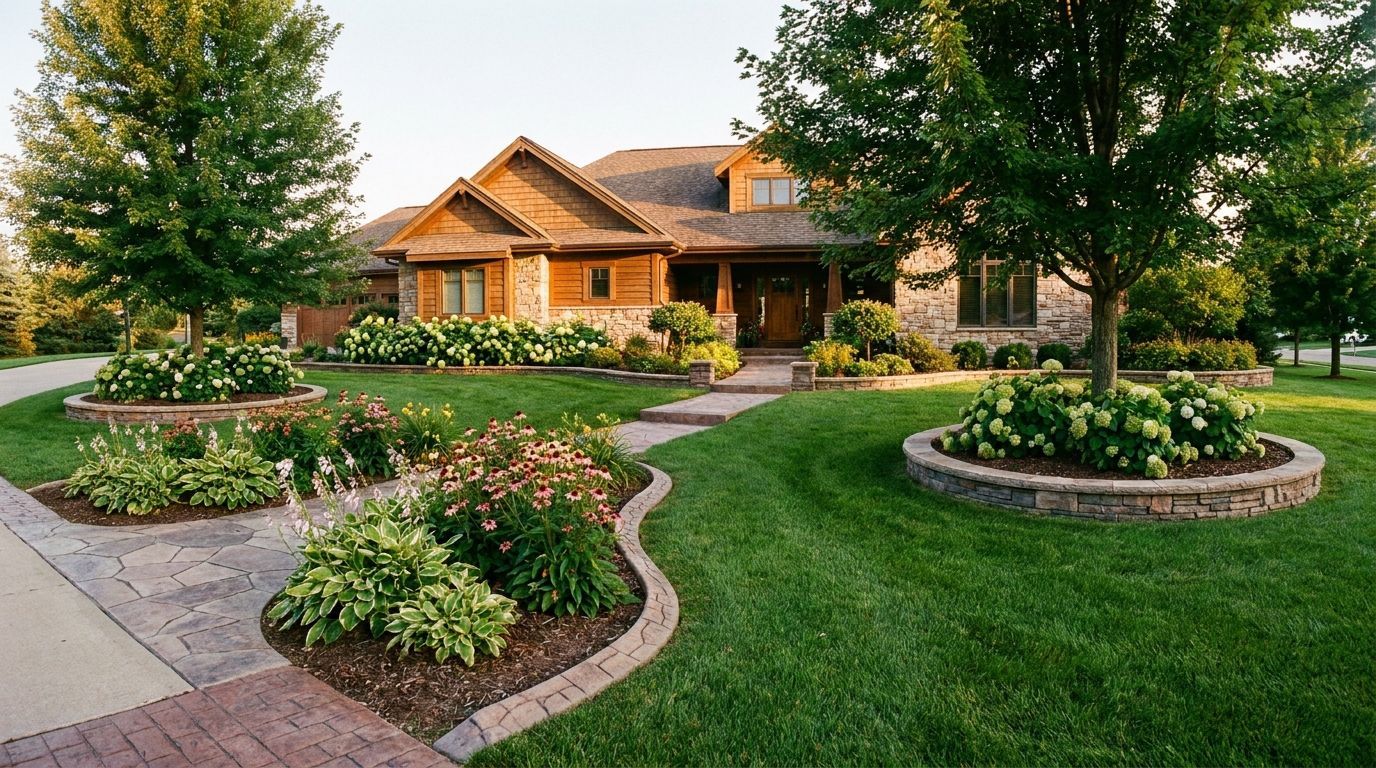
Five stamp patterns, 80+ colors, and a material built to last two to three decades through Wisconsin’s freeze-thaw seasons. The right combination depends on your home’s exterior, your landscaping style, and where the borders need to work hardest.
Contact Wolfrath’s Curb at (920) 212-2872 for a free estimate and in-person samples of every pattern and color.