
Continuous Concrete Edging: Why Seamless Borders Win in Wisconsin
Continuous concrete edging is a seamless, joint-free landscape border poured in a single unbroken line around garden beds, walkways, and tree rings. Unlike segmented block, brick, or plastic edging, it leaves no gaps for water, weeds, or shifting. Wolfrath’s Curb extrudes every border as one continuous piece across all 11 service counties in northeast Wisconsin.
Segmented edging has more pieces, but each joint is a failure point. Water that freezes in a single joint gap expands by 9% and can push that section out of alignment permanently.
What Makes Continuous Edging Different?
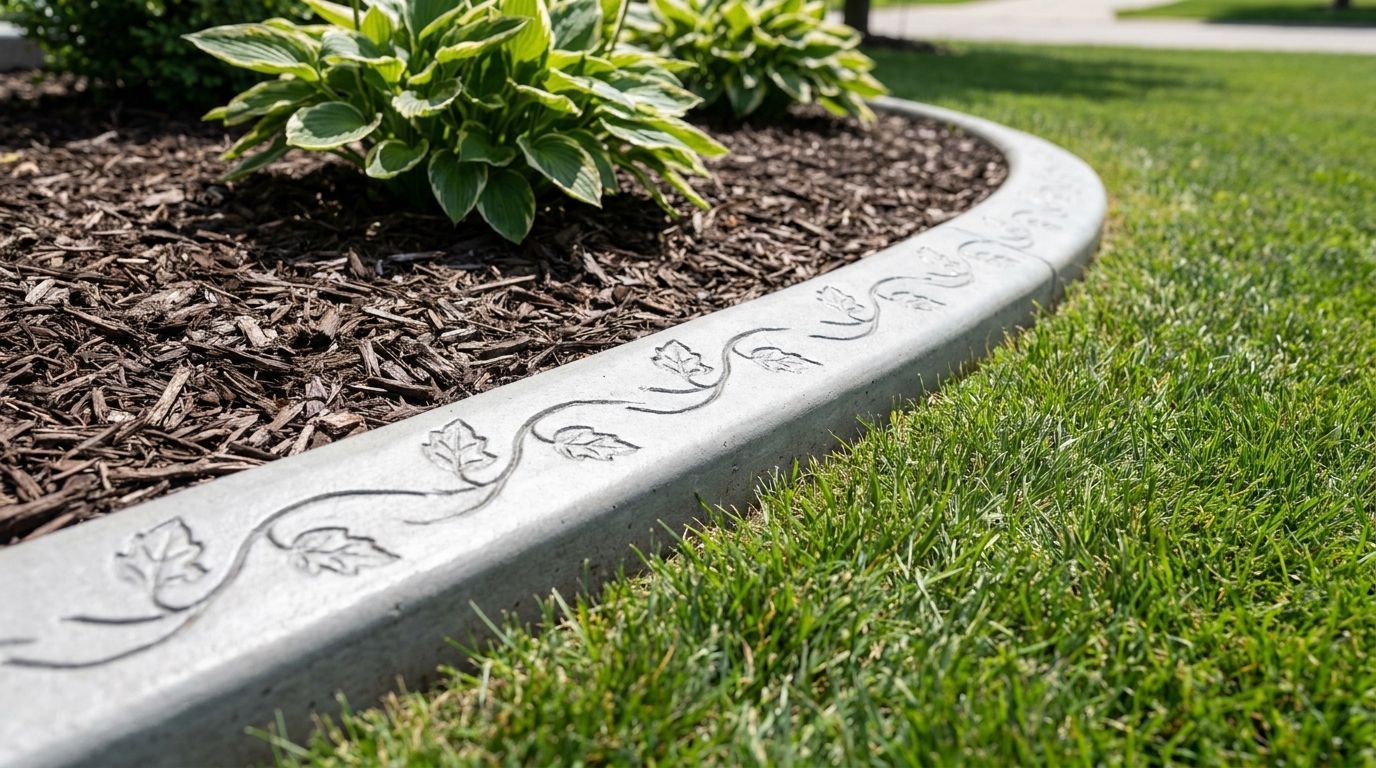
Standard landscape edging comes in sections. Plastic strips connect with stakes. Paver blocks sit side by side. Steel lengths bolt together at joints. Every connection point is a spot where movement, separation, and failure can begin.
Continuous concrete edging eliminates those connections entirely. Landscape curbing uses a specialized extrusion machine to pour a single ribbon of concrete that follows curves, straight runs, and tight corners without any interruption. There are no stakes to work loose, no joint compound to crack, and no seams where weeds can root. Wolfrath’s Curb’s five-step installation covers everything from ground preparation and custom concrete mixing through stamping and final sealing.
This matters most in Wisconsin, where soil shifts several inches over a single winter. Segmented edging moves with the soil in different directions at each joint. Continuous curbing flexes as a unit, distributing pressure across the full run rather than concentrating it at weak connection points.
How Seamless Construction Handles Freeze-Thaw
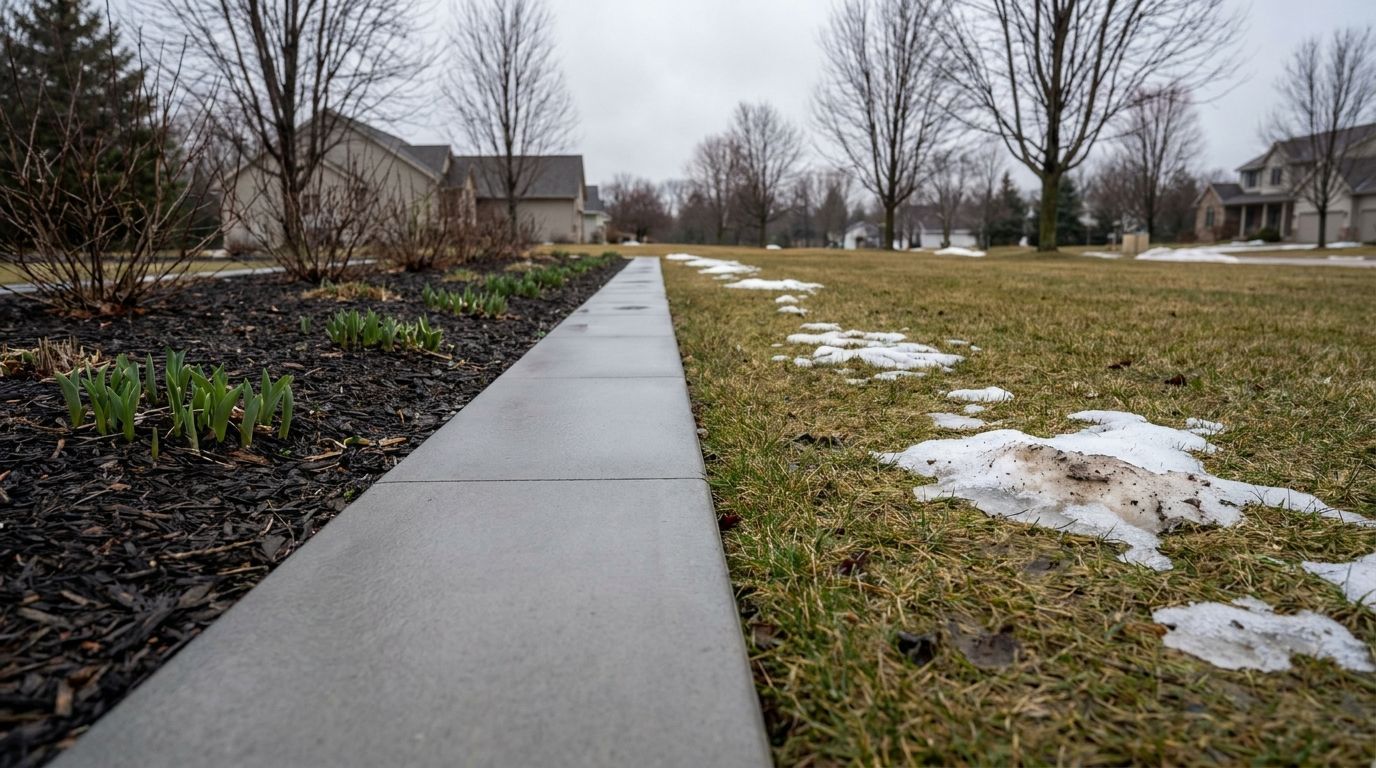
Wisconsin’s freeze-thaw cycle puts more stress on landscape borders than almost any other climate factor. Water enters gaps between sections, freezes, expands by roughly 9%, and pushes those sections apart. Over dozens of repeated cycles each winter, segmented edging heaves, tilts, and opens spaces for weeds and mulch migration.
Continuous concrete resists this process because there are no lateral gaps for water to enter between sections. The fiber-reinforced mix and professional-grade sealer protect the top surface, while the unbroken form underneath prevents individual sections from heaving independently. Instead of six or eight separate pieces all moving in different directions, the entire border responds to ground pressure as one connected structure.
A properly sealed continuous border handles 20 to 30 years of Wisconsin winters. Standard plastic edging in the same climate typically lasts one to three seasons before it warps, cracks, and needs to be pulled out and replaced entirely.
Where Continuous Curbing Works Best
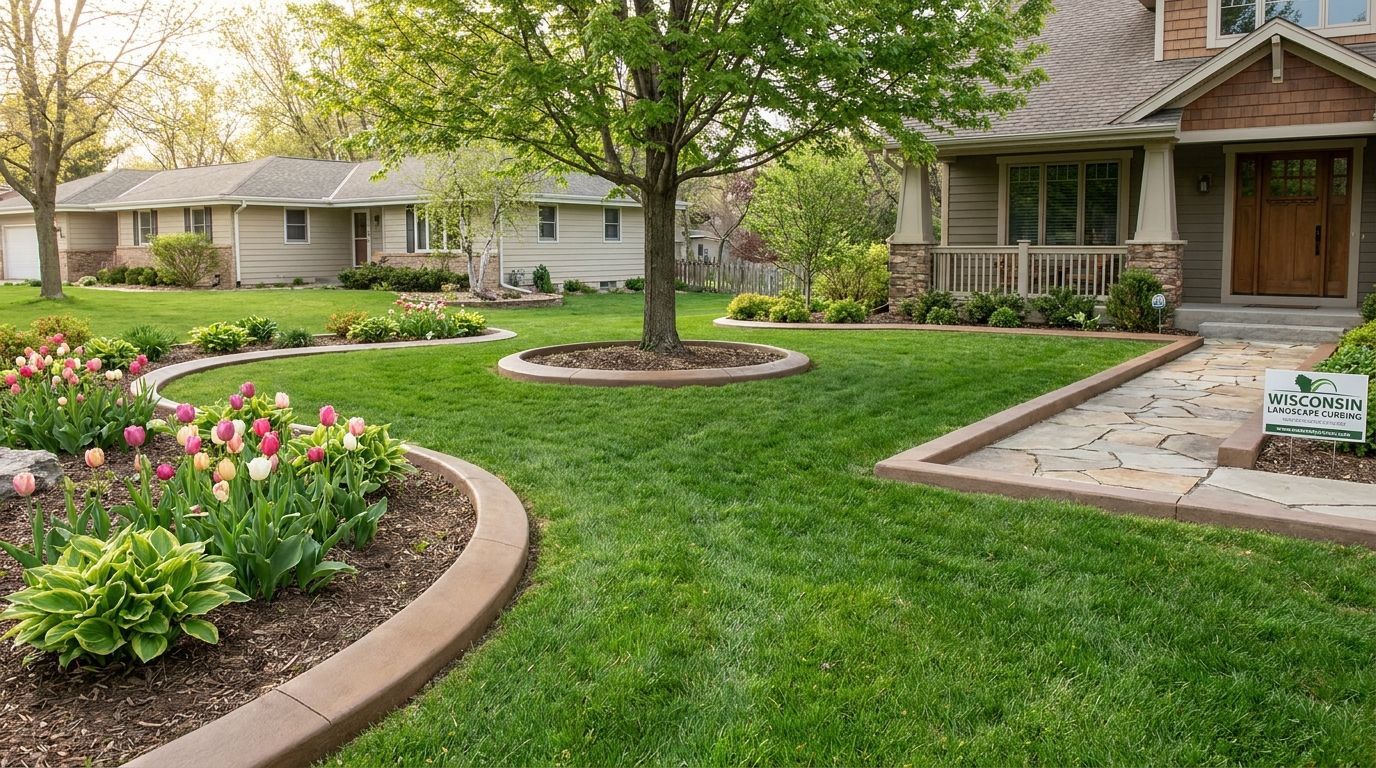
Continuous concrete edging performs in every landscape application, but certain areas benefit most from the seamless design.
Garden beds and flower borders get the strongest advantage. The continuous form prevents mulch from washing out during spring storms and heavy summer rains, and the mower-friendly profile lets you trim right along the edge without lifting the deck. Tree rings stay intact around root systems that would push segmented blocks apart over several growing seasons.
Walkway borders and driveway edges benefit from the clean, unbroken line that segmented materials can’t maintain through seasonal ground movement. Driveways in particular need edging that holds firm under vehicle traffic and snowplow proximity.
For homeowners in Winnebago County and across the Fox Valley, where clay-heavy soils amplify freeze-thaw shifting, continuous construction is the practical choice.
Frequently Asked Questions
Is continuous concrete edging the same as poured concrete edging?
Yes, the terms are used interchangeably. Both describe a seamless concrete border extruded on-site in one continuous line using specialized equipment. The key feature is the absence of joints, seams, or connections between sections. Wolfrath’s Curb installs all continuous borders using a custom on-site concrete mix tuned for Wisconsin conditions.
Does continuous edging crack in Wisconsin winters?
Hairline cracks can develop as concrete naturally expands and contracts with temperature changes. These are cosmetic and rarely affect the border’s structural performance or appearance. The fiber-reinforced mix and professional sealing significantly reduce their frequency and severity. Resealing every two to three years adds further protection against moisture penetration during Wisconsin’s freeze-thaw cycles.
How long does continuous concrete edging last compared to plastic?
Continuous concrete curbing typically lasts 20 to 30 years with proper sealing and minimal maintenance. Standard plastic landscape edging lasts one to five years in Wisconsin before warping, cracking, or heaving out of the ground. Steel edging falls between the two at roughly 15 to 20 years but develops rust over time.
One Continuous Line of Concrete That Changes Everything
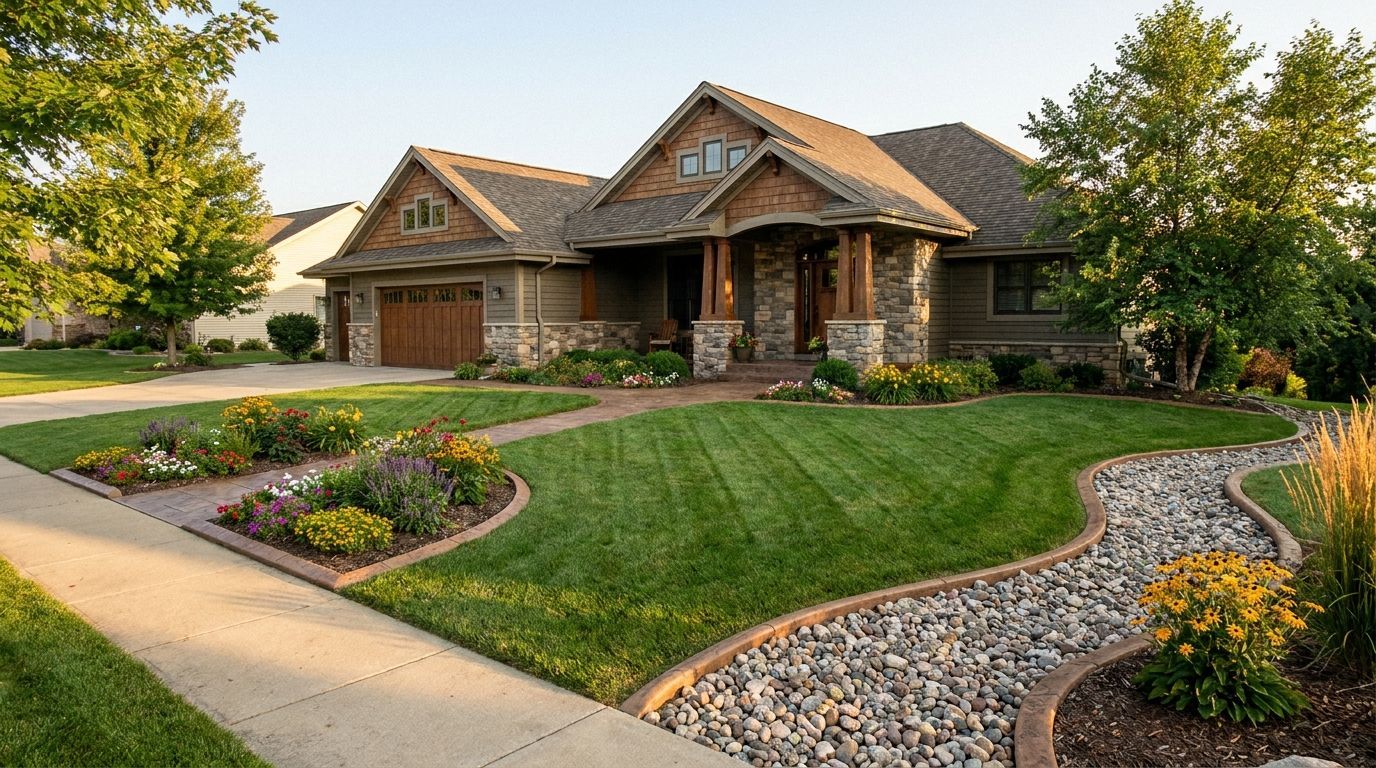
Every stretch of landscape edging faces the same stressors: freeze-thaw, root pressure, soil movement, rain, and lawnmower contact. The difference between borders that hold and borders that fail comes down to whether those forces hit individual joints or get distributed across one continuous structure. Seamless construction removes the weakest links entirely.
Contact Wolfrath’s Curb at (920) 212-2872 for a free estimate on continuous concrete curbing for your Wisconsin property.