Straight vs. Curved Concrete Landscape Curbing: Choosing a Layout for Your Northeast Wisconsin Yard
Straight concrete landscape curbing works best for structured, geometric beds, while curved curbing creates a softer, more natural look. The right choice depends on your home's existing hardscape, the shape of your planting beds, how much lawn space you have to work with, and how you maintain the yard. Wolfrath's Curb forms curbing on site, so either layout, or a thoughtful combination of both, can be installed around a Northeast Wisconsin property.
Matching the Layout to Your Home's Style
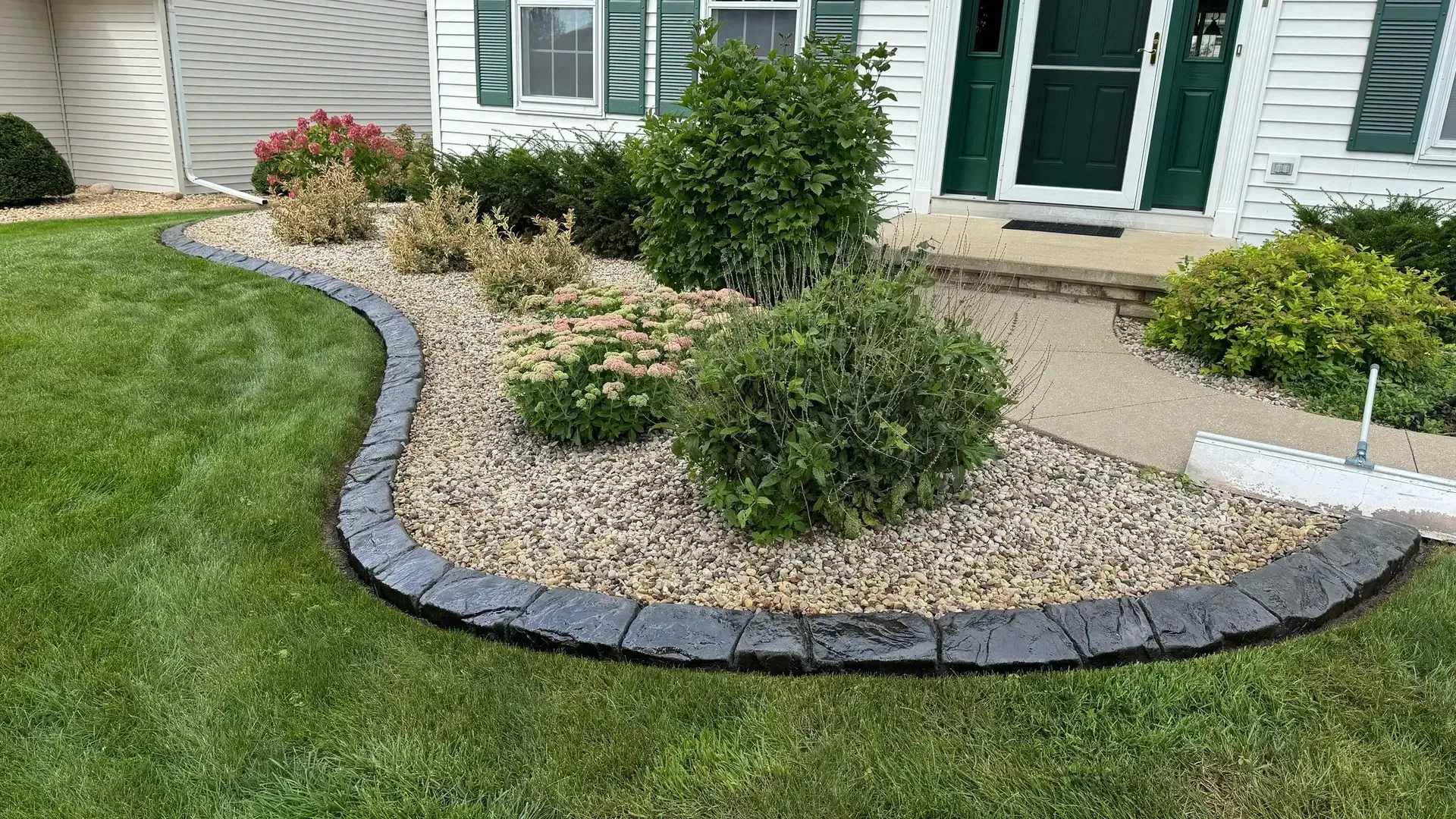
Design guidance from the UW–Madison Division of Extension associates straight bed lines and repeated geometric patterns with formal landscapes, while naturalistic curves tend to suit informal designs. That same guidance cautions against forcing symmetry or adding excessive undulation just for the sake of variety.
In practice, this means the decision should reflect your home's architecture and your yard's existing layout rather than a rule that one shape always looks better than the other. A home with a strong, symmetrical front entry and clipped hedges often reads well with straight curbing, while a yard with informal plantings and winding walkways tends to feel more cohesive with broad, sweeping curves.
Straight vs. Curved: A Quick Comparison
| Layout | Best Suited For | Design Feel |
|---|---|---|
| Straight Curbing | Formal entries, structured beds, driveways and walkways with clean lines | Geometric, orderly, architectural |
| Curved Curbing | Informal plantings, rolling lawns, beds that follow natural contours | Organic, relaxed, natural |
Practical Site Factors That Should Drive the Decision
Beyond style, a few practical considerations matter just as much as appearance:
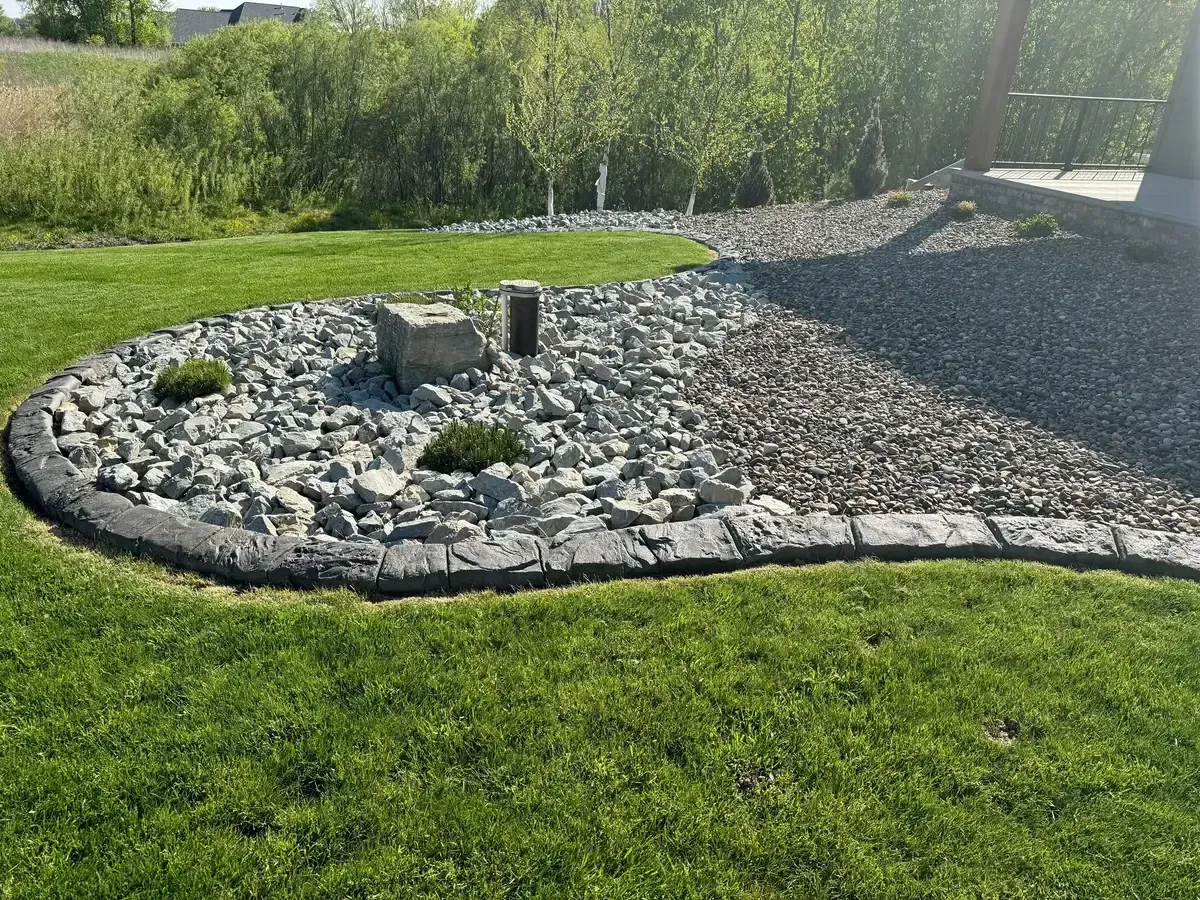
- Mowing access: Bed lines should stay smooth and mowable with the equipment actually used on the property. Evaluate the remaining turf and turning space, not just how the line looks on paper, since even a well-designed curve can create awkward trimming if it is too tight for the mower being used.
- Grade and drainage: The UW–Madison Extension recommends noting slope, runoff paths, eroded areas, and standing water during site analysis. Its guidance also warns that improperly installed hard edging can heave or shift as soil freezes and thaws. These are important site considerations, but layout choice alone will not resolve a drainage or grading issue.
- Mature plant size: Plan bed space using the mature dimensions of your shrubs and perennials rather than the size they are at the nursery, so plants do not end up crowded against the finished edge a few seasons later.
Planning Around Existing Hardscape and Established Beds
Wolfrath's Curb documents working with homeowners to install curbing around existing landscaping and to help select a design, which means a layout decision does not require starting from a blank yard.
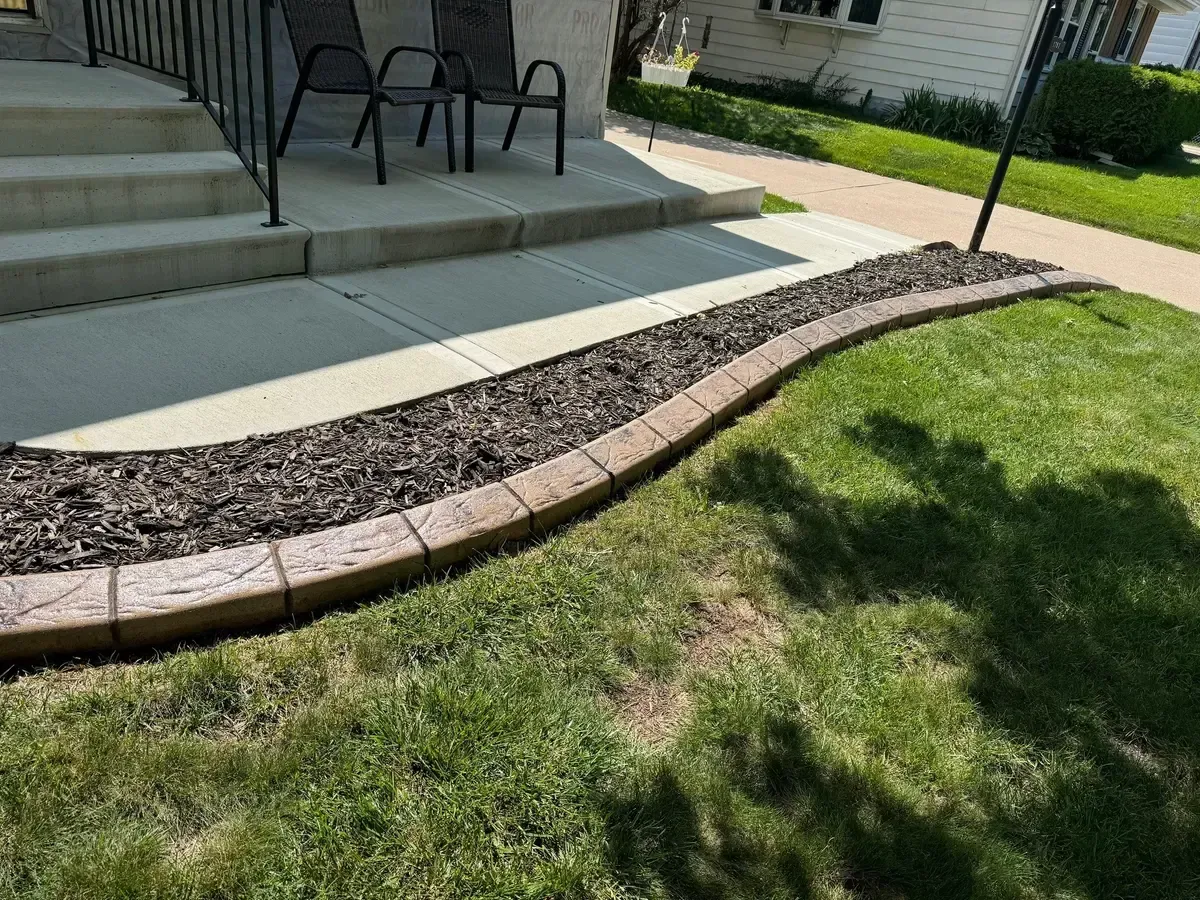
Established trees, patios, driveways, and walkways can all be used as reference points.
UF/IFAS Extension suggests using buildings and hard surfaces to guide bed lines, allowing broad arcs at corners, and starting a bed perpendicular to a straight hardscape edge before letting it curve.
This approach is especially useful where a patio or driveway meets a planting bed, since it gives the transition a deliberate starting point instead of an abrupt change in direction.
Where straight and curved sections meet elsewhere in the yard, plan the transition carefully so the property reads as one connected design rather than two mismatched styles.
It also helps to view a proposed layout from normal vantage points, such as the front walkway or a window, and to sketch alternatives before committing, since a shallow curve that looks fine on paper can appear nearly straight once it is standing in the yard.
For more detail on working around mature landscaping, see Wolfrath's Curb's article on installing concrete curbing around existing landscaping.
Decorative Finish Is a Separate Decision
Layout shape and decorative finish do not have to be an either-or choice.
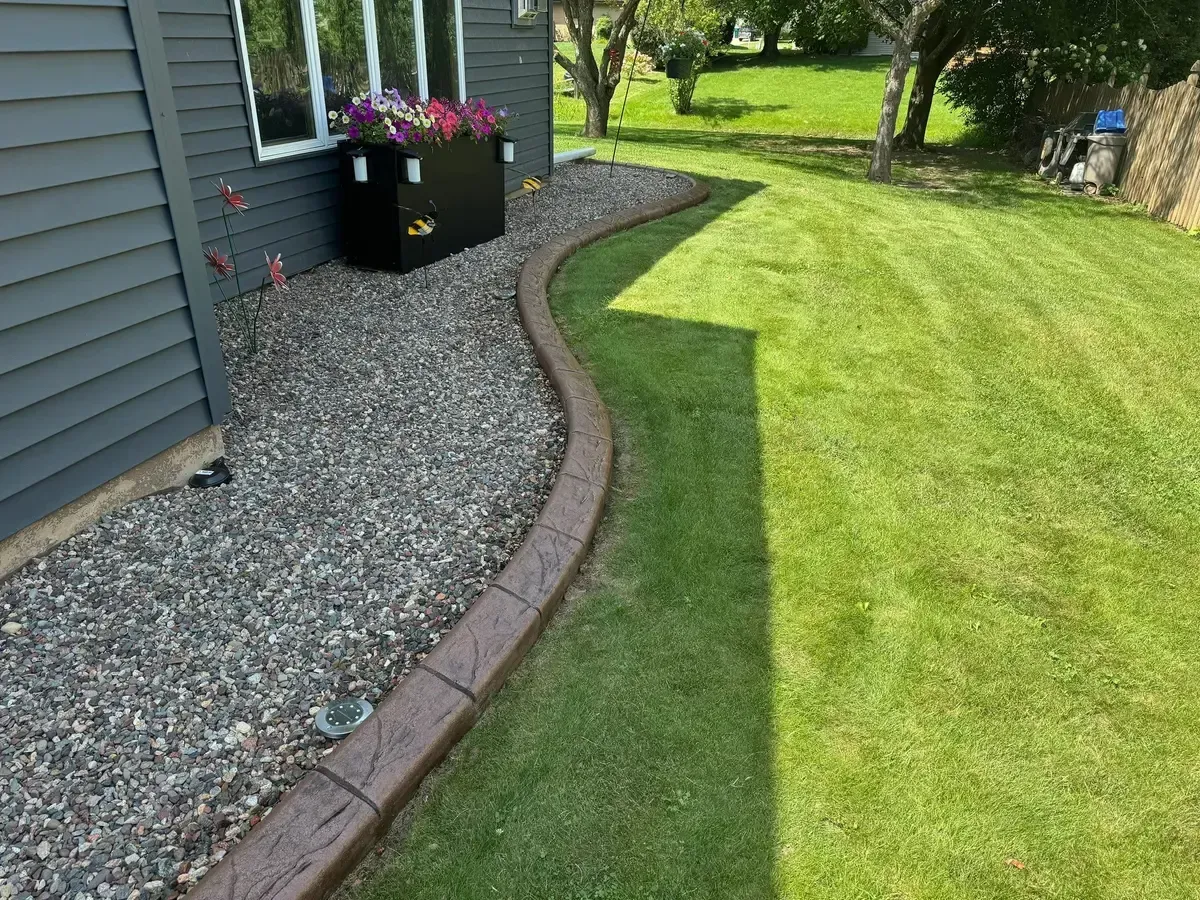
Wolfrath's Curb's stamped and textured curbing options can reflect stone, brick, wood, and other textures, so a straight run or a curved bed line can both be finished to match the look you want for the property.
How Wolfrath's Curb Installs Either Layout
Wolfrath's Curb forms extruded concrete curbing on site using specialized equipment, with a process that includes preparation, mixing, shaping, and decorative finishing.
Once the newly installed curbing has had time to set, the company returns to apply a protective sealer, typically a few days after installation.
That installation method supports straight runs, curves, planting beds, and curbing around trees, which is why either layout, or a combination of both, can be installed for a given property.
Wolfrath's Curb has specialized in landscape curbing since 2005 and reports installing more than one million linear feet of curbing.
You can see examples of completed layouts in the project gallery and learn more about the installation steps on the process page.
Ready to Plan Your Layout?
If you are weighing straight versus curved curbing for your Northeast Wisconsin yard, Wolfrath's Curb can walk through your property's hardscape, beds, and mowing patterns to help you land on a layout that fits.
Call (920) 212-2872 to talk through options for your home in the Fox Cities, Oshkosh, Appleton, Green Bay, Fond du Lac, and surrounding Northeast Wisconsin communities.