5 Walkway Edging Ideas for Wisconsin Homes Using Concrete Curbing
The most effective walkway edging ideas for Wisconsin homes focus on permanent, custom-poured patterns like Soldier Course for a geometric brick look, Castle Rock for traditional masonry texture, and Flagstone for an organic, natural aesthetic.
Wolfrath’s Curb provides professional landscape curbing services across northeast Wisconsin, extruding these designs on-site as a seamless, joint-free border. By eliminating the gaps where weeds grow and frost heaving occurs, these five curbing concepts offer a structural alternative to the seasonal repair work required by plastic or stone.
This guide explores how these designs elevate the curb appeal and durability of walkways from Appleton to the Fox Valley.
1. Soldier Course for Formal Front Walkways
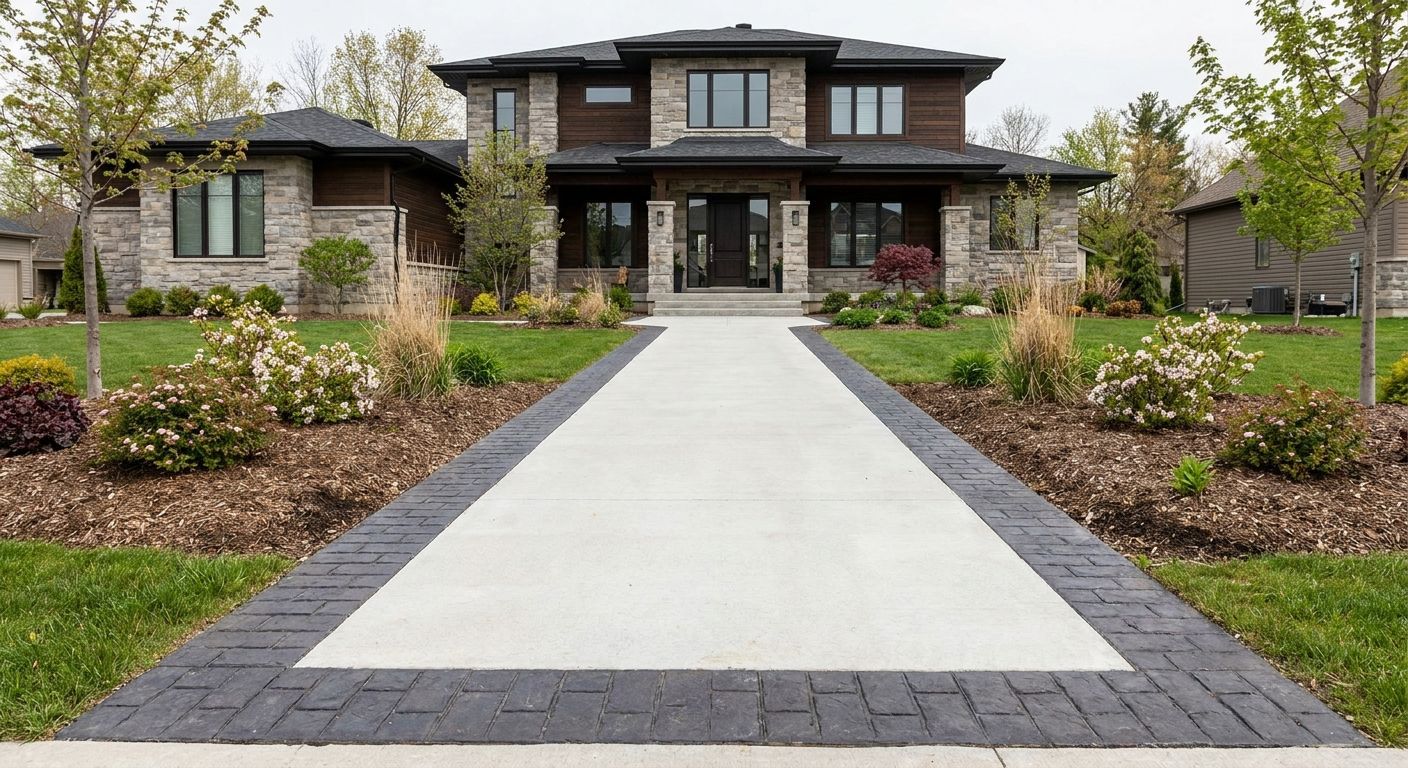
Soldier Course lays uniform blocks end-to-end in a tight single row, creating a crisp geometric border that mirrors the clean lines of poured concrete or paver walkways. The pattern sharpens the front approach on newer homes in Greenville, Fox Crossing, and Grand Chute where contemporary exteriors call for structured edging.
A charcoal or slate color against light concrete sidewalks creates strong visual definition from the street. The design options page shows Soldier Course in several color combinations suited to front walkway applications.
2. Castle Rock Along Side-Yard Paths
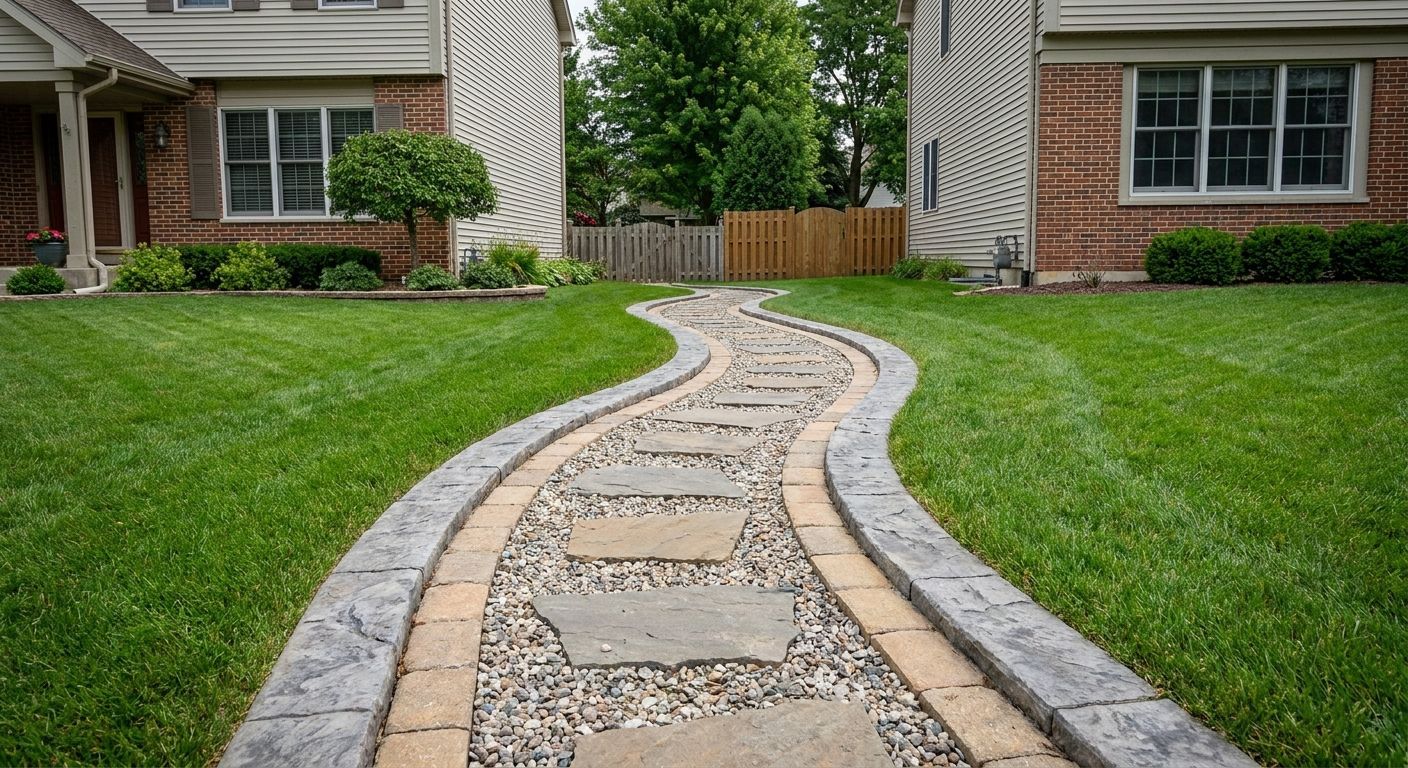
Side-yard paths connect front and back yards through narrow runs where clean edging matters most. Castle Rock’s running bond pattern provides a structured, traditional look that works in tight spaces without overwhelming the path itself.
Sandstone or clay tones tie the border to brick and stone exteriors common across Appleton neighborhoods. The mow-strip profile lets you trim grass right along the edge without hand-edging on either side of the walkway.
3. Flagstone Borders on Curved Garden Paths
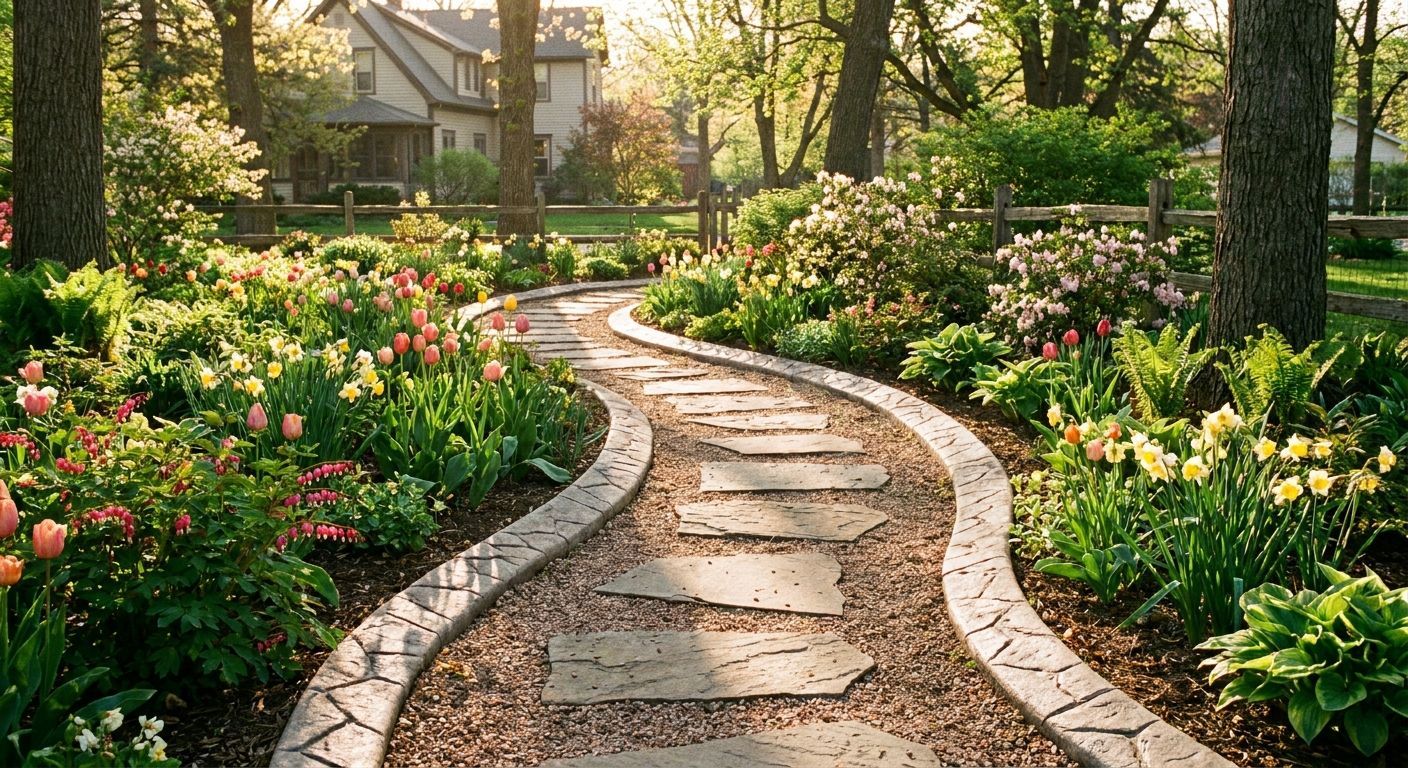
Curved garden paths benefit from Flagstone’s irregular natural stone texture, which follows bends without looking forced. The organic edges and random sizing create a border that blends with surrounding plantings and feels intentional rather than manufactured.
The continuous pour handles tight curves around garden beds and trees without the cutting and fitting that individual flagstone pieces require. Browse the project gallery for flagstone walkway borders installed across Fox Valley properties.
4. Natural Stone Edging for Wooded Lot Pathways
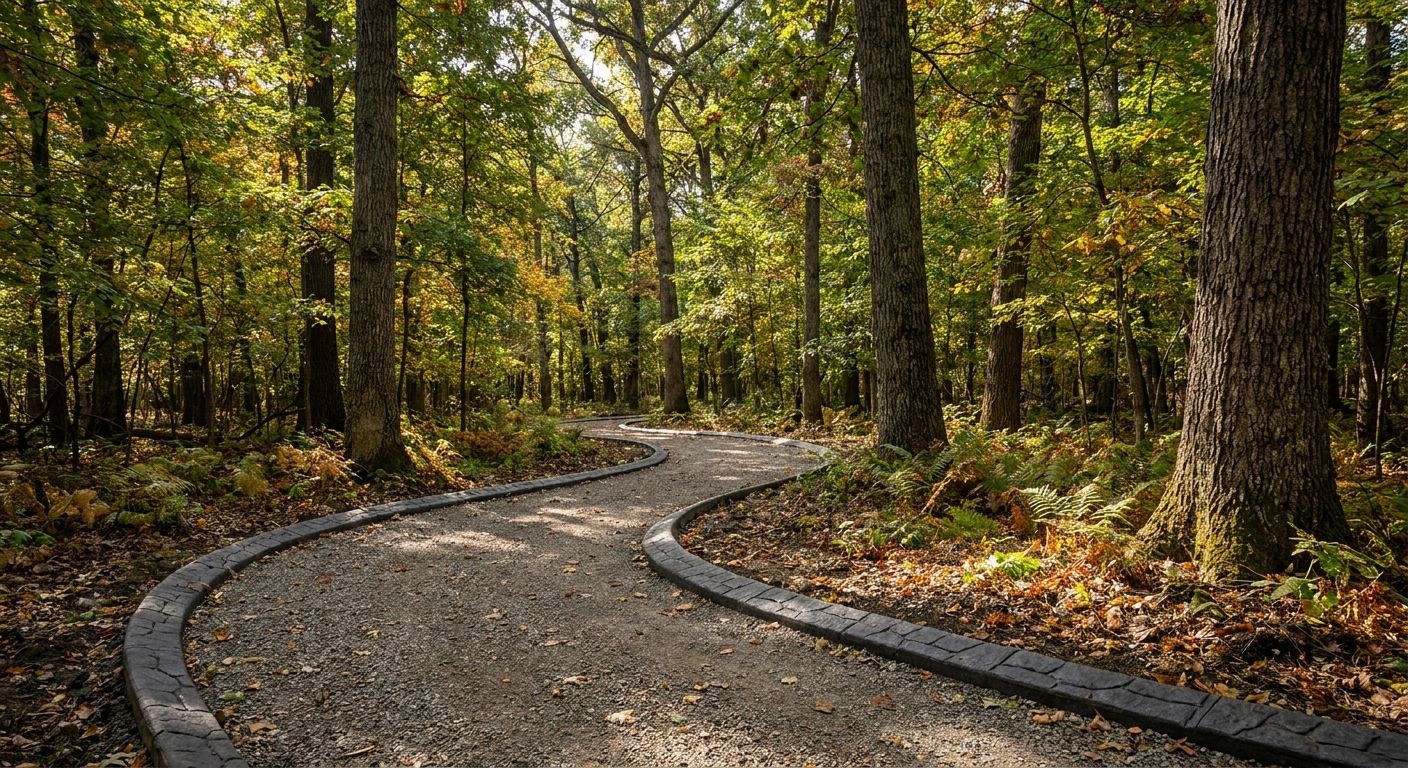
Wooded properties between Hortonville and Waupaca feature meandering paths through mature hardwoods. Natural Stone’s weathered quarry rock texture matches the rugged bark and canopy of oaks and maples without looking manufactured or out of place.
A charcoal or bark-brown color integrates with the woodland palette. The seamless concrete follows the path’s natural contour through root zones and grade changes that would shift segmented borders out of alignment within a few seasons of Wisconsin freeze-thaw.
5. Wood Grain Edging for Rustic Garden Walks
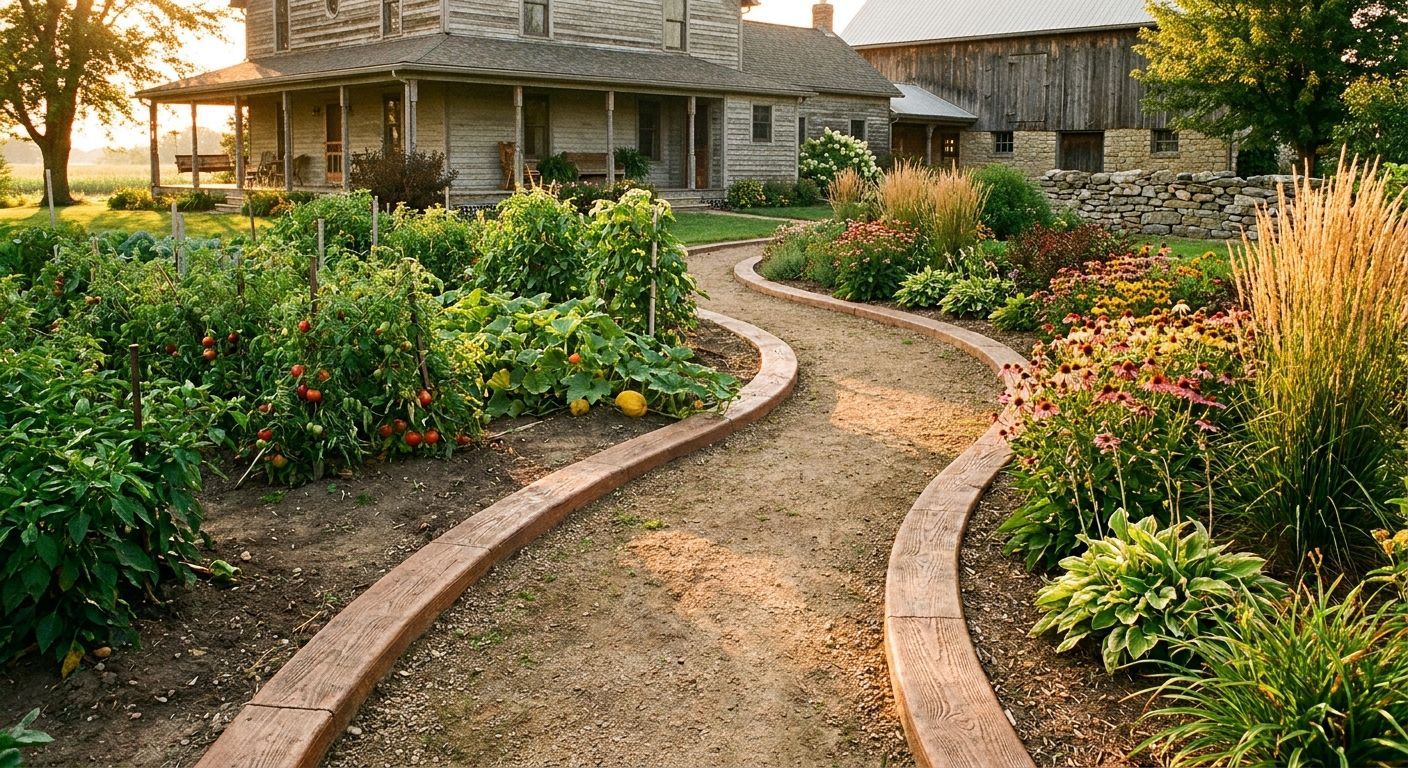
Rural properties in Outagamie and Waupaca counties often feature informal garden paths through vegetable beds and perennial borders. Wood Grain captures the look of milled timber with realistic grain lines and natural splits, without the rot and warping that real wood develops at ground contact in Wisconsin.
A cedar color deepens the natural wood effect. For more concrete curbing design ideas beyond walkways, see the full curbing ideas guide for Wisconsin properties.
Frequently Asked Questions
What walkway edging material lasts longest in Wisconsin?
Concrete curbing lasts 20 to 30 years with resealing every two to three years. Plastic walkway edging lasts one to three seasons before warping. Steel edging lasts 15 to 20 years but develops rust. Pavers last as individual units but require releveling every three to five years in Wisconsin’s freeze-thaw climate.
Can concrete curbing follow curved walkway layouts?
Yes. The extrusion machine produces a continuous ribbon that follows any curve, including tight bends around garden beds, gradual arcs through lawn areas, and irregular winding paths. There are no pre-formed sections or limiting angles. The result traces the walkway’s exact contour.
How wide is concrete walkway edging?
Standard walkway curbing profiles range from four to six inches wide and three to four inches tall. The mow-strip profile slopes to allow mowing along the edge. Wolfrath’s Curb adjusts the profile width based on the walkway design and site conditions during the free estimate consultation.
Ensure Your Property’s Curb Appeal for the Long Haul
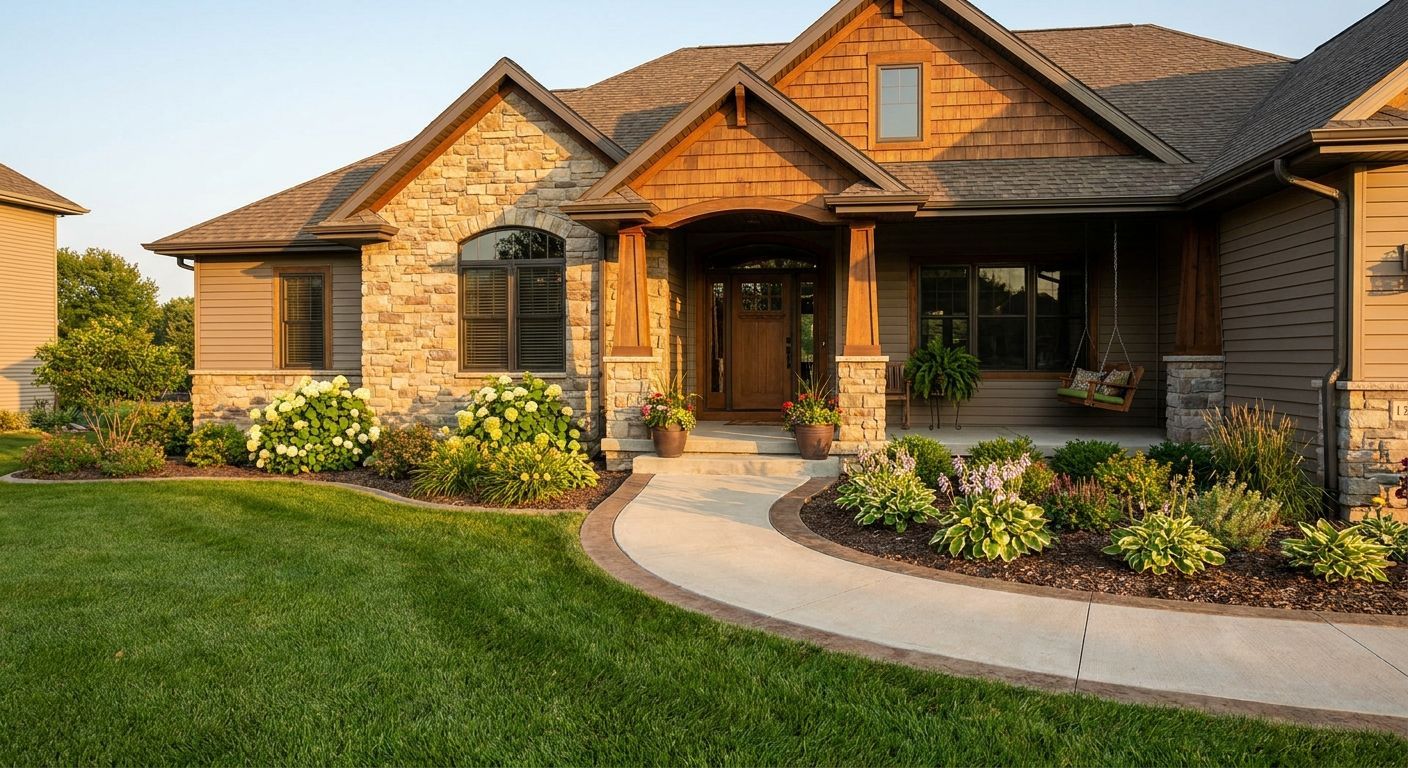
Your walkways shouldn't require a weekend of repairs every time the snow melts. By choosing a custom-poured design, you’re moving past sagging plastic and loose bricks. Instead, you’re giving your landscape a permanent architectural edge that keeps your mulch contained, your mower moving, and your property lines looking sharp through decades of Fox Valley winters.
Why settle for a temporary fix when you can install a lasting landscape signature? To see our pattern samples up close and get a professional take on your layout, reach out to Wolfrath’s Curb at (920) 212-2872. Let’s build a border that actually respects your time and your budget.