
Concrete Curbing vs Pavers: Wisconsin Durability Comparison
Concrete curbing vs pavers comes down to three factors that Wisconsin homeowners weigh differently than homeowners in milder climates: installed cost, freeze-thaw durability, and long-term maintenance. Poured concrete costs $3 to $8 per linear foot and lasts 20 to 30 years. Paver borders run $8 to $25 per linear foot installed and require periodic releveling. Wolfrath’s Curb breaks down the comparison for northeast Wisconsin conditions below.
Homeowners weighing these two options usually have a specific border project in mind, quotes from different contractors, and numbers that don’t line up. The gap between a concrete curbing estimate and a paver quote raises a fair question about what each option actually delivers over five, ten, and twenty years.
Upfront Cost: Concrete Curbing vs Paver Borders
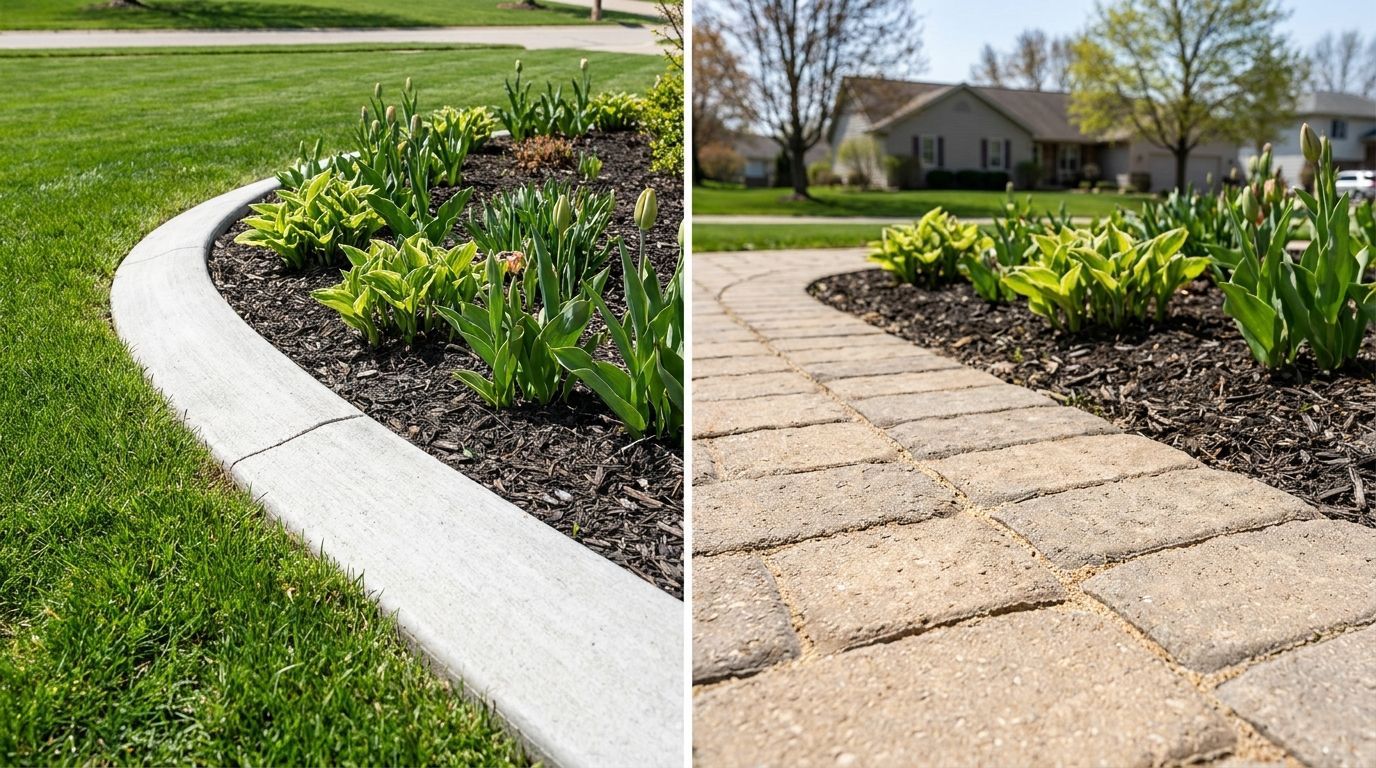
Concrete landscape curbing runs $3 to $8 per linear foot installed, depending on pattern, color, and project size. A typical 200-linear-foot project around front beds and tree rings costs $600 to $1,600. Larger projects bring the per-foot cost toward the lower end of that range.
Paver edging costs $8 to $25 per linear foot installed, including base preparation, material, and setting labor. That same 200-foot project runs $1,600 to $5,000. The higher price reflects the labor intensity of setting individual pieces, cutting around curves, and preparing a compacted gravel base. Concrete curbing’s extrusion process eliminates most of that labor by pouring the entire border in a single continuous pass.
Freeze-Thaw Durability in Wisconsin
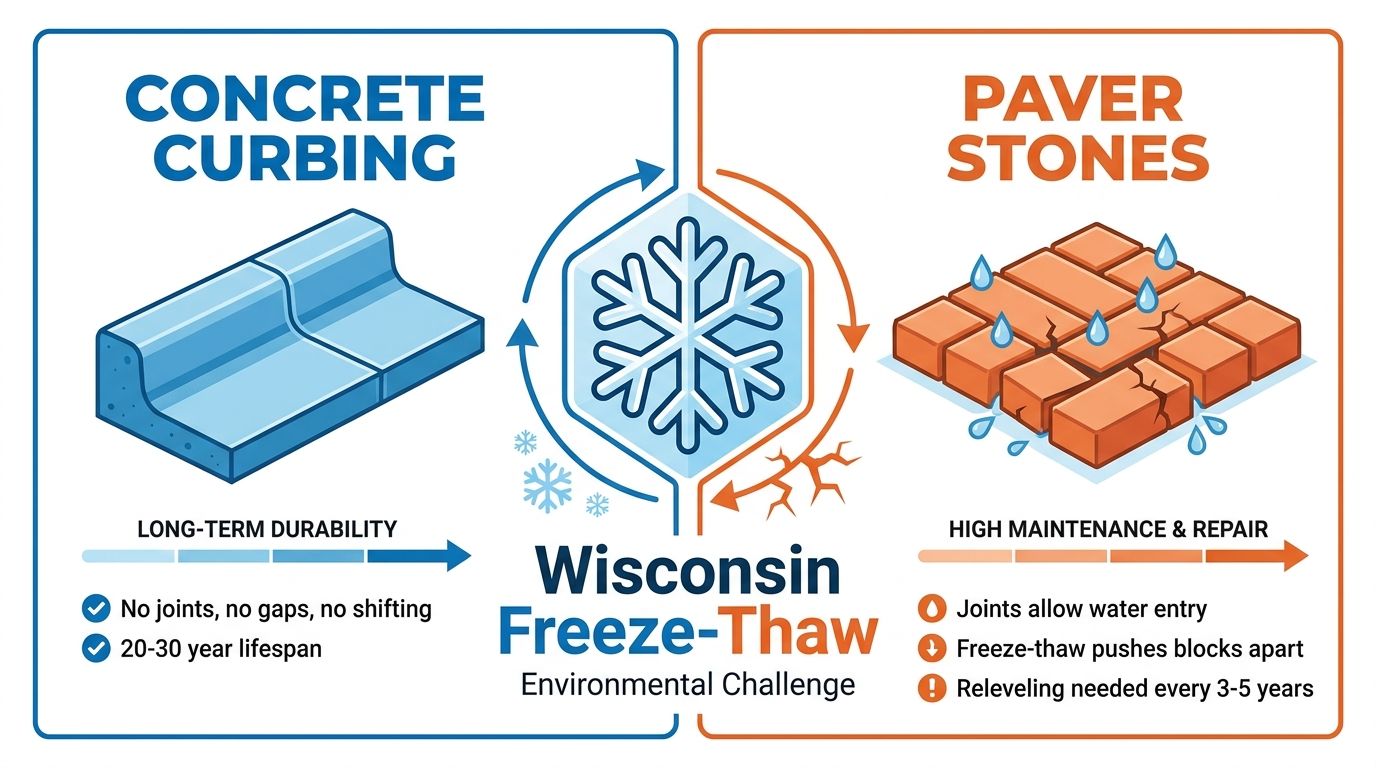
Wisconsin’s freeze-thaw cycle puts dozens of expansion-contraction events on landscape borders every winter. Water enters the joints between individual pavers, freezes, expands by roughly 9%, and pushes sections apart. After several winters, paver borders develop gaps, uneven surfaces, and visible shifting that requires professional releveling. In Outagamie County’s clay-heavy soil, this process accelerates because the soil itself retains more moisture around the border.
Continuous concrete curbing has no joints for water to penetrate between sections. The seamless extrusion distributes ground pressure across the entire run instead of concentrating it at connection points. Fiber reinforcement and professional-grade sealer add further protection against moisture penetration and surface damage. A properly installed concrete border handles 20 to 30 years of Wisconsin freeze-thaw without releveling or section replacement. Our cost vs value analysis explores concrete curbing’s long-term value and how it compares to other popular edging materials.
Long-Term Maintenance Comparison
Paver borders need releveling every three to five years in Wisconsin soils. Weeds grow between joints and require either chemical treatment or manual pulling each season. Polymeric sand washes out of the joints during heavy spring rains and needs reapplication. Ant colonies and root growth exploit gaps between individual units. Over a decade, these recurring costs and labor hours add significantly to the true cost of paver borders.
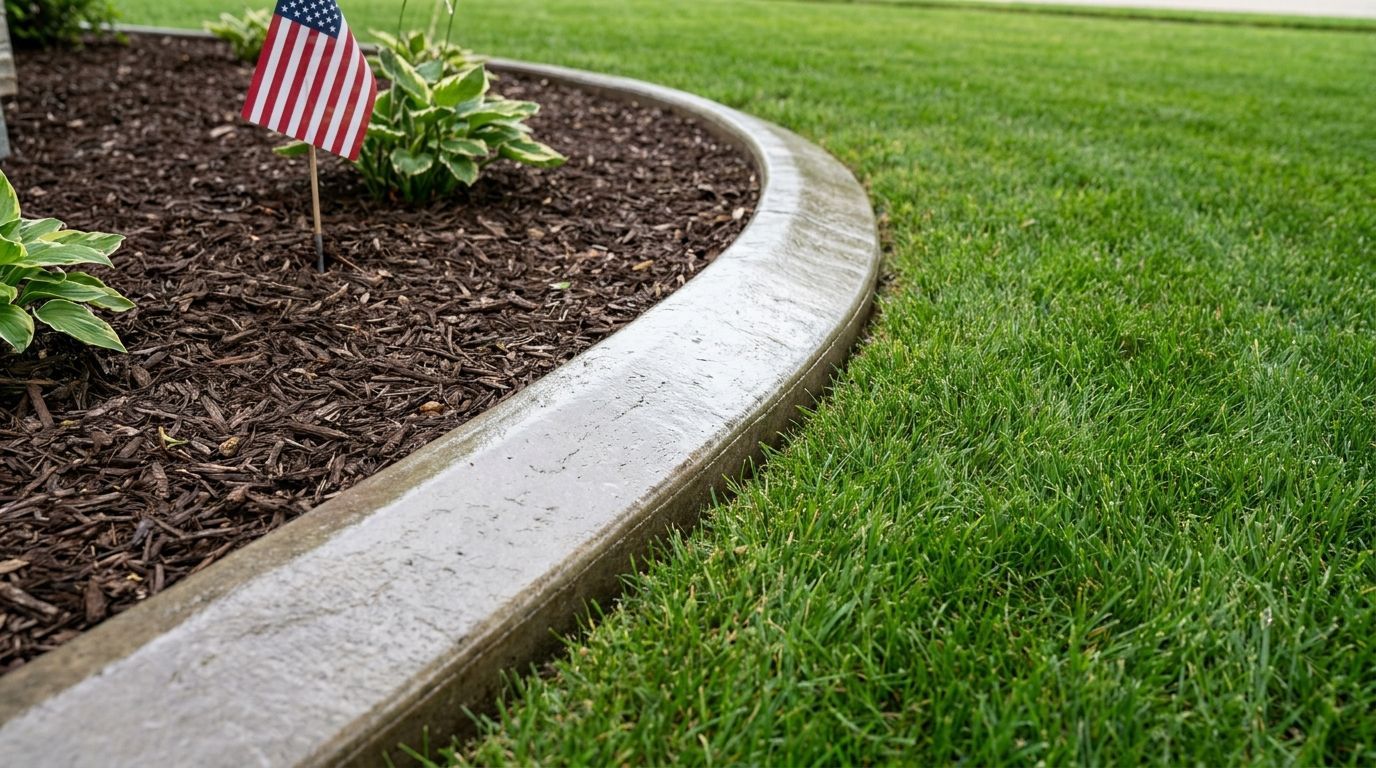
Concrete curbing maintenance is limited to resealing every two to three years and occasional cleaning with mild soap and a soft-bristle brush. No releveling, no joint repair, no weed treatment between sections. The mower-friendly profile lets you trim right along the edge without hand-edging. Over ten years, a concrete border from Wolfrath’s Curb in Hortonville, Outagamie County requires a fraction of the maintenance hours and cost that paver borders demand.
Frequently Asked Questions
Are pavers or concrete curbing better for curved garden beds?
Concrete curbing follows any curve seamlessly because the extrusion machine traces the exact layout in one continuous pour. Pavers require cutting and fitting individual pieces around curves, which increases labor cost and creates more joints where shifting can occur. For curved beds, concrete curbing delivers cleaner lines with fewer failure points.
How long do pavers last compared to concrete curbing in Wisconsin?
Pavers can last 25 to 50 years as individual units, but the assembled border shifts and gaps within three to seven years in Wisconsin’s freeze-thaw climate. Concrete curbing lasts 20 to 30 years as a complete, stable border without releveling. The distinction matters: paver longevity refers to the material, while concrete curbing longevity refers to the installed border staying in position.
Can concrete curbing match the look of paver borders?
Yes. Wolfrath’s Curb offers stamp patterns like Castle Rock and Soldier Course that replicate brick and paver aesthetics. With 80+ integral color options, the curbing matches surrounding hardscape materials. The color is mixed throughout the concrete, so it stays consistent as the surface wears.
Pick the Border Built for Wisconsin
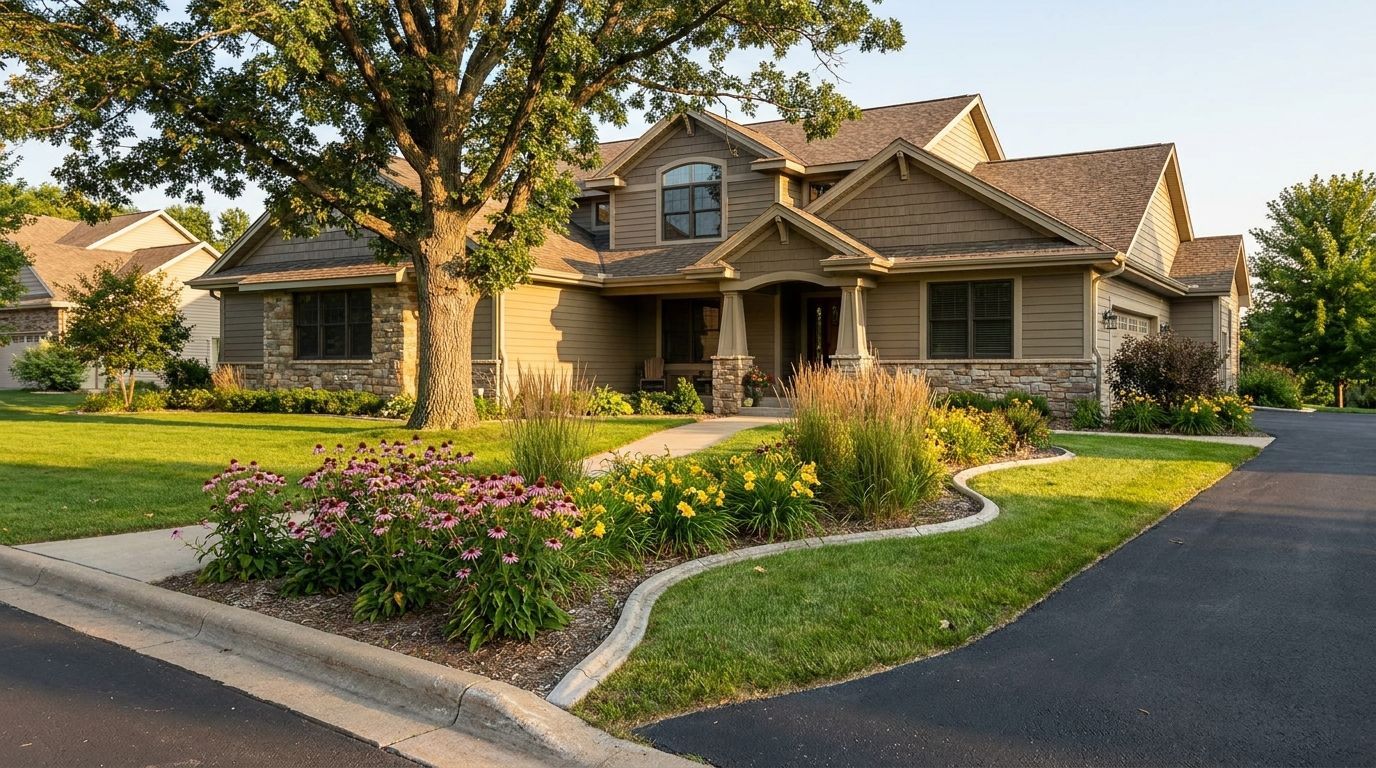
Lower installed cost, zero joints for freeze-thaw damage, and maintenance limited to resealing every few years. For Wisconsin landscapes, concrete curbing wins the comparison on the three factors that determine whether a border holds or fails. Every season that a paver border needs releveling is another season a concrete border stays exactly where it was poured.
If you’re ready to trade high-maintenance pavers for a more permanent border, contact Wolfrath’s Curb at (920) 212-2872. Get a free estimate and a pattern consultation.