5 Inexpensive Flower Bed Edging Ideas That Keep Your Garden Beds Clean and Defined
Flower bed edging ideas range from basic plastic borders to permanent concrete curbing, with options typically priced between $1 and $10 per linear foot depending on the material and installation. After installing concrete landscape curbing for over 20 years, Wolfrath’s Curb knows that the material you choose in Wisconsin matters far more than most national guides acknowledge.
Every spring across the Fox Valley, homeowners find plastic edging that heaved out of the ground over winter. Most push it back in. Some finally decide to do something different. If that sounds familiar, here are five edging options worth knowing about, including what each costs, how each holds up through Wisconsin winters, and which ones are actually worth your time.
5 Flower Bed Edging Options Worth Knowing About
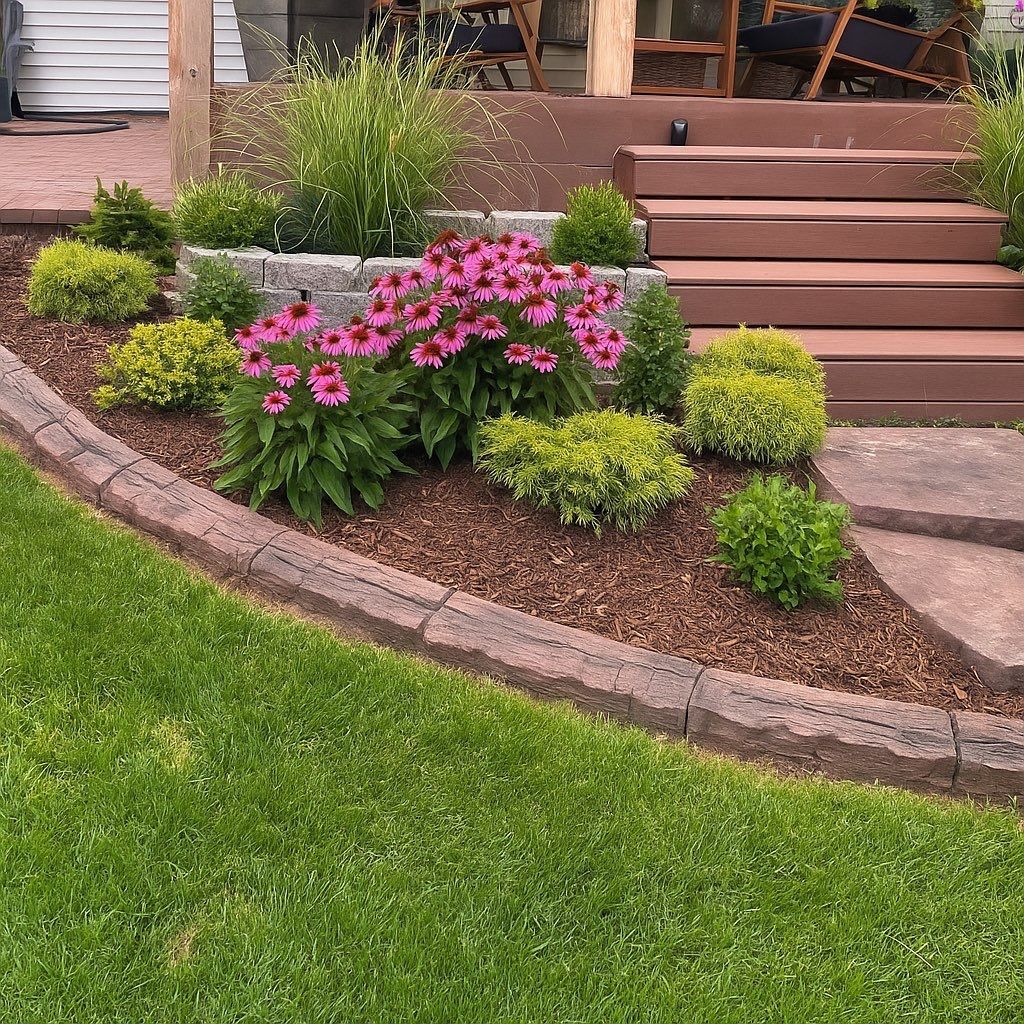
The goal of bed edging is straightforward: keep mulch in the bed, keep grass out, and make the border look intentional. Not every material delivers those results equally in a climate that averages more than 40 freeze-thaw cycles each winter across northeast Wisconsin.
1. Plastic Borders
Plastic landscape edging is the most common starting point at $0.50 to $1.50 per linear foot. Though it can be installed in an afternoon, Wisconsin's freeze-thaw cycle pushes it out of the ground regularly. Many homeowners end up reinstalling or replacing it every one to two years, which adds up in both cost and time.
2. Steel Edging
Steel edging holds a sharper edge and runs $1.50 to $3 per linear foot. It holds up better structurally than plastic, but untreated steel edging can show visible rust within three to five years near Wisconsin's salt-heavy winter roadways. Galvanized or powder-coated versions last longer, though none are truly maintenance-free here.
3. Pavers and Landscape Bricks
Landscape bricks and pavers sit between $3 and $8 per linear foot installed and add strong visual weight to a bed border. Wisconsin's frost line sits at 48 inches in most of the state, and soil movement from freeze-thaw cycles shifts individual bricks out of alignment over time. Beds that look sharp in May often have gapped borders by October.
4. Natural Stone
Natural stone runs $4 to $10 per linear foot and suits larger rural lots well. Stone resists minor frost heave better than brick, but gaps and uneven settling are still common after several winters. It doesn't hold a clean mulch line as tightly as rigid edging materials.
5. Concrete Curbing
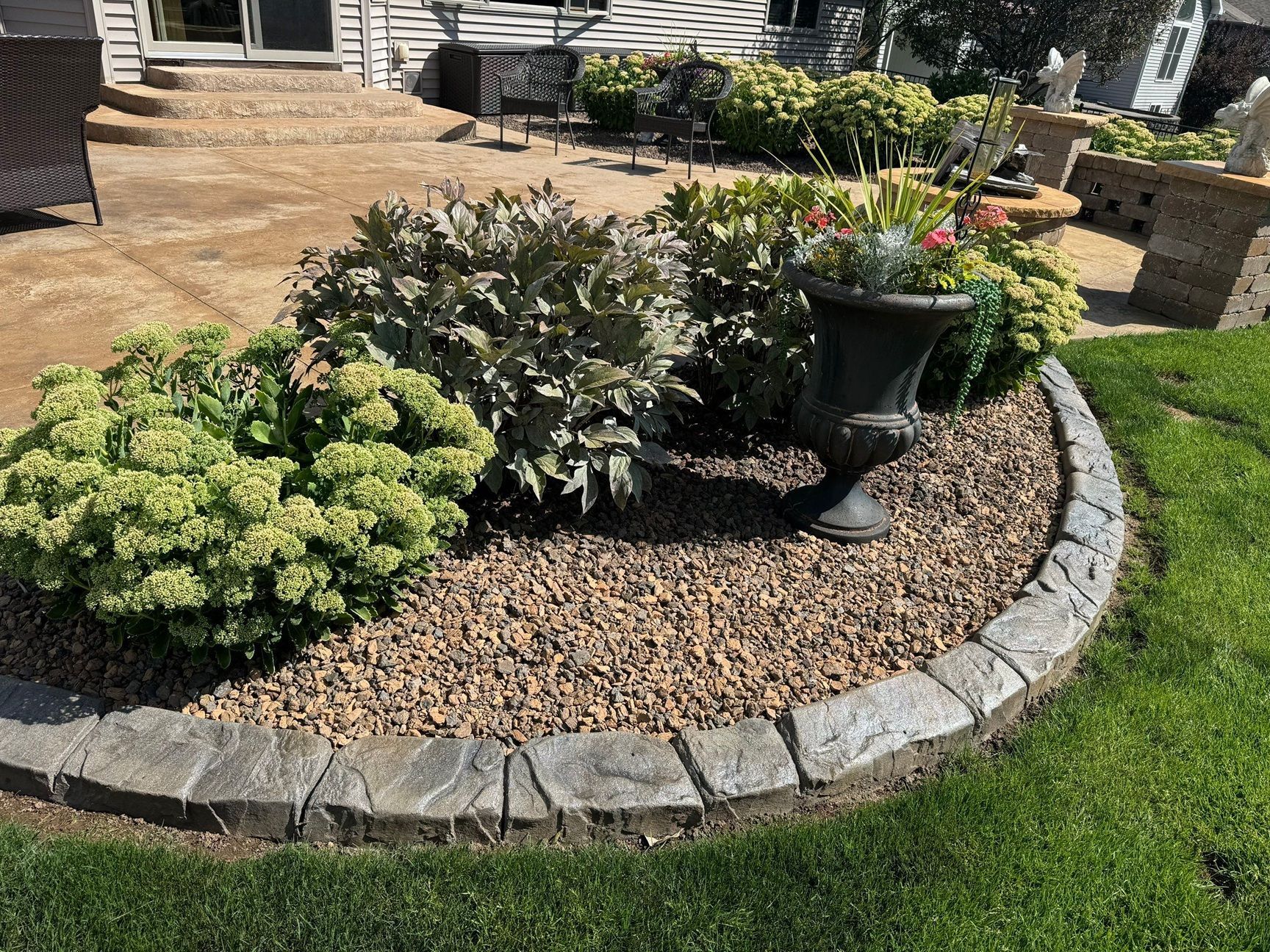
Extruded concrete curbing is the most permanent option on this list. Wolfrath's Curb installs seamless, continuous borders using a specialized machine that follows any curve or shape — straight runs, tree rings, tight radiuses. Color is mixed throughout the concrete, not applied to the surface, so it doesn't flake or fade. At $3 to $8 per linear foot, it lands in the same range as brick and stone but is a one-time cost rather than a recurring one.
What’s the Right Choice for Wisconsin Properties?
The decision comes down to how much ongoing maintenance you're willing to commit to. Plastic and steel have the lowest upfront cost, but Wisconsin homeowners who've weighed the long-term expense of concrete landscape curbing find the economics shift quickly once you count annual reinstallation, replacement materials, and the time spent fixing what didn't stay put.
Brick and stone are a reasonable middle ground for small accent beds where occasional re-leveling isn't a burden. On larger suburban or rural lots with 200 to 400 linear feet of bed borders, that upkeep becomes a significant seasonal task.
Concrete curbing holds its position through freeze-thaw cycles by design. Wolfrath's Curb serves Northeast Wisconsin and the surrounding communities with an on-site concrete mix engineered for Wisconsin soil. Most installations are finished in a single day.
If you're comparing options by price, understanding how much concrete landscape curbing costs helps put the one-time investment in perspective. Many property owners find that concrete curbing is the practical answer since it delivers a lasting and reliable edging solution.
Frequently Asked Questions
What is the most durable flower bed edging for cold climates?
Extruded concrete landscape curbing is the most durable option for cold-climate gardens. Unlike plastic, steel, or segmented brick, seamless concrete doesn't heave or shift from freeze-thaw cycles because it's installed as a continuous border with no joints for frost to exploit. In Wisconsin winters, that distinction separates a one-time installation from a recurring maintenance task.
Is concrete landscape curbing more expensive than other edging options?
Concrete landscape curbing typically runs $3 to $8 per linear foot installed, which overlaps with brick and natural stone in upfront cost. The difference is longevity: plastic and steel edging often need replacement within three to five years, while concrete curbing is permanent. For many homeowners, the total cost of edging replaced repeatedly often exceeds the one-time curbing investment within a few years.
Can Wolfrath's Curb install edging around curved or irregular garden beds?
Yes. Wolfrath's Curb uses a specialized extruding machine that follows any curve, contour, or shape. Our curbing machine allows us to follow tight radiuses, create freeform beds, produce tree rings, and do straight runs with equal precision. The concrete is extruded continuously with no joints or seams that shift over time. Contact Wolfrath's Curb to discuss your specific layout.
Get an Edging Solution That Lasts
Spring is the right time to stop reinstalling edging that doesn't hold and put in something permanent instead. Wolfrath's Curb has installed over 1 million linear feet of concrete landscape curbing across northeast and central Wisconsin.
Call (920) 212-2872 to get your free estimate this season.