
How To Mix Concrete for Curbing: 5 Tips to Achieve the Perfect Ratio
Achieving a flawless, long-lasting concrete curb that withstands Wisconsin's demanding climate starts with the right mix. The quality and consistency of your concrete are the foundation of a successful curbing project. Wolfrath's Curb has spent years perfecting our on-site mixing technique to ensure every installation is strong, durable, and beautiful.
The art and science of mixing concrete for curbing are integral to our professional process. The right ratio of sand, cement, and water is critical, as are the additives and techniques used to create a mix that flows smoothly through an extrusion machine and retains its shape.
In this guide, we'll share five essential tips for mixing concrete for curbing, helping you understand what it takes to achieve a professional-grade result.
1. Start With High-Quality Materials
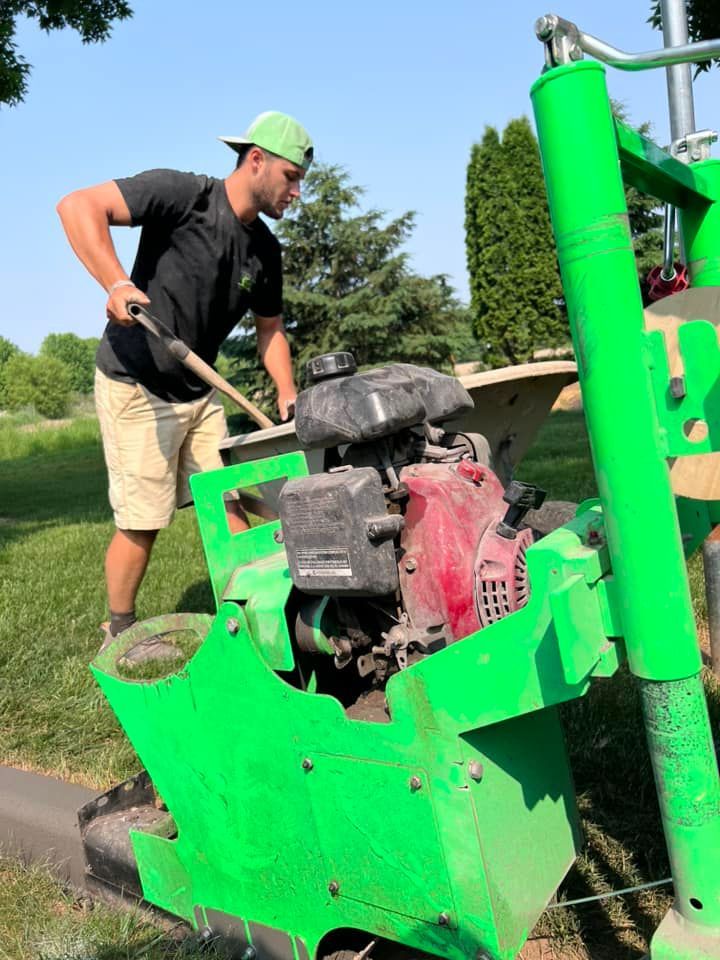
The old saying, "you get out what you put in," is especially true for concrete. The quality of your raw materials will directly impact the strength and appearance of your finished curb. For professional results, you need more than a standard bag of concrete mix from the local hardware store.
At Wolfrath's Curb, we use a specific blend of high-quality Portland cement and clean, well-graded sand. The sand must be free of clay, silt, and organic materials, as these impurities can weaken the concrete and cause surface imperfections. We also use performance-enhancing additives commonly used in professional curbing applications, which brings us to our next tip.
2. Incorporate Specialized Additives
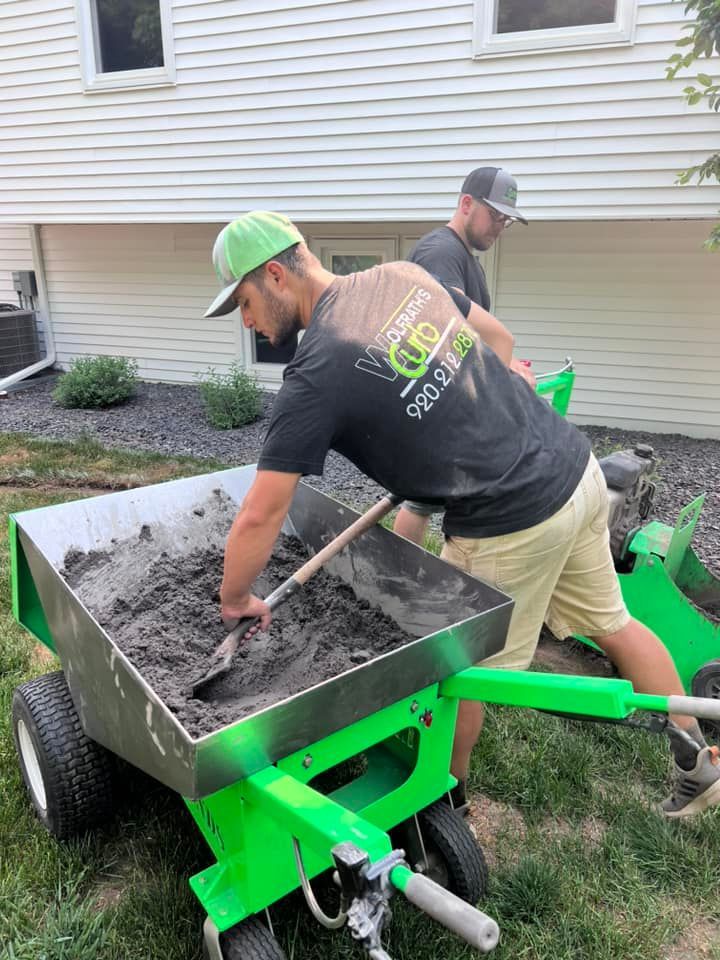
To create a concrete mix ideal for landscape curbing, specialized additives are essential in professional installations. Though not strictly required for all applications, these additives significantly improve workability, strength, and long-term durability—especially in climates with freeze-thaw cycles.
Common additives include polymers that enhance flexural strength and adhesion, plasticizers that increase workability without adding excess water, and integral color that ensures consistent, long-lasting color throughout the entire curb. With countless colors to choose from, integral color enables complete customization.
3. Master the Concrete-to-Sand Ratio
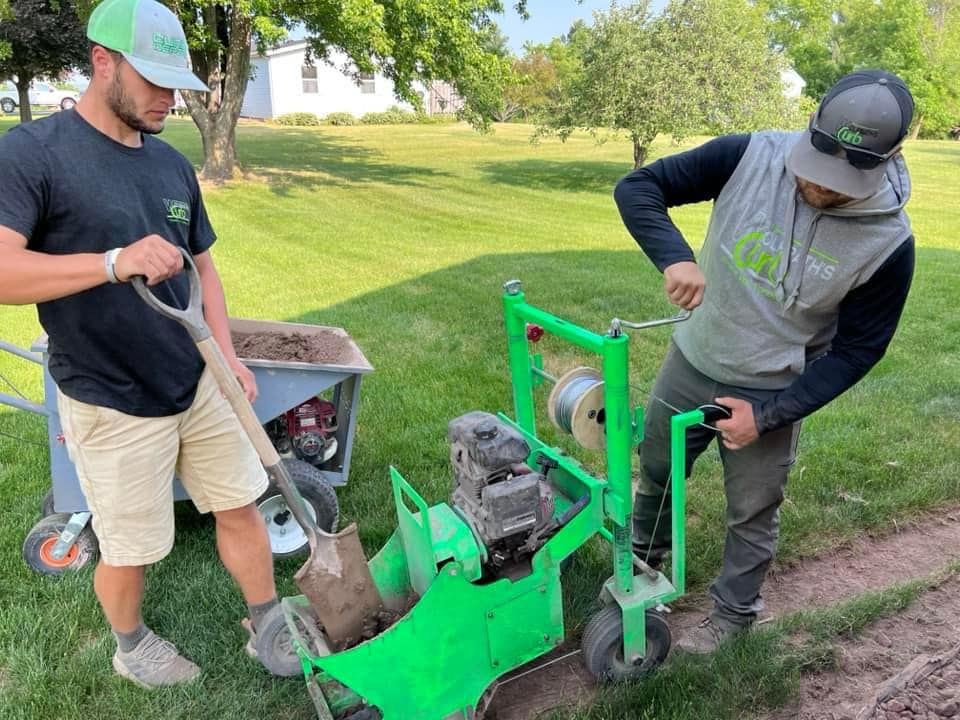
The cement-to-sand ratio is a critical factor in the strength of your curbing. A mix with too much sand will be weak and porous, while a mix with too much cement can be prone to shrinkage and cracking. For landscape curbing, a common starting point is a 1:3 or 1:4 ratio of cement to sand.
However, the optimal ratio can vary depending on the specific materials, additives, and equipment being used. This is where the experience of a professional curbing installer becomes invaluable. We adjust our mix on-site to account for factors like humidity and temperature, ensuring the proper consistency for extrusion every time.
4. Control the Water Content Carefully
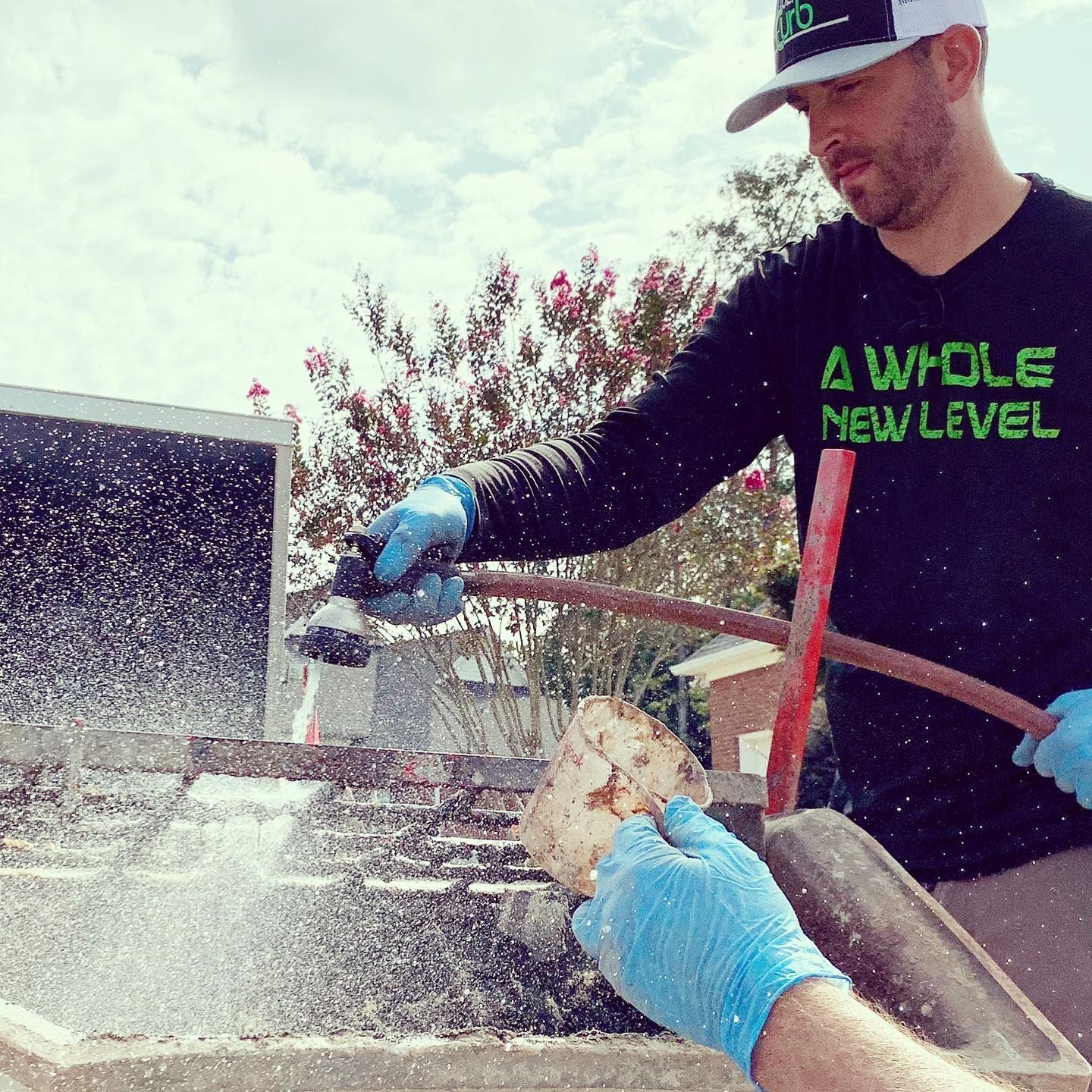
The amount of water in your mix is arguably the most critical variable to manage. Too much water will result in weak, porous concrete that is susceptible to damage. Too little water will make the mix too stiff to extrude properly. This is known as the "slump" of the concrete.
For curbing, you need a relatively low-slump mix that is stiff enough to hold its shape immediately after being extruded. The ideal consistency is often described as being similar to damp sand that can be formed into a ball without crumbling. In our region, seasonal moisture, spring thaws, and summer humidity can subtly affect the amount of water required by concrete mixes, making real-time adjustments essential for maintaining strength, proper curing, and long-term resistance to cracking and surface scaling.
Achieving this balance takes practice and a feel for the material, something our experienced team at Wolfrath's Curb has developed over countless projects across Wisconsin.
5. Ensure Thorough and Consistent Mixing
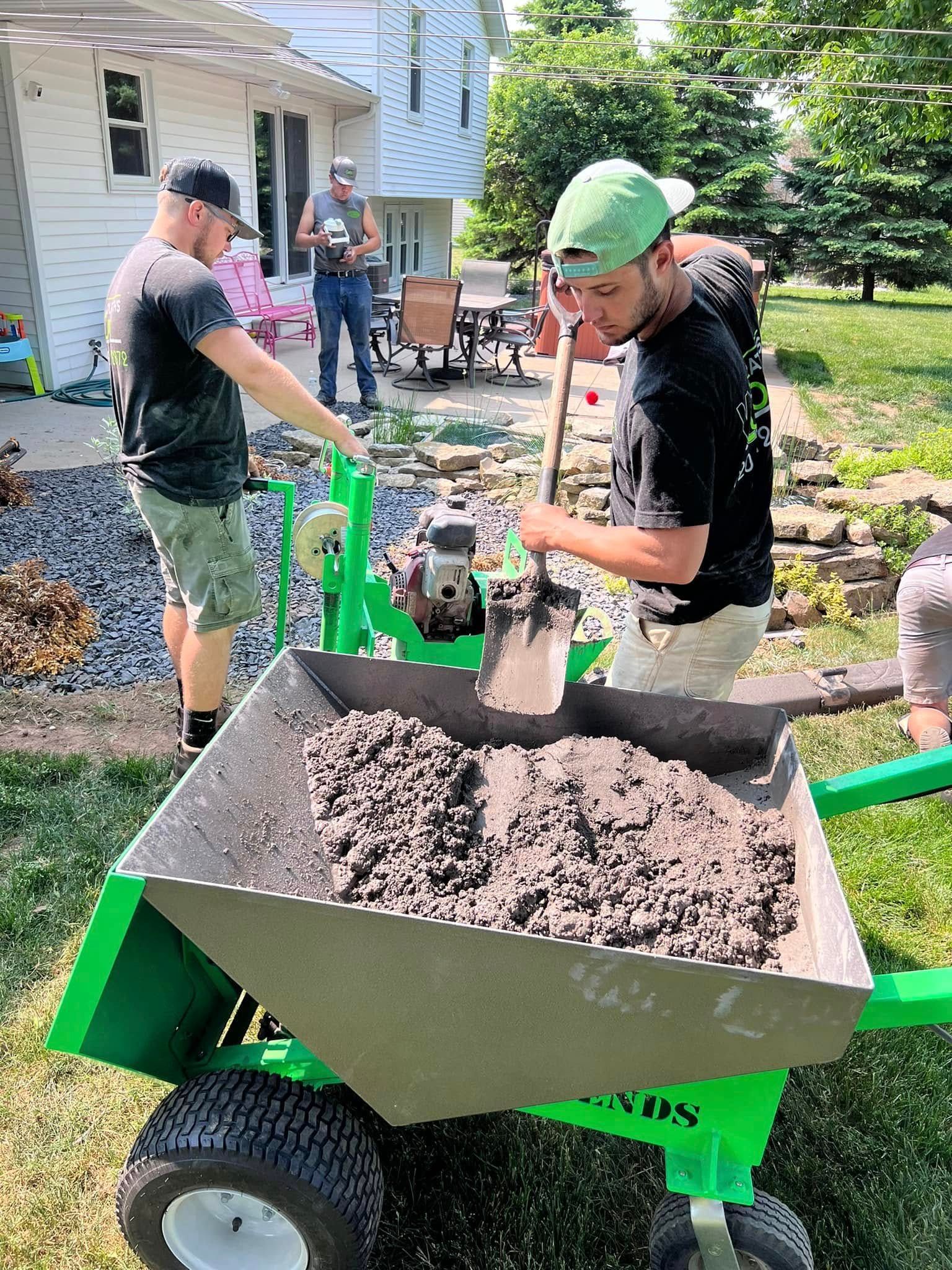
Finally, the concrete must be mixed thoroughly to ensure all components are evenly distributed. Inconsistent mixing can lead to weak spots in the curb and variations in color and texture. For professional curbing applications, a mechanical mixer—such as a mortar mixer or a specialized curbing trailer—is vital.
Mixing by hand in a wheelbarrow is possible for small DIY projects but is generally not recommended for curbing installations, as it's difficult to achieve the consistency required for a uniform, high-quality finish. The goal is a homogeneous mix where every batch performs the same.
Get Professional Results Without the Guesswork
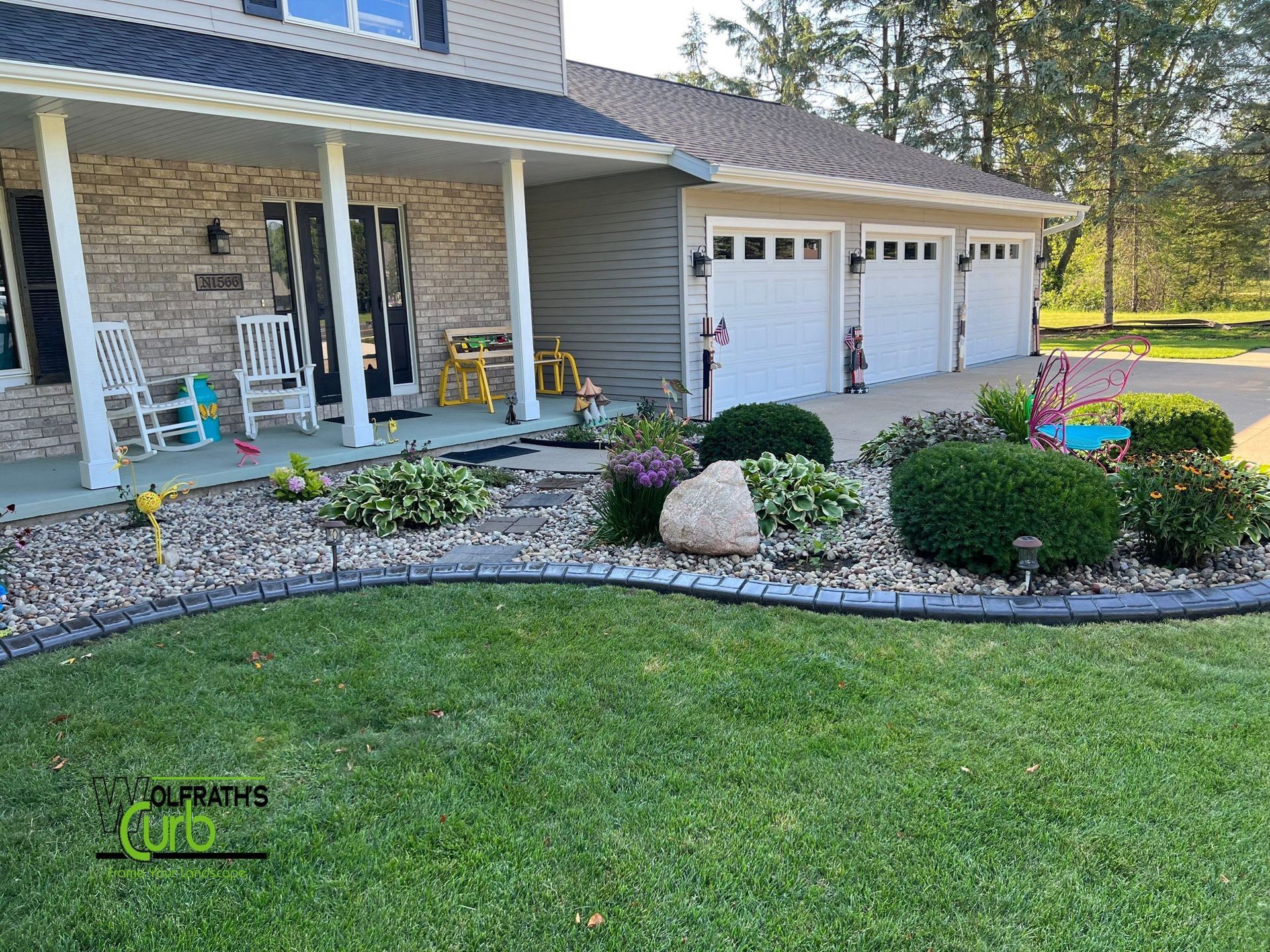
Mixing concrete for curbing is a precise process that requires high-quality materials, proper equipment, and experience. While DIY projects are possible, professional installations deliver superior durability, consistency, and appearance.
Ready to get curbing that's mixed right and built to last?
Contact Wolfrath's Curb today for a free estimate. We'll handle everything from the perfect concrete ratio to the finished installation.