6 Tree Ring Edging Ideas to Protect Your WI Landscape & Simplify Mowing
Tree ring edging ideas range from simple mow-over circles to wide decorative rings with stamped patterns and custom colors. The right type of curbing protects tree roots, contains mulch, and gives your mower a clean riding edge. Wolfrath's Curb installs extruded concrete tree rings for Wisconsin homeowners across northeast and central Wisconsin. In this article, we discuss six styles worth knowing.
Northeast Wisconsin sees dozens of freeze-thaw cycles each winter. That repeated ground movement is what destroys plastic and steel tree ring edging—not age, not neglect, just the soil doing what it does every winter. A seamless concrete tree ring has no joints that might separate or edges that could heave. Homeowners who've replaced plastic borders once generally don't need convincing.
What Makes a Tree Ring Edging Style Worth Installing in Wisconsin
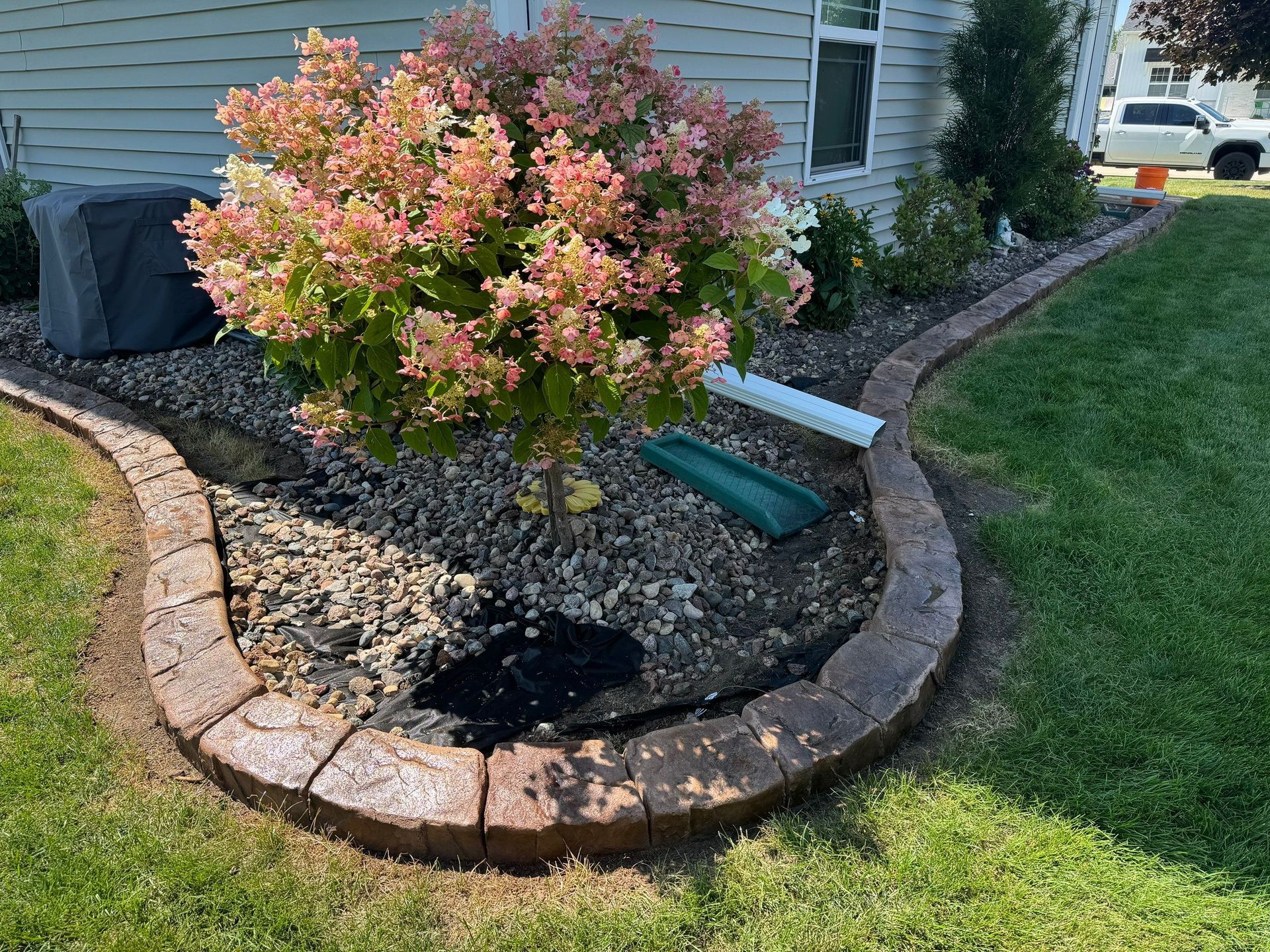
Not every design performs the same way here. Durability is only part of the picture. Concrete extruded on-site is blended with integral color. It’s mixed throughout rather than applied on the surface so it doesn't chip, fade, or peel as temperatures swing from October through January. The profile is shaped during installation, which means the outer edge is built to a specific height and slope to match how the homeowner actually mows.
Two decisions determine whether a tree ring saves mowing time or adds it:
- Concrete Curbing Profile: a mow-over slope lets the mower wheel ride the outer edge without a trimmer pass.
- Tree Ring Width: a wider ring holds more mulch, which means fewer top-offs per season and better moisture retention at the root zone.
Wolfrath's Curb’s installation process shapes both during extrusion.
6 Tree Ring Edging Ideas for Wisconsin Yards
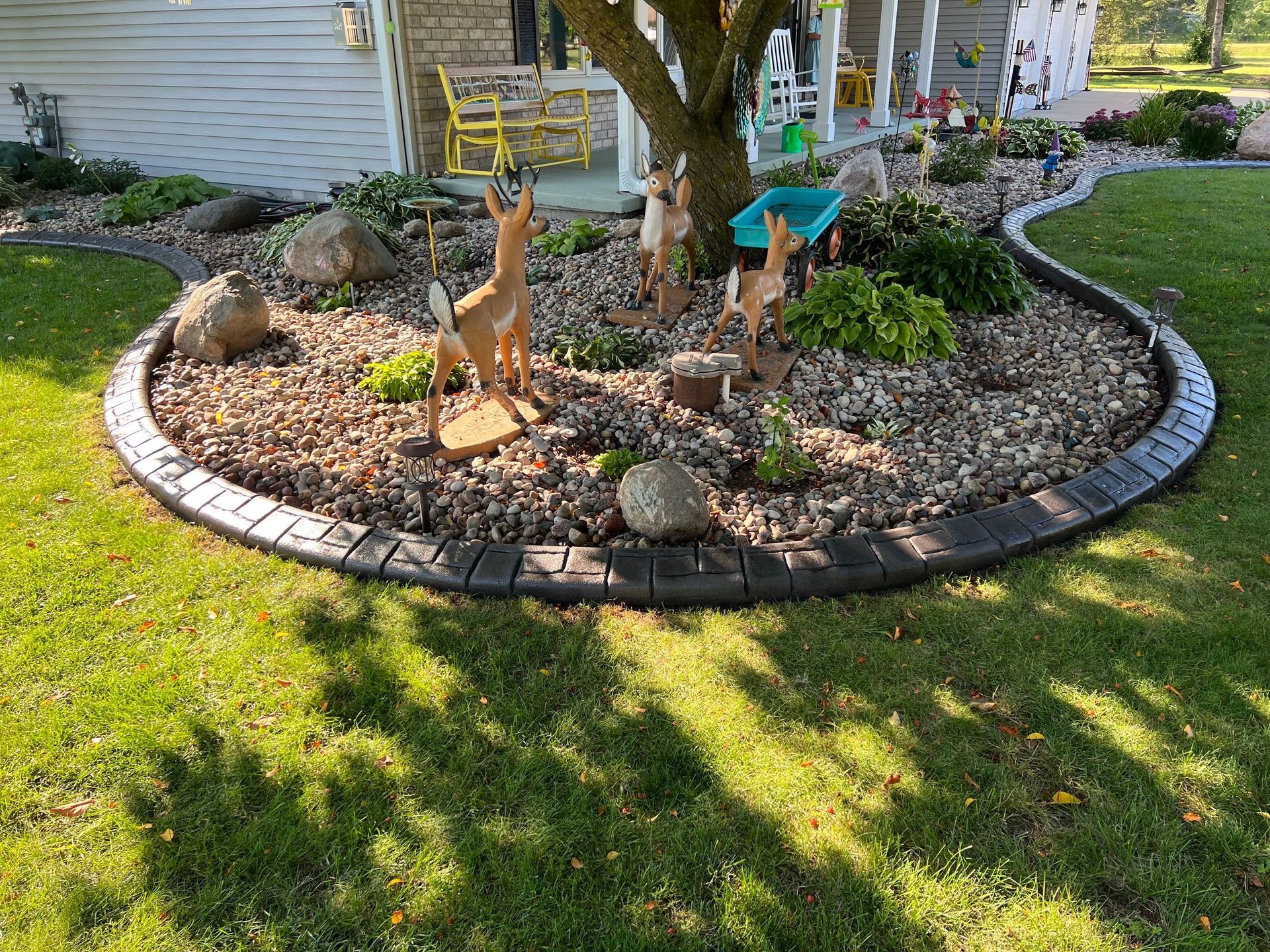
These six styles reflect the range of what works well for Wisconsin residential landscapes, from low-maintenance simplicity to full decorative statements.
1. Simple Round Mow-Over Ring
The most practical option: a clean circle, 4 to 6 inches wide, with a low-slope outer edge the mower rides. No trimming needed. This works well for single-trunk shade trees on open suburban lots, common in neighborhoods around Neenah and Appleton. It's the most affordable design and delivers the clearest time savings every mowing day.
2. Wide Decorative Ring with Mulch Shelf
A wider ring, 8 to 12 inches across, creates a deeper mulch shelf that holds 3 to 4 inches of mulch without washing out in the rain. The extra surface area also makes stamped patterns more visible, turning the ring into a design feature rather than just a border.
3. Stamped Pattern Ring
Wisconsin homeowners adding concrete curbing across their yard often match tree rings to edging elsewhere in the landscape. Castle Rock—rectangular blocks in a running bond—looks clean and architectural. Natural Stone and Flagstone stamps give an organic look that suits mature plantings. The pattern is pressed in while the concrete is still workable.
4. Color-Matched Ring
With 80-plus custom-blended integral colors available, tree rings can be matched to a home's exterior trim, brick tone, or existing hardscape. Because color is mixed throughout the concrete rather than applied as a surface coat, it stays consistent across years of Wisconsin weather without chipping or fading.
5. Kidney-Shaped Bed Ring
Not every tree sits in open lawn. Mature trees near foundation plantings sometimes make more sense enclosed in a curved shape that connects to adjacent bed edging. A kidney or crescent border frames the tree and surrounding plants as one unit, reducing the separate mowing obstacles in the yard.
6. Tiered Ring with Raised Lip
A ring with a raised inner lip, roughly 3 to 4 inches of vertical face, creates an elevated mulch bed that improves visual presence and limits mulch migration in heavy rain. It pairs well with a stamped outer face. If you're still weighing the investment, this breakdown on whether concrete landscape curbing is worth it discusses its long-term value.
Frequently Asked Questions
How wide should a tree ring be for a mature tree?
For most mature trees, a ring extending 2 to 3 feet from the trunk gives the root zone enough protected space and holds adequate mulch depth. Wolfrath's Curb sizes rings based on canopy spread and the homeowner's mowing pattern, so the width serves a practical purpose rather than just a visual one.
Will concrete tree rings crack or shift through Wisconsin winters?
Concrete tree rings installed as seamless extruded curbing are less prone to shifting than plastic or steel alternatives because there are no seams or joints to separate. Hairline cracks can appear as concrete expands and contracts with temperature. This is normal and rarely affects performance. Resealing every 2 to 3 years maintains the surface and color.
Can I add a tree ring to a tree that already has plastic edging around it?
Yes. Existing plastic edging and loose material are removed during ground preparation before the concrete is poured. The crew compacts the base to prevent settling through freeze-thaw cycles before extrusion begins. Homeowners in Winnebago County and surrounding areas regularly replace plastic borders with concrete rings as part of a broader curbing project.
Get a Tree Ring Design That Withstands Wisconsin Winters
Wisconsin's spring planning window is short. If tree rings are on your list this year, settle on a design before the mulching season opens.
Contact Wolfrath's Curb for a free estimate and find the style that fits your yard and schedule.